In modern industrial automation and process control, the reliability of sensing technology is paramount. Among the various sensing solutions, laser sensors stand out for their precision, speed, and non-contact measurement capabilities. However, their performance can be severely compromised in environments laden with dust, particulate matter, and other airborne contaminants. This article delves into the critical importance of dust-proofing in laser sensor design, exploring the advanced technologies and methodologies that ensure operational integrity in the most challenging conditions.
Industrial settings such as mining, cement production, woodworking, and metal processing generate significant amounts of dust and debris. Standard laser sensors, without adequate protection, are vulnerable to lens contamination, signal attenuation, and internal component damage. Dust accumulation on the optical lens can scatter or block the laser beam, leading to inaccurate readings, false triggers, or complete sensor failure. This not only disrupts production lines but also incurs substantial costs in maintenance, downtime, and potential safety hazards.
To combat these issues, engineers have developed robust dust-proof laser sensors incorporating multiple layers of protection. The first line of defense is often a physical barrier. Many high-end sensors are equipped with durable, sealed housings rated according to international standards like IP67 or IP69K. These ingress protection ratings guarantee resistance against dust ingress and high-pressure water jets, making the sensors suitable for wash-down environments in food processing or pharmaceutical manufacturing. The housing materials are carefully selected for chemical resistance and mechanical strength, often utilizing stainless steel or specialized polymers.
Beyond the enclosure, the optical design itself is optimized for dirty environments. Some sensors feature a constant air purge system. A continuous flow of clean, dry air (or inert gas) is directed across the lens surface, creating a positive pressure barrier that prevents dust particles from settling. This technology is particularly effective in applications like powder handling or foundries. Alternatively, lens designs with steep angles or hydrophobic coatings can encourage dust and moisture to slide off, maintaining a clear optical path.
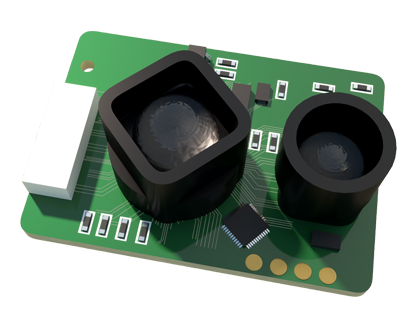
The internal electronics and signal processing algorithms also play a crucial role. Advanced dust-proof sensors employ powerful microprocessors that can differentiate between a true target signal and noise caused by dust interference. Techniques like background suppression, advanced filtering, and echo processing allow the sensor to maintain stable detection even when the signal is partially obscured. Some models include self-monitoring functions that alert operators to gradual lens contamination before it affects performance, enabling predictive maintenance.
Furthermore, the choice of laser technology influences dust resilience. Sensors using visible red lasers might allow for easier alignment, but in extremely dusty atmospheres, sensors with infrared or even laser class 2M blue lasers can offer better penetration. The wavelength and power are engineered to minimize scattering caused by specific particle sizes common in the target industry.
Installation and maintenance practices are equally vital. Proper mounting orientation, away from direct sources of dust accumulation, and the use of protective accessories like mounting brackets with built-in air knives can extend sensor life. Regular maintenance, as simple as wiping the lens with approved materials, remains essential, though the frequency is greatly reduced with dust-proof designs.
In conclusion, the evolution of dust-proof laser sensors represents a significant engineering achievement, enabling automation to thrive in sectors once considered too hostile for sensitive electronics. By integrating mechanical sealing, innovative optical systems, intelligent signal processing, and appropriate laser technology, these sensors deliver unmatched reliability. They ensure continuous, accurate monitoring and control, which is the backbone of efficient, safe, and profitable industrial operations. Investing in such robust sensing solutions is not merely a technical choice but a strategic business decision for long-term operational resilience.