In the rapidly evolving landscape of automotive technology, laser navigation systems have emerged as a cornerstone for advanced sensor suites, fundamentally transforming vehicle perception and enabling higher levels of autonomy. Unlike traditional vision-based or radar systems, laser navigation, primarily through Light Detection and Ranging (LiDAR) technology, provides unparalleled precision in creating high-resolution, three-dimensional maps of a vehicle's surroundings. This capability is critical for the safe operation of autonomous vehicles (AVs) and advanced driver-assistance systems (ADAS).
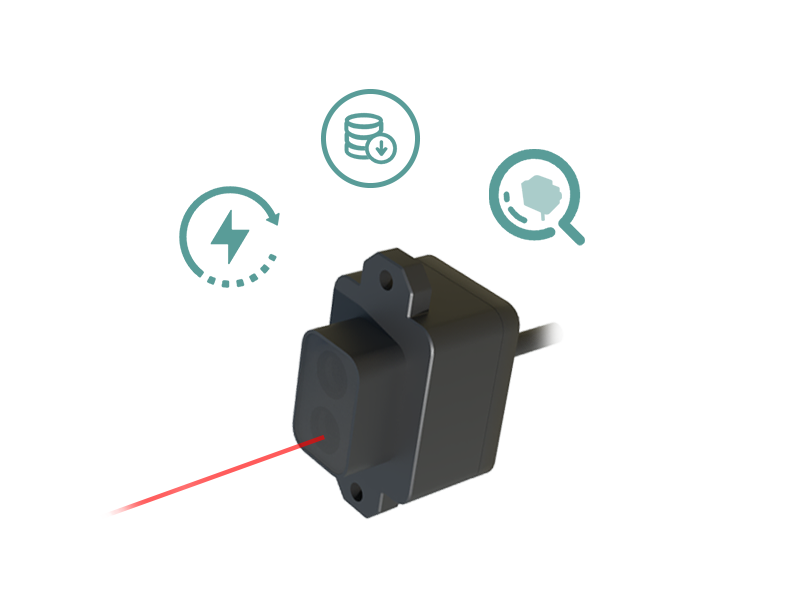
The core principle of automotive laser navigation involves emitting rapid pulses of laser light and measuring the time it takes for each pulse to reflect off objects and return to the sensor. This time-of-flight (ToF) data is processed to generate precise distance measurements, culminating in a detailed point cloud representation of the environment. Modern solid-state LiDAR systems, which have no moving parts, offer enhanced durability, compact form factors, and lower costs compared to earlier mechanical rotating units. This evolution is crucial for scalable automotive integration.
Key advantages of laser navigation in automotive applications are manifold. First, it delivers exceptional accuracy in object detection and distance measurement, often within centimeters, even at long ranges and in low-light conditions where cameras may struggle. Second, it excels in creating precise 3D environmental models, allowing vehicles to identify lane markings, road curvature, pedestrians, cyclists, and other vehicles with high fidelity. This is indispensable for path planning and collision avoidance algorithms. Furthermore, LiDAR is largely unaffected by ambient lighting variations, providing reliable performance in glaring sunlight or complete darkness, a significant limitation for optical cameras.
Integration with other sensor modalities—such as cameras, radar, and ultrasonic sensors—is essential for robust perception. This sensor fusion approach leverages the strengths of each technology: LiDAR provides precise geometric data, radar offers superior velocity measurement and performance in adverse weather, and cameras deliver rich semantic information like color and texture. Advanced algorithms synthesize this data to form a comprehensive, redundant, and reliable model of the driving scene, enhancing system safety and decision-making confidence.
However, challenges persist. While costs are decreasing, high-performance LiDAR units can still be a significant component of vehicle expenses. Performance in heavy rain, fog, or snow can be degraded as laser pulses scatter off precipitation particles. Automotive engineers are actively developing solutions, including more robust signal processing, multi-wavelength LiDAR systems, and improved fusion algorithms to mitigate these effects. Standardization of data formats and interfaces across the industry also remains an ongoing effort to streamline integration.
The future trajectory of automotive laser navigation points toward greater miniaturization, increased resolution, and reduced power consumption. Emerging technologies like Frequency-Modulated Continuous Wave (FMCW) LiDAR promise to integrate direct velocity measurement, akin to radar, while also improving interference immunity from other LiDAR sources. As the industry progresses toward higher levels of autonomy (SAE Levels 4 and 5), the role of laser navigation as a primary, reliable source of truth for environmental mapping will only become more pronounced, underpinning the safety and feasibility of self-driving cars.
In conclusion, laser navigation technology represents a pivotal advancement in automotive sensing. By providing precise, real-time 3D environmental perception, it forms the bedrock upon which modern ADAS and autonomous driving systems are built. Continued innovation in cost reduction, performance in adverse conditions, and seamless sensor fusion will be critical in driving widespread adoption and realizing the full potential of autonomous mobility.