In the realm of industrial automation and control systems, the 24V DC proximity sensor stands as a fundamental and ubiquitous component. Its primary function is to detect the presence or absence of an object without any physical contact, providing a reliable digital signal to a Programmable Logic Controller (PLC) or other control unit. The 24V DC operating voltage has become the de facto standard in many industrial environments due to its optimal balance of safety, compatibility, and performance.
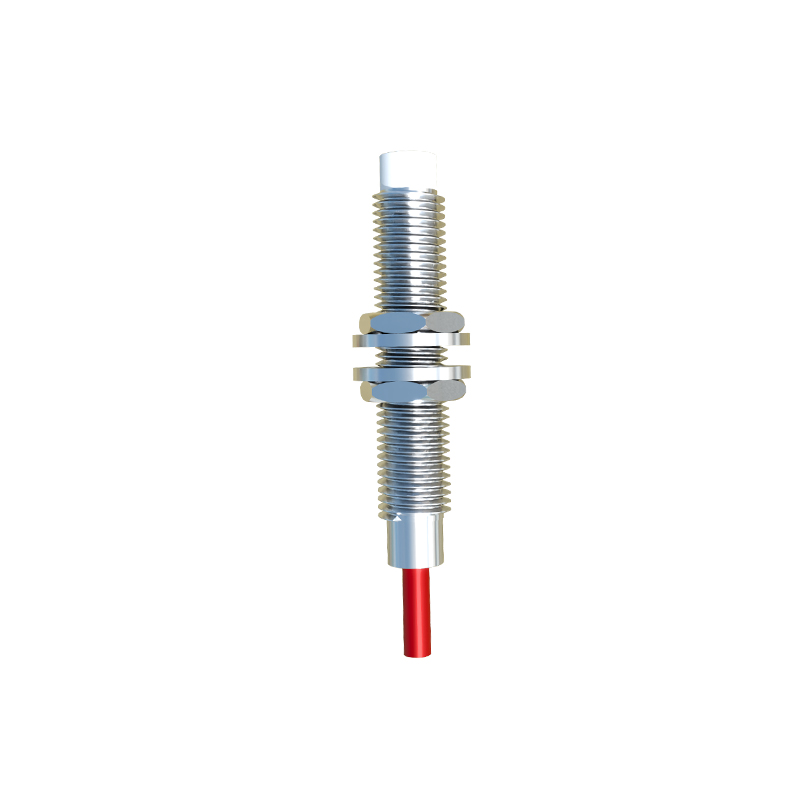
The core principle behind an inductive proximity sensor, the most common type for metal detection, is electromagnetic induction. The sensor contains an oscillator circuit that generates a high-frequency electromagnetic field at its active face. When a metallic target enters this field, eddy currents are induced in the target, causing a change in the oscillation amplitude. This change is detected by the sensor's circuitry, which then triggers a solid-state switch (typically an NPN or PNP transistor) to change state, signaling the object's presence. For detecting non-metallic objects, capacitive proximity sensors operate on a similar principle but respond to changes in capacitance, while photoelectric sensors use a beam of light.
Choosing a 24V DC power supply is not arbitrary. Compared to higher voltages like 110V AC or 230V AC, 24V DC is considered a Safety Extra-Low Voltage (SELV), significantly reducing the risk of electric shock during installation, maintenance, or in case of insulation failure. This enhances personnel safety, especially in damp or confined industrial settings. Furthermore, 24V DC systems generate less electrical noise (EMI), leading to more stable signal transmission and reduced interference with sensitive electronic equipment. The compatibility with modern solid-state electronics and PLC digital input modules, which are predominantly designed for DC signals, is another decisive advantage. DC sensors also offer faster switching speeds, which is critical in high-speed counting or positioning applications.
When selecting a 24V DC proximity sensor for a specific application, several key specifications must be considered. The sensing distance, or nominal range, is crucial and is always specified for a standard target (usually mild steel). It's vital to note that the effective sensing distance can vary for different metals; for instance, aluminum and stainless steel typically reduce the range. The housing material, such as nickel-plated brass, stainless steel, or PBT plastic, must be chosen based on the environmental conditions, including exposure to chemicals, washdowns, or physical impact. The electrical output type is paramount: NPN (sinking) and PNP (sourcing) outputs define how the sensor interfaces with the control system, and the choice depends entirely on the PLC input card configuration. A three-wire sensor will have connections for Brown (24V+), Blue (0V), and Black (switched output), while two-wire versions simplify wiring but have limitations on load current and leakage current.
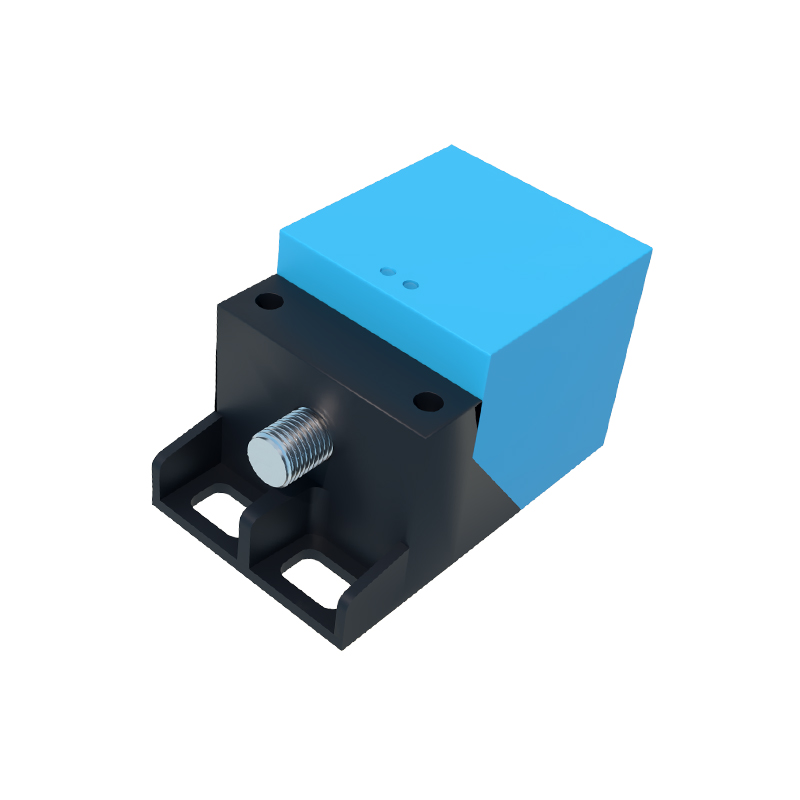
Installation and wiring require careful attention. Maintaining the proper mounting clearance around the sensor head is essential to prevent false triggers from the metal mounting bracket itself, a phenomenon known as "shielded" vs. "unshielded" flush-mounting design. Proper cable routing away from high-power lines minimizes inductive coupling and noise. While 24V DC sensors are robust, they are not immune to failure. Common issues include incorrect wiring (mixing NPN and PNP with the wrong PLC card), supply voltage fluctuations, sensing range inaccuracies due to the wrong target material, and physical damage to the sensing face. A systematic troubleshooting approach—checking power, output status with a multimeter, and the target's properties—usually resolves most problems.
The applications for 24V DC proximity sensors are vast and varied. They are indispensable for object detection on conveyor lines, precise positioning of machine parts, high-speed counting of products, monitoring the end positions of cylinders and actuators, and ensuring safety in automated machinery by verifying the open or closed state of guards. Their solid-state design ensures a long operational life with millions of switching cycles, offering exceptional reliability with no moving parts to wear out.
In conclusion, the 24V DC proximity sensor is a cornerstone of modern industrial automation. Its design elegantly combines operational safety, electrical compatibility, and robust performance. A thorough understanding of its operating principles, specifications like sensing distance and output type, and proper installation practices is essential for engineers and technicians to design, implement, and maintain efficient, reliable, and safe control systems. As Industry 4.0 and smart manufacturing evolve, these sensors continue to be critical data points, feeding essential information into the broader industrial IoT ecosystem.