Capacitive proximity sensors, particularly the widely adopted M18 form factor, represent a cornerstone of modern industrial automation. These versatile devices excel in detecting a vast array of materials—metals, plastics, glass, wood, liquids, and granular substances—where traditional inductive sensors fall short. Their operating principle hinges on the formation of an electrostatic field. The sensor's active face and the target object act as two capacitor plates. As a target enters this field, it alters the capacitance, triggering an internal oscillation change that is processed to switch the output state. This fundamental mechanism grants the M18 capacitive sensor its remarkable material-agnostic detection capability.
The "M18" designation refers to the standardized 18mm cylindrical threaded housing, a robust and compact form that facilitates easy installation in space-constrained environments. A key advantage lies in their adjustable sensing range, typically from 2mm to 8mm for standard models. This sensitivity is often fine-tuned via a potentiometer, allowing engineers to calibrate the sensor to ignore interfering background materials (like a container wall) and focus solely on the target. This feature is indispensable in applications such as liquid level detection in non-metallic tanks or monitoring the fill level of plastic bottles on a high-speed conveyor.
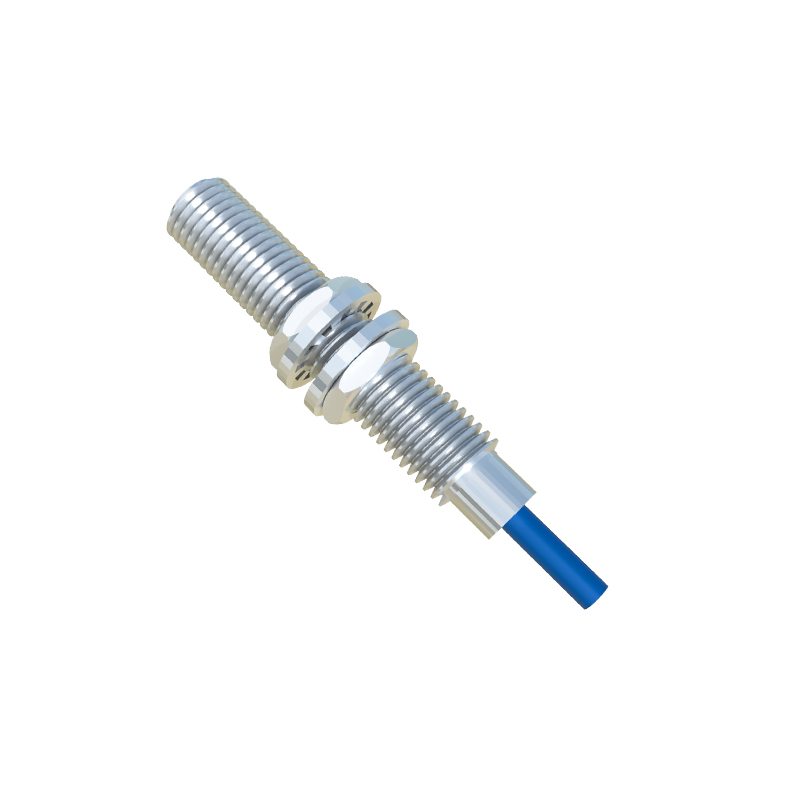
When selecting an M18 capacitive sensor for a specific task, several critical parameters must be evaluated. The sensing distance, as noted, is primary. Output configuration is another vital consideration; these sensors are available in both NPN (sinking) and PNP (sourcing) transistor outputs, as well as analog (4-20mA or 0-10V) and IO-Link enabled versions for smart factory integration. The choice depends on the control system's input card requirements. Environmental ratings are non-negotiable in industrial settings. Look for an ingress protection rating of at least IP67, ensuring resilience against dust and temporary immersion. Operating temperature range, typically from -25°C to 70°C, must suit the application environment. Furthermore, the housing material—often nickel-plated brass or stainless steel—determines chemical and mechanical durability.
Real-world applications are extensive. In packaging machinery, M18 capacitive sensors reliably detect the presence of cardboard boxes, plastic films, or adhesive labels. In the food and beverage industry, they monitor powder levels in silos or control liquid levels in processing vats through non-invasive mounting on the exterior of PVC or glass containers. Woodworking and textile machinery utilize them to sense non-metallic materials. A growing application is in automated guided vehicles (AGVs) for collision avoidance, where they detect obstacles regardless of material composition.
Installation and commissioning demand attention to detail. Mounting the sensor in a stable, vibration-free location is essential. The sensing field can be influenced by surrounding metals or other dielectrics; maintaining the recommended clearance from adjacent structures (as per datasheet guidelines) prevents false triggering. For level detection applications, calibrating the sensor with the tank empty and then with the material at the desired detection point ensures reliable operation. Regular maintenance involves checking for buildup of dust, moisture, or product residue on the sensing face, which can attenuate performance. A simple periodic wipe-down often suffices.
The evolution of Industry 4.0 has propelled these sensors into the realm of predictive maintenance and data analytics. Modern M18 capacitive sensors with IO-Link communication provide not just a binary switch signal but also diagnostic data like operating hours, temperature readings, and signal strength. This data enables condition monitoring, allowing for maintenance before a failure causes downtime. When integrated into a networked system, they contribute to overall equipment effectiveness (OEE) optimization.
In conclusion, the M18 capacitive proximity sensor is an indispensable, flexible tool for industrial sensing challenges involving non-metallic targets or challenging environments. Its principle of operation, combined with a rugged standardized housing and configurable electronics, makes it a first-choice solution for engineers across manufacturing, processing, and packaging sectors. Proper selection based on electrical characteristics, environmental specs, and material considerations ensures long-term, reliable service, forming a critical link in automated and intelligent production systems.