In the realm of industrial automation and control, reliable non-contact object detection is paramount. Among the various technologies employed, Hall Effect proximity sensors stand out for their robustness, longevity, and precision in detecting magnetic fields. This article delves into the fundamental principles, operational characteristics, and typical applications of these essential components.
The core principle behind a Hall Effect sensor is the Hall Effect, discovered by Edwin Hall in 1879. It describes the generation of a voltage difference—the Hall voltage—across an electrical conductor, transverse to an electric current in the conductor and a magnetic field perpendicular to the current. In simpler terms, when a current-carrying semiconductor or conductor plate is exposed to a perpendicular magnetic field, the charge carriers (electrons or holes) are deflected by the Lorentz force. This deflection creates a measurable voltage potential across the plate's width, which is directly proportional to the strength of the applied magnetic field.
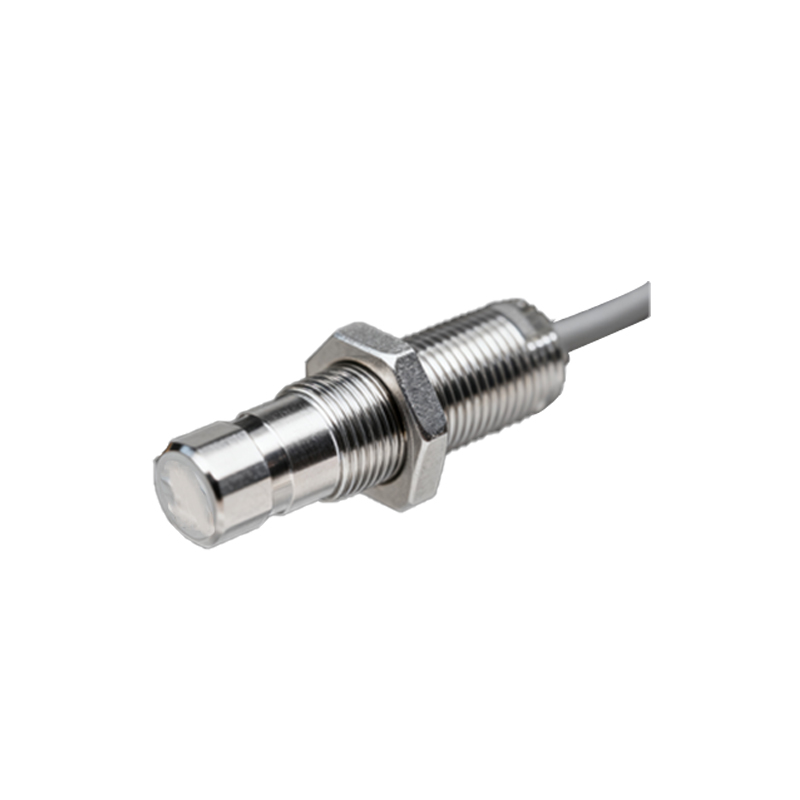
A Hall Effect proximity sensor leverages this phenomenon. Its primary components include a Hall element (the semiconductor chip), a signal conditioning circuit, and a solid-state output stage, typically housed in a rugged casing. The sensor itself does not generate a magnetic field; instead, it reacts to an external magnetic field. In standard proximity sensing applications, a permanent magnet is attached to the target object. As this magnet approaches the active face of the sensor, the magnetic flux density at the Hall element increases. Once this density surpasses a predefined threshold (the operating point), the sensor's internal circuitry triggers a change in its output state—switching from OFF to ON (or vice-versa, depending on the configuration). When the magnet retreats and the flux density falls below a release point, the output reverts to its original state.
This operational method confers several distinct advantages. First, as true solid-state devices with no moving parts and no physical contact required for detection, they offer exceptional reliability and an almost infinite operational life concerning switching cycles. They are immune to wear and tear from mechanical contact, making them ideal for harsh environments with vibration, dust, or moisture. Second, they can operate at very high switching frequencies, often up to several kilohertz, enabling detection of rapidly moving objects. Third, they are largely unaffected by ambient factors like non-metallic dust, oil films, or acoustic noise, which can plague other sensor types.
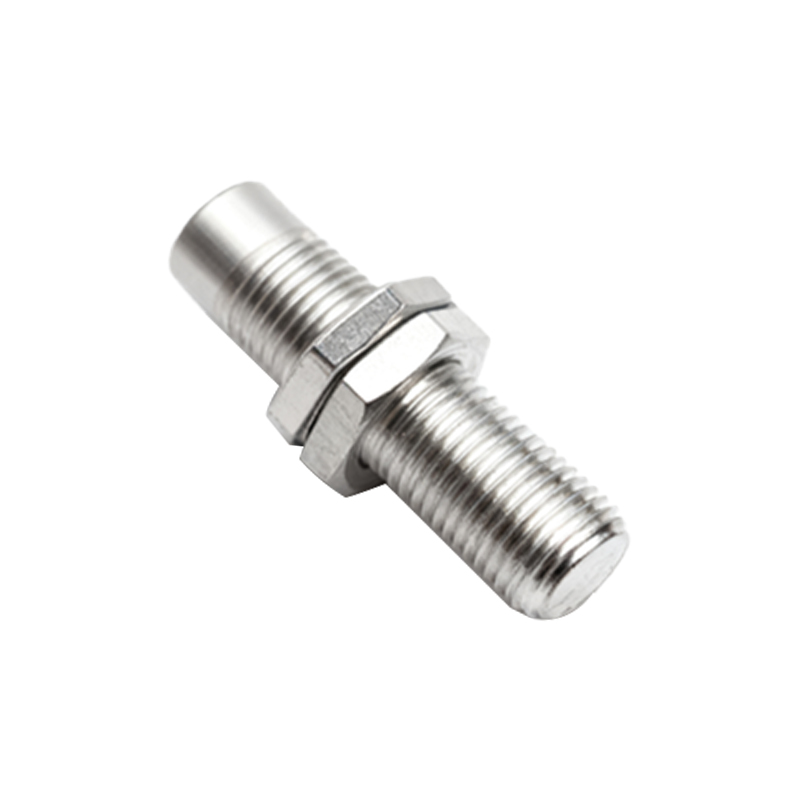
Hall Effect sensors are predominantly categorized by their output type. The most common are digital (or switch) outputs, which provide a simple ON/OFF signal. These can be further divided into unipolar (responding to a single magnetic pole, usually the south pole) and bipolar (requiring a south pole to switch ON and a north pole to switch OFF) types. Analog output sensors provide a continuous voltage or current signal proportional to the magnetic field strength, useful for positional feedback or speed measurement. A third variant, the latch or bipolar lock type, switches ON with one pole and remains ON until the opposite pole is applied, useful for counting revolutions.
Typical industrial applications are vast. They are extensively used for speed sensing and RPM measurement in motors, gearboxes, and conveyor systems, often by detecting the teeth of a gear or tabs on a rotating shaft equipped with magnets. They serve as end-of-travel or limit switches in linear actuators and cylinders. In the automotive industry, they are ubiquitous for detecting crankshaft and camshaft position, wheel speed for ABS systems, and seatbelt buckle status. Furthermore, they are critical in brushless DC (BLDC) motors for commutation, detecting the rotor's magnetic pole position to electronically switch the motor phases.
When selecting a Hall Effect proximity sensor, key parameters must be considered. The sensing distance, typically short-range (from 1mm to 40mm), is specified for a standard magnet. The electrical output (NPN/PNP, NO/NC) must match the control system's input requirements. Supply voltage range, operating temperature, housing material (often nickel-plated brass or stainless steel), and protection class (IP67/IP69K) are also crucial for ensuring performance in the intended environment.
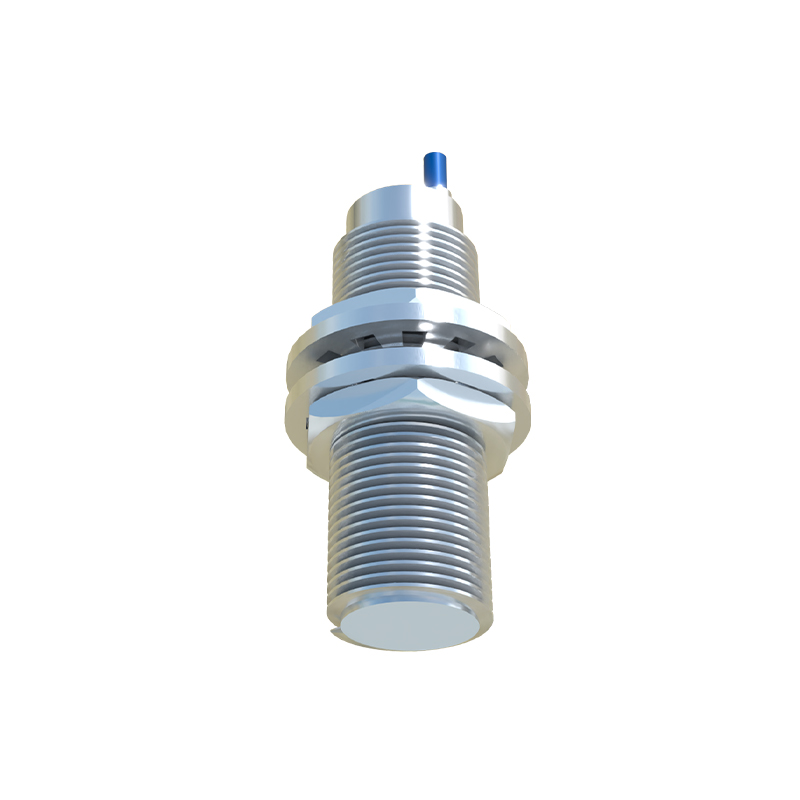
In conclusion, Hall Effect proximity sensors are a cornerstone of modern electromechanical systems. Their operation, rooted in a fundamental physical effect, translates into a practical, durable, and highly effective solution for magnetic field-based detection. Understanding their principle of operation, characteristics, and application nuances enables engineers to deploy them effectively, enhancing the reliability and intelligence of automated machinery across countless industries.