In the realm of industrial automation and safety, laser fence sensors have emerged as a critical technology for perimeter protection, access control, and machine safeguarding. Unlike traditional mechanical guards or basic photoelectric sensors, a laser fence creates an invisible, high-precision curtain of light beams. When any object interrupts this planar array of beams, the sensor triggers an immediate response, such as halting machinery, activating an alarm, or logging an access event. This article delves into the operational principles, key advantages, diverse applications, and essential selection criteria for these sophisticated devices.
At its core, a laser fence system comprises a transmitter unit and a receiver unit. The transmitter emits multiple parallel, modulated laser beams to form a dense, planar light curtain. The corresponding receiver, positioned opposite, detects the intensity of these incoming beams. Modern systems utilize synchronous scanning technology, where the transmitter and receiver are precisely synchronized. The beams are pulsed in a rapid sequence, and the receiver only acknowledges light pulses that match its specific timing pattern. This design provides exceptional immunity to ambient light interference from factory lighting or sunlight, ensuring reliable operation in challenging environments. The system's controller continuously monitors the status of each beam. The safety output is only maintained when all beams are received uninterrupted. Any break in even a single beam causes the controller to switch the safety output to an OFF state within milliseconds, initiating the predefined safety function.
The advantages of laser fence sensors over alternative safety solutions are substantial. First and foremost is their non-contact nature. They provide protection without any physical contact with the operator or the process, eliminating wear and tear and allowing for seamless integration into high-speed operations. Flexibility is another key benefit. The detection area (height and resolution) can be easily configured. Resolution, defined as the spacing between adjacent laser beams, can be selected based on the required sensitivity—finer resolutions (e.g., 10mm, 20mm) can detect fingers or small tools, while coarser resolutions (e.g., 40mm, 90mm) are suitable for full-body detection. Furthermore, their high precision and reliability are paramount for safety-critical applications. With diagnostic capabilities and compliance with international safety standards like IEC 61496 (Type 2 or Type 4), they offer a high Safety Integrity Level (SIL 2 or SIL 3) and Performance Level (PL d/e).
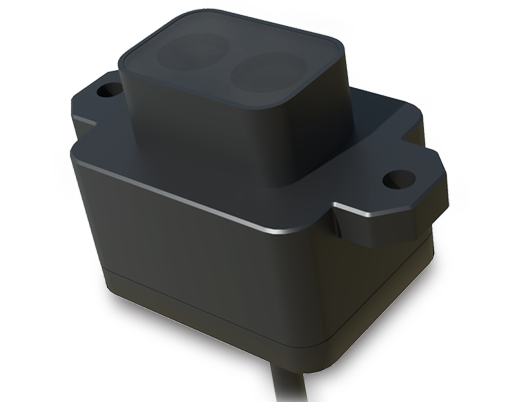
The applications for laser safety light curtains are vast and varied across industries. In industrial machinery safeguarding, they are commonly used as point-of-operation guards for presses, stamping machines, robotic cells, and automated assembly lines. They allow operators to load and unload parts freely while ensuring the machine cannot cycle if a hand is within the danger zone. For perimeter and access control, they secure the boundaries of hazardous areas, warehouses, or sensitive equipment rooms. In material handling and logistics, they protect personnel near automated guided vehicles (AGVs), palletizers, and conveyor transfer points. Specialized versions are also used in elevator and door systems to prevent entrapment.
Selecting the appropriate laser fence sensor requires careful consideration of several parameters. Protective Height: This is the vertical length of the detection zone. It must be tall enough to cover the entire access path to the hazard. Resolution: Choose a resolution small enough to prevent parts of the body (determined by safety standards like ISO 13855) from reaching the hazard before the machine stops. Safety Distance: This is the minimum required distance between the hazard and the light curtain. It must be calculated according to standards (e.g., ISO 13855) considering the system's stopping time and the approach speed of a person. Safety Classification: For safeguarding human bodies, a Type 4 (IEC 61496) or Category 4 (ISO 13849) device is typically required for the highest reliability. Environmental Ratings: The sensor must withstand the operating environment—factors like IP rating for dust/water ingress, temperature range, vibration, and potential exposure to chemicals are critical. Output Configuration: Ensure the safety outputs (OSSDs - Output Signal Switching Devices) are compatible with your safety relay or controller.
Installation and maintenance are crucial for sustained performance. The transmitter and receiver must be aligned with high accuracy, often facilitated by built-in alignment indicators. Regular functional testing, as mandated by safety regulations, is necessary to verify the system responds correctly to a beam interruption. Keeping the optical surfaces clean from dust, dirt, or condensation is essential to maintain signal integrity.
In conclusion, laser fence sensors represent a sophisticated, reliable, and flexible solution for modern industrial safety and automation challenges. By providing a non-intrusive yet highly effective barrier, they enhance productivity without compromising on personnel safety. A thorough understanding of their working principles, coupled with a meticulous selection and installation process aligned with relevant safety standards, is imperative for engineers and safety professionals to implement an effective safeguarding strategy. As technology advances, we can expect further integration with Industrial IoT systems, enabling predictive maintenance and enhanced data logging for safety analytics.