In the realm of industrial automation and machine control, proximity sensors are indispensable components for non-contact detection. Among the diverse range available, ultra-short proximity switch sensors, particularly in the prevalent 3-wire configuration, represent a critical solution for applications with severe spatial constraints. This article delves into the technical specifics, operational principles, and application considerations of these compact yet powerful devices.
Ultra-short proximity sensors are defined by their exceptionally compact housing dimensions, often with sensing faces as small as a few millimeters in diameter and lengths significantly shorter than standard models. This miniaturization is achieved through advanced electronic design and component integration without compromising core functionality. The primary function remains the detection of metallic objects—typically ferrous metals for inductive types—within a very short sensing range, usually from 0.1 mm to 2 mm. This makes them ideal for precision positioning, end-position detection in compact cylinders, part presence verification in dense assemblies, and monitoring in miniature machinery.
The 3-wire configuration is the most common electrical design for DC-powered proximity sensors due to its balance of performance and simplicity. Unlike 2-wire sensors that are wired in series with the load, 3-wire sensors have separate paths for power supply and load switching, offering distinct advantages. The three wires are universally color-coded: brown for the positive supply voltage (V+), blue for the common negative or 0V (V-), and black for the switched output signal. This standardization facilitates installation and troubleshooting across different manufacturers and regions.
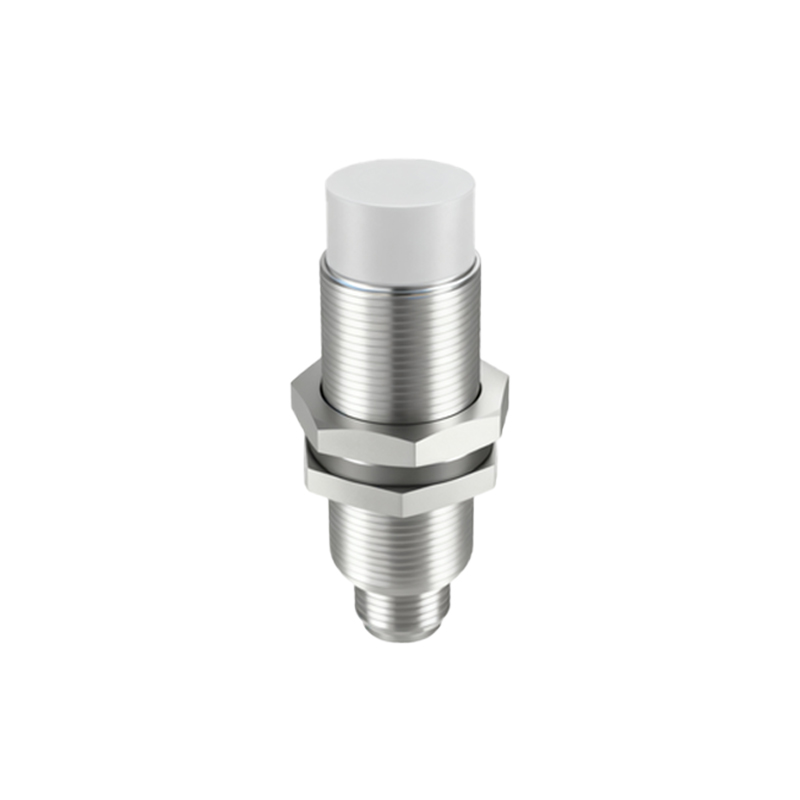
The core of a 3-wire ultra-short sensor is its solid-state switching output. Two main types exist: NPN (sinking) and PNP (sourcing). An NPN sensor switches the black output wire to the negative (blue) line when a target is detected, effectively "sinking" current to ground. Conversely, a PNP sensor switches the black output to the positive (brown) line, "sourcing" current to the load. The choice between NPN and PNP is fundamental and depends on the input circuitry of the connected controller (PLC, relay, etc.). It is crucial to match the sensor type to the control system; a mismatch will result in non-operation. Furthermore, the output can be normally open (NO) or normally closed (NC), defining the signal state when no target is present.
The operational principle for inductive ultra-short sensors involves an oscillator circuit that generates a high-frequency electromagnetic field at the active face. When a metallic target enters this reduced field, it causes eddy currents that dampen the oscillation. This change is detected by the sensor's evaluation circuit, which triggers the solid-state output switch. Despite their small size, modern ultra-short sensors incorporate sophisticated ICs that ensure stable switching points, high switching frequencies (often exceeding 1 kHz), and immunity to electrical noise.
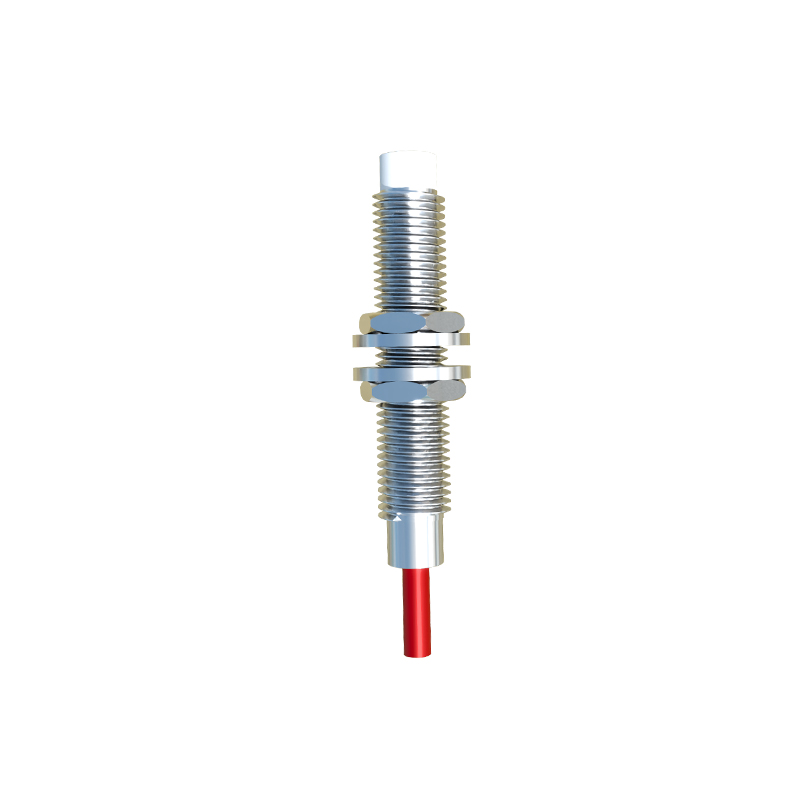
Selecting and applying an ultra-short 3-wire sensor requires careful attention to several parameters. First, the sensing distance must be precisely considered; the effective operating distance is typically 70-80% of the nominal value to account for tolerances and environmental factors. Mounting is critical—these sensors are often flush-mounted, but non-flush (shielded) models allow for side-by-side installation without mutual interference. The housing material, usually nickel-plated brass or stainless steel, must withstand the mechanical and chemical environment. Electrical specifications such as supply voltage range (commonly 10-30V DC), current consumption, and load current capacity must align with the system design. Protection ratings like IP67 are standard, ensuring resistance to dust and temporary immersion.
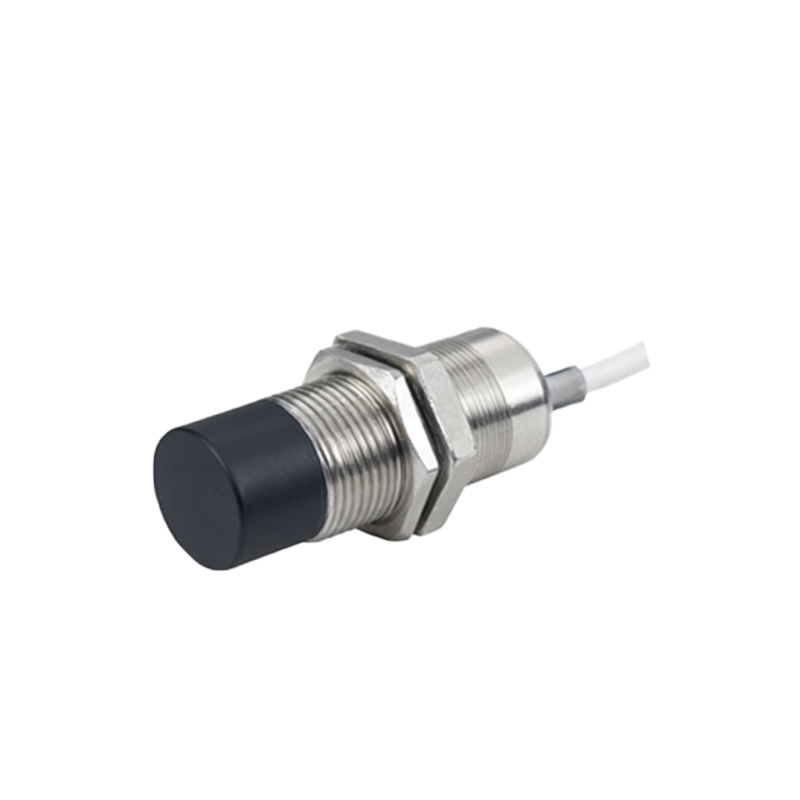
A key advantage of the 3-wire design over 2-wire is lower residual current and voltage drop when "off," leading to minimal leakage and clearer signal states for sensitive controllers. They also generally offer higher switching speeds and more precise switching points. However, the requirement for an additional wire is a minor trade-off.
In practice, these sensors are deployed in robotics, semiconductor manufacturing, packaging equipment, and automated assembly lines where space is at a premium. Proper installation involves ensuring a stable DC power supply, correct polarity, and adequate protection against surge voltages and short circuits on the output. Wiring should be kept away from high-voltage power lines to prevent inductive interference.
In conclusion, ultra-short 3-wire proximity switch sensors are engineered marvels that deliver reliable detection in the tightest spaces. Understanding their configuration—NPN vs. PNP, NO vs. NC—alongside their electrical and mechanical limits is paramount for successful integration. As machinery continues to shrink and precision demands increase, these sensors will remain vital components in the engineer's toolkit, enabling smarter, more compact, and more efficient automated systems.