In modern industrial environments, the demand for high-precision, reliable, and non-contact detection and measurement solutions has never been greater. Industrial laser sensors have emerged as a cornerstone technology, enabling unprecedented levels of accuracy, speed, and flexibility across a vast array of applications, from automotive assembly and electronics manufacturing to food processing and logistics. These sensors operate on the fundamental principles of emitting a focused laser beam and analyzing the reflected light to determine critical parameters such as distance, position, thickness, presence, or profile of an object. Unlike traditional mechanical or proximity sensors, laser sensors offer significant advantages, including the ability to measure minute details on objects of various materials, colors, and surface textures without physical contact, thereby eliminating wear and tear and preventing damage to delicate components.
The core technology behind these sensors typically involves time-of-flight (ToF), triangulation, or confocal measurement principles. Time-of-flight sensors calculate distance by measuring the time it takes for a laser pulse to travel to the target and back. This method is highly effective for long-range measurements, such as in warehouse automation for pallet positioning or vehicle detection. Triangulation sensors, on the other hand, use a laser emitter, a receiver (like a CCD or CMOS array), and the geometric principle of triangulation to determine position with extreme micron-level precision. They are indispensable for tasks like checking part dimensions, monitoring edge positions on a continuous production line, or ensuring precise weld seam tracking. Confocal chromatic sensors utilize white light split into a spectrum, offering exceptional resolution for measuring transparent or multi-layered materials, critical in semiconductor and display panel inspection.
The implementation of industrial laser sensors drives substantial improvements in quality control, process efficiency, and operational safety. In automated production lines, they perform rapid, in-line inspections, identifying defects like cracks, deformations, or incorrect assembly in real-time. This allows for immediate corrective action, drastically reducing waste and rework. For example, in the automotive sector, laser sensors meticulously verify the gap and flushness between body panels, ensuring premium build quality. In packaging, they guarantee that labels are correctly applied and fill levels are accurate. Furthermore, their role in robotics is transformative, providing the precise feedback needed for guidance, pick-and-place operations, and complex assembly tasks, enhancing the autonomy and capability of robotic systems.
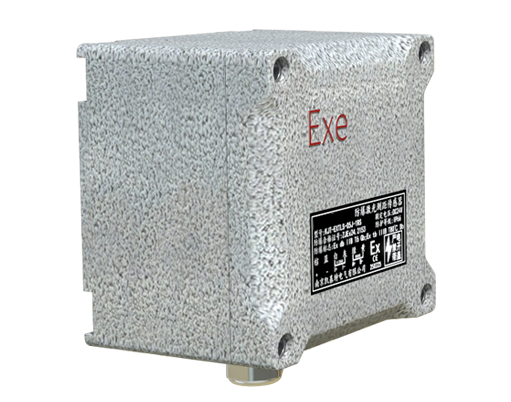
Selecting the appropriate laser sensor requires careful consideration of several key specifications. The required measurement range, resolution (the smallest detectable change), repeatability (consistency of measurements), and linearity (accuracy across the entire range) are paramount. Environmental factors pose significant challenges; industrial settings are often fraught with ambient light interference, dust, oil mist, vibration, and temperature fluctuations. Modern laser sensors are engineered with robust housings (typically IP67 or higher ratings), integrated temperature compensation, and advanced filtering algorithms to ensure stable performance under these harsh conditions. Connectivity is another vital aspect, with standard interfaces including analog outputs (4-20 mA, 0-10 V), digital I/O, and industrial communication protocols like IO-Link, PROFINET, or EtherNet/IP, enabling seamless integration into broader Industrial Internet of Things (IIoT) and Industry 4.0 frameworks.
The future trajectory of industrial laser sensor technology is geared towards even greater intelligence, miniaturization, and integration. The convergence of laser sensing with artificial intelligence and machine vision is creating smart sensor systems capable of not just capturing data but also interpreting complex patterns and making autonomous decisions. This evolution supports predictive maintenance strategies, where sensors monitor their own health and the condition of machinery, alerting operators to potential failures before they occur. Additionally, the development of more compact and cost-effective models is making high-precision laser sensing accessible to smaller-scale operations and new application areas. As industries continue to pursue higher levels of automation and data-driven optimization, the role of the industrial laser sensor as a critical enabler of precision, efficiency, and innovation will only become more pronounced and indispensable.
