In the realm of industrial automation, measurement, and quality control, Japanese laser distance sensors stand as a paragon of precision engineering and technological innovation. These devices, leveraging advanced optoelectronics and sophisticated signal processing algorithms, have become indispensable tools across a multitude of sectors, from automotive manufacturing and robotics to construction and semiconductor fabrication. The reputation of Japanese sensor technology is built upon a foundation of meticulous craftsmanship, relentless R&D, and an unwavering commitment to reliability.
The core principle of a laser distance sensor, or laser displacement sensor, involves emitting a focused beam of coherent light—typically from a laser diode—towards a target object. The sensor then detects the reflected light. The distance to the target is calculated based on the time-of-flight (ToF) principle or through triangulation methods. Japanese manufacturers have excelled in refining these techniques. Time-of-flight sensors measure the round-trip time of the laser pulse, ideal for longer ranges. Triangulation sensors, where the position of the reflected spot on a CMOS or PSD detector is analyzed, offer exceptional accuracy at shorter distances, often down to the sub-micron level. This dual expertise allows for a comprehensive product portfolio catering to diverse application needs.
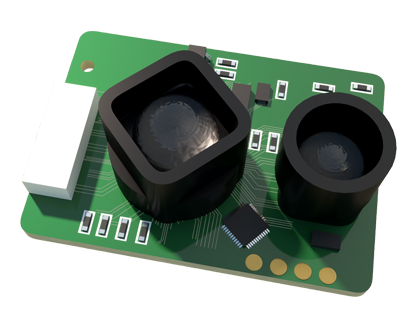
Key Japanese players in this field, such as KEYENCE, OMRON, Panasonic, and SICK (which has a strong presence in Japan), have consistently pushed the boundaries. Their sensors are renowned for features like ultra-high-speed sampling, which is critical for monitoring fast-moving production lines; exceptional environmental resistance to factors like ambient light, dust, and vibration; and intelligent functionalities such as multi-point measurement, profile scanning, and seamless integration with PLCs and industrial networks like EtherCAT and PROFINET. For instance, sensors are used for precise gap and flush measurement in automobile body assembly, thickness monitoring of rolled metals, wafer positioning in cleanrooms, and even guiding autonomous mobile robots (AMRs) in smart warehouses.
The innovation extends beyond hardware. Sophisticated software suites accompany these sensors, enabling easy configuration, real-time data visualization, and advanced analytics. This digital layer transforms raw distance data into actionable insights for predictive maintenance and process optimization, aligning perfectly with Industry 4.0 and IoT paradigms. Furthermore, the miniaturization of components has led to compact sensor designs that can be installed in space-constrained environments without sacrificing performance.
Choosing the right Japanese laser distance sensor requires careful consideration of several parameters: required measuring range, resolution, repeatability, response speed, the material and surface condition of the target (e.g., transparent, glossy, or dark surfaces pose different challenges), and the specific industrial environment. Japanese manufacturers provide extensive support and application engineering to ensure optimal selection and integration.
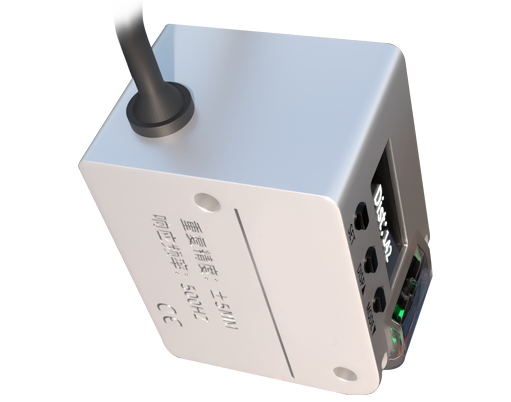
In conclusion, Japanese laser distance sensors represent the forefront of non-contact measurement technology. Their blend of extreme accuracy, robust durability, and smart connectivity solutions empowers industries to enhance quality, boost efficiency, and drive automation forward. As manufacturing demands grow ever more complex, the continuous evolution of these sensors from Japan will undoubtedly play a pivotal role in shaping the future of precision engineering and automated production systems worldwide. Their legacy is not merely in measuring distance, but in setting the standard for it.
