Proximity sensors are essential components in modern automation and electronic systems, enabling non-contact detection of objects within a specific range. These devices operate based on various physical principles, each suited to different applications and environmental conditions. Understanding how proximity sensors work requires exploring their underlying sensing mechanisms, which primarily include inductive, capacitive, ultrasonic, and optical methods.
Inductive proximity sensors are widely used for detecting metallic objects. They generate an electromagnetic field using a coil and oscillator circuit. When a metal object enters this field, eddy currents are induced on the object's surface, causing a change in the sensor's oscillation amplitude. This change is detected by a threshold circuit, which triggers an output signal. Inductive sensors are robust, resistant to environmental factors like dust or moisture, and ideal for industrial settings such as machinery positioning or metal detection in manufacturing lines.
Capacitive proximity sensors can detect both metallic and non-metallic materials, including liquids, plastics, and wood. They function by generating an electrostatic field between two electrodes. When an object enters this field, it alters the capacitance between the electrodes, leading to a change in the sensor's oscillation. This variation is processed to activate the output. Capacitive sensors are versatile and commonly used in applications like level sensing in tanks, material handling, or touch-sensitive interfaces.
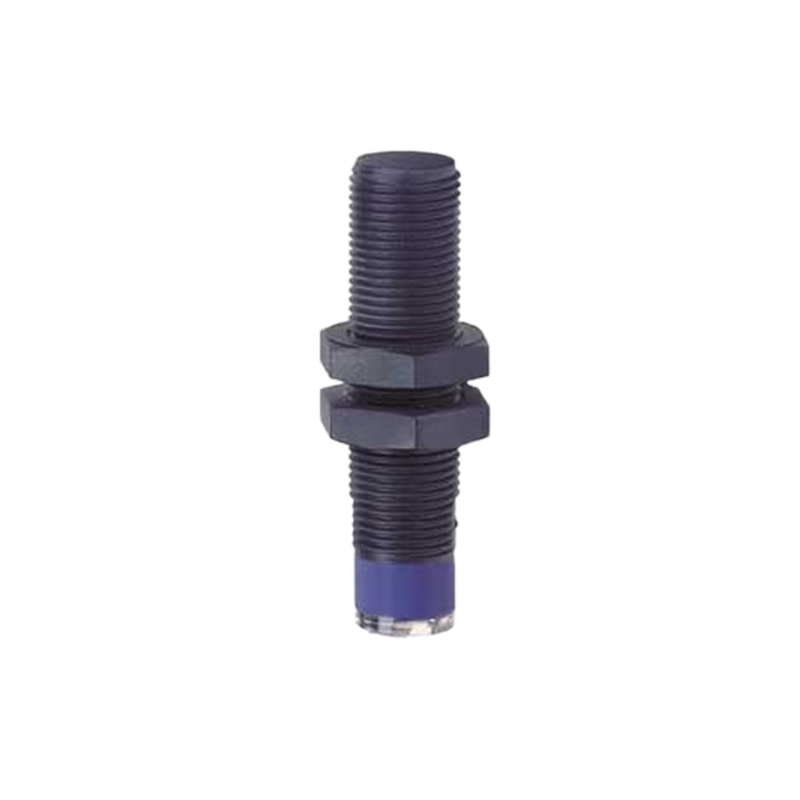
Ultrasonic proximity sensors utilize sound waves beyond the human hearing range (typically above 20 kHz). They emit ultrasonic pulses and measure the time taken for the echoes to return after reflecting off an object. By calculating the time delay, the sensor determines the object's distance. These sensors are effective for detecting objects regardless of material, color, or transparency, making them suitable for distance measurement, obstacle detection in robotics, or liquid level monitoring in harsh environments.
Optical proximity sensors, often based on infrared (IR) light, consist of an emitter and a receiver. The emitter sends an IR beam, and the receiver detects its reflection from an object. In a reflective configuration, the sensor detects objects when the beam bounces back, while in a through-beam setup, an object interrupts the beam between separate emitter and receiver units. Optical sensors offer high precision and fast response, used in applications like object counting, automation safety systems, or mobile device screen control.
Each sensing principle has distinct advantages and limitations. Inductive sensors excel with metals but ignore non-metals, while capacitive sensors are material-sensitive but can be affected by environmental humidity. Ultrasonic sensors provide long-range detection but may struggle with sound-absorbing materials. Optical sensors are accurate but susceptible to interference from ambient light or dirty lenses. Selecting the right sensor depends on factors like target material, detection range, environmental conditions, and cost.
In practice, proximity sensors integrate these principles into compact designs with digital or analog outputs. They enhance efficiency and safety in industries like automotive, aerospace, consumer electronics, and smart infrastructure. For example, in automotive systems, inductive sensors monitor wheel speed for anti-lock braking, while capacitive sensors enable touchless controls. As technology advances, innovations like MEMS-based sensors and IoT integration are expanding their capabilities, enabling smarter, more responsive systems.
Overall, proximity sensors rely on fundamental physical interactions to detect objects without physical contact. By leveraging electromagnetic, electrostatic, acoustic, or optical phenomena, they provide reliable solutions for diverse applications. Understanding these principles helps in optimizing sensor selection and implementation, ensuring effective performance in real-world scenarios.