In the intricate world of industrial automation, the seamless interaction between sensing devices and control systems is paramount. Proximity switch sensor controllers stand as a critical nexus in this ecosystem, bridging the gap between non-contact detection and actionable machine control. These specialized electronic units are designed to interpret signals from inductive, capacitive, ultrasonic, or photoelectric proximity sensors and translate them into reliable commands for PLCs (Programmable Logic Controllers), relays, or other actuators. Their role extends beyond simple signal conversion; they provide conditioning, amplification, and often diagnostic capabilities essential for robust system performance.
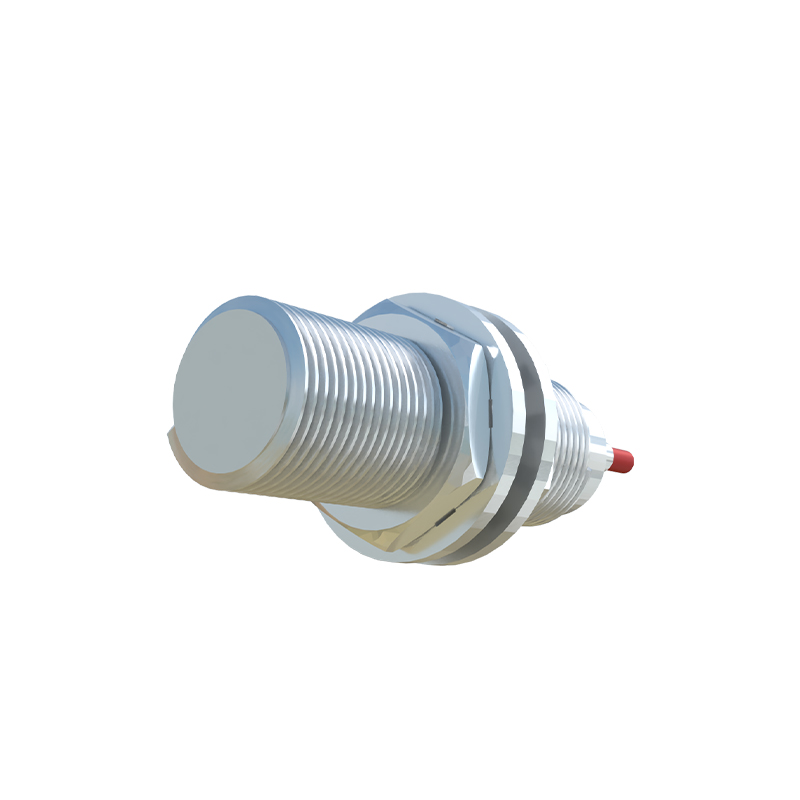
The core function of a proximity sensor controller is to manage the sensor's output. A typical inductive proximity sensor, for instance, generates a small switching signal when a metallic target enters its sensing range. The controller receives this signal, processes it to eliminate noise and bounce, and outputs a clean, standardized signal—often 24V DC or a dry contact—suitable for industrial control circuits. Modern controllers frequently feature adjustable parameters such as sensitivity, response time delay (on-delay/off-delay), and switching hysteresis. This programmability allows engineers to fine-tune the system's behavior to match specific application requirements, such as ignoring small or fast-moving objects to prevent false triggers.
Selecting the appropriate controller hinges on several factors aligned with the sensor and application. First, compatibility with the sensor type is non-negotiable. An inductive sensor requires a controller designed for its specific operating principle and output type (e.g., NPN sinking or PNP sourcing). Second, the electrical specifications must match: supply voltage range, output current capacity, and connection interface (e.g., M12 connectors, terminal blocks). For harsh environments, controllers with high IP (Ingress Protection) ratings, wide operating temperature ranges, and resistance to vibration and electromagnetic interference (EMI) are crucial. Features like short-circuit protection, reverse polarity protection, and LED status indicators are standard expectations for ensuring operational safety and simplifying maintenance.
The applications of proximity switch sensor controllers are vast and varied across manufacturing, packaging, material handling, and automotive industries. In a conveyor system, they can count objects, detect jams, or verify the position of components. In robotic cells, they ensure end-effectors are correctly positioned before a gripping or welding operation commences. A sophisticated use case involves multi-channel controllers that manage arrays of sensors, enabling complex tasks like part profiling or orientation verification. The controller's ability to implement timing functions can also be used to create simple sequencing logic independently of a central PLC.
Installation and wiring practices significantly impact system reliability. Proper shielding of cables, maintaining recommended distances from high-voltage lines, and ensuring secure, corrosion-free connections are fundamental. Regular maintenance, though minimal, should include checking for physical damage, cleaning optical or sensing surfaces (for relevant sensor types), and verifying the controller's status LEDs against operational benchmarks. Troubleshooting often starts at the controller: a lit power LED but no output signal might indicate a sensor fault, a misaligned target, or an incorrectly set sensitivity threshold, guiding technicians efficiently to the root cause.
The evolution of Industry 4.0 is shaping the next generation of proximity sensor controllers. Smart controllers with integrated IO-Link communication are becoming increasingly prevalent. IO-Link transforms the traditional binary signal into a digital data stream, enabling the controller to transmit detailed device parameters, process data, and diagnostic information (like operating hours, temperature warnings, or signal strength) back to the control system. This facilitates predictive maintenance, remote configuration, and faster device replacement, minimizing downtime. The future points toward even greater integration, with controllers offering embedded logic and wireless connectivity, further decentralizing control and enhancing system flexibility.
In conclusion, the proximity switch sensor controller is far more than a passive interface box. It is an active, intelligent component that enhances sensor performance, ensures signal integrity, and provides vital application-specific configurability. A deep understanding of its selection criteria, functionality, and integration best practices is essential for any engineer or technician aiming to design, implement, or maintain efficient, reliable, and future-ready automated systems. By choosing and applying these controllers correctly, industries achieve higher precision, improved safety, and ultimately, greater productivity.