In the rapidly evolving landscape of additive manufacturing, precision and repeatability are paramount. Among the critical components ensuring these qualities in Fused Deposition Modeling (FDM) and other 3D printing technologies is the laser bed sensor. This sophisticated device plays a fundamental role in the initial and often most crucial step of any print job: the first layer adhesion. For engineers and technical professionals, a deep understanding of its operation, benefits, and integration is essential for optimizing print quality, reducing waste, and enhancing system reliability.
At its core, a laser bed sensor is a non-contact distance measurement system. It typically consists of a laser diode emitter and a photodetector or position-sensitive detector (PSD). The operating principle is based on optical triangulation. The laser diode projects a focused beam of light onto the print bed surface. The reflected light is then captured by the photodetector at an angle. The precise position where this reflected beam strikes the detector changes depending on the distance to the bed. By calculating this positional shift, the sensor's onboard processor can determine the exact distance to the bed with high accuracy, often within microns.
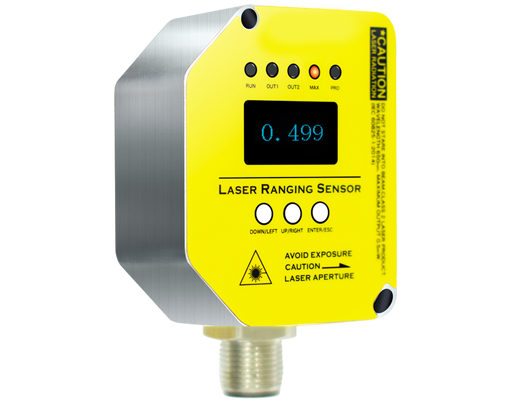
The primary application of this technology is automated bed leveling or mesh bed leveling. Unlike manual leveling, which relies on user adjustment of screws or knobs, a laser sensor systematically probes multiple points across the build plate. It creates a detailed topographic map of the bed's surface, identifying areas of deviation from a perfectly flat plane. This mesh data is then fed to the printer's firmware. During the print, the firmware dynamically adjusts the Z-axis height in real-time, compensating for any warps, dips, or tilts in the bed. This ensures the nozzle maintains a consistent distance across the entire first layer, which is the single most important factor for successful print adhesion and overall dimensional accuracy.
The advantages of implementing a laser bed sensor are substantial. First and foremost is the significant improvement in first-layer consistency, which directly translates to higher success rates and reduced material waste from failed prints. It eliminates the tedious and often imperfect process of manual bed leveling, saving time and reducing human error. For professional and industrial settings where printers run continuously or with different operators, this automation ensures consistent results regardless of user skill level. Furthermore, it allows for the use of a wider variety of build surfaces—glass, PEI, Garolite—as the sensor can adapt to their different reflective properties and slight imperfections.
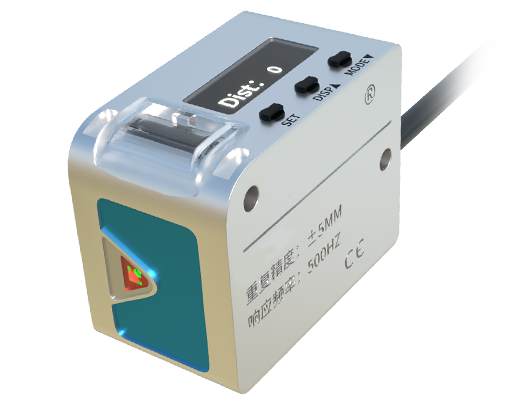
When selecting or specifying a laser bed sensor for a system, several key parameters must be considered. Resolution and accuracy are paramount; look for sensors capable of sub-micron resolution for high-precision applications. The measuring range must be compatible with the printer's expected Z-axis variations. The response time and sampling rate are critical for fast probing routines. The type of surface the sensor can reliably detect is also crucial; some sensors may struggle with transparent surfaces like glass or highly reflective materials without specific calibration or diffusive coatings. Engineers must also consider the communication interface (e.g., analog voltage, I²C, SPI) and its compatibility with the chosen controller board.
Integration into a 3D printer's ecosystem involves both hardware and software considerations. Mechanically, the sensor must be mounted rigidly to the toolhead or a fixed part of the gantry, ensuring its measurement point is precisely correlated with the nozzle tip. Any offset must be accurately measured and programmed into the firmware. Electrically, it requires a stable power supply and noise-free signal lines. On the software side, firmware like Marlin, Klipper, or RepRapFirmware must be configured to support the specific sensor protocol, define the probing grid density, and implement the leveling algorithm. Proper calibration is a non-negotiable step, often involving a Z-offset calibration to define the exact trigger point relative to the nozzle.
Despite their robustness, laser bed sensors are not without challenges. Environmental light interference, though minimal with modulated lasers, can occasionally cause issues. Dust or debris on the lens can impair function. As with any optical system, the characteristics of the bed surface remain a variable; a jet-black, light-absorbing surface may return a weak signal, while a mirror-finish might cause erroneous reflections. Modern sensors often include features to mitigate these issues, such as adjustable laser power or advanced filtering algorithms.
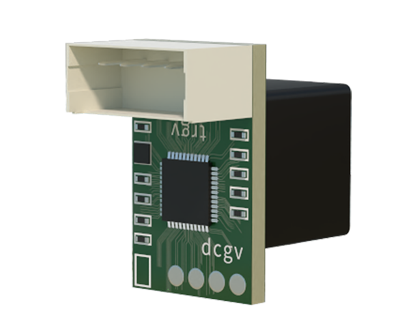
Looking forward, the role of laser bed sensors is set to become even more integrated and intelligent. We are seeing trends towards sensor fusion, where data from laser sensors is combined with information from other sensors, such as inductive probes or vision systems, to create a more comprehensive understanding of the print environment. This multi-modal sensing approach can enhance reliability and fault detection. Furthermore, integration with machine learning algorithms could enable predictive leveling, where the system learns the bed's behavior over time and temperature cycles, proactively adjusting parameters before a print even begins.
In conclusion, the laser bed sensor is far more than a simple convenience feature; it is a critical enabler of precision and automation in modern 3D printing. For engineers designing, maintaining, or operating additive manufacturing systems, a thorough grasp of its technology is indispensable. By ensuring a perfect first layer, it lays the literal foundation for successful, high-quality prints, driving efficiency and reliability in both prototyping and production environments. As the technology continues to advance, its principles of non-contact, high-precision measurement will remain central to the pursuit of perfection in additive manufacturing.