In the rapidly evolving landscape of automotive technology, laser wheel hub sensors have emerged as a pivotal component, driving advancements in vehicle safety, performance, and efficiency. These sensors, integral to modern anti-lock braking systems (ABS), traction control, and stability management, utilize laser-based principles to deliver unparalleled precision in monitoring wheel speed and rotational dynamics. Unlike traditional magnetic or Hall effect sensors, laser variants operate by emitting focused light beams onto reflective targets on the wheel hub, detecting minute changes in reflection patterns to calculate velocity and position with exceptional accuracy. This technology minimizes mechanical wear, reduces susceptibility to electromagnetic interference, and enhances reliability in diverse environmental conditions, from icy roads to desert heat.
The core mechanism involves a laser diode that projects coherent light onto a specially encoded disc or surface attached to the wheel hub. As the wheel rotates, the reflected light is captured by a photodetector, which converts optical signals into electrical data for processing by the vehicle's electronic control unit (ECU). This process allows for real-time monitoring of wheel slip, deceleration rates, and directional changes, enabling proactive adjustments to braking force and engine output. In electric and autonomous vehicles, laser wheel hub sensors play an even more critical role, supporting regenerative braking systems and providing essential input for navigation algorithms that require precise localization and motion tracking.
Recent innovations have focused on integrating these sensors with smart connectivity features, such as IoT-enabled diagnostics that alert drivers to potential issues like tire pressure loss or alignment errors. Manufacturers are also exploring miniaturized designs using MEMS (Micro-Electro-Mechanical Systems) technology, which reduces costs and power consumption while maintaining high performance. Industry standards, including ISO 26262 for functional safety, underscore the importance of rigorous testing to ensure fail-safe operation in automotive applications. As the push toward fully autonomous driving intensifies, laser wheel hub sensors are poised to become even more sophisticated, with advancements in LiDAR integration and AI-driven predictive analytics for enhanced road safety.
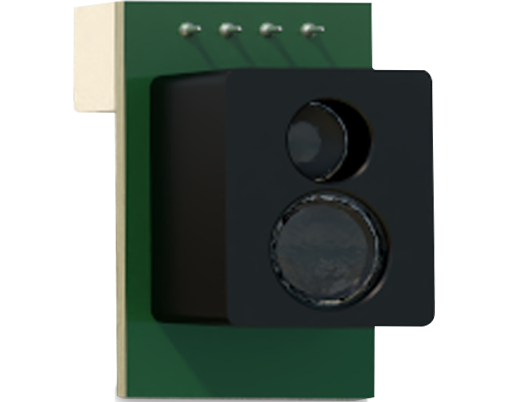
From an engineering perspective, the adoption of laser wheel hub sensors represents a significant leap forward in automotive design. Their ability to operate with low latency and high resolution makes them ideal for next-generation vehicles that demand seamless interaction between mechanical components and digital systems. However, challenges remain, such as ensuring durability against contamination from dirt or moisture, which can affect optical clarity. Ongoing research aims to develop self-cleaning coatings and robust housing materials to address these concerns. In summary, laser wheel hub sensors are not merely incremental improvements but transformative elements that redefine how vehicles perceive and respond to dynamic driving conditions, paving the way for safer, smarter, and more efficient transportation solutions globally.