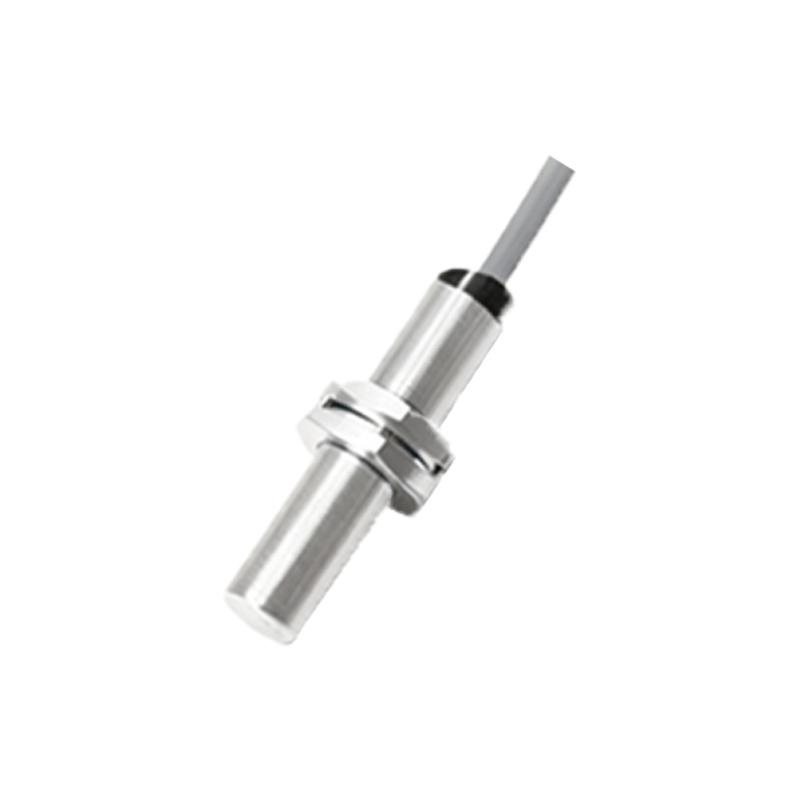
In the realm of industrial automation and electronic design, proximity sensors stand as critical components for non-contact detection. Among the diverse range of form factors, the 20mm proximity sensor has established itself as a versatile and widely adopted standard. This article delves into the technical specifications, operational principles, and primary applications of these compact yet powerful devices, providing a comprehensive overview for engineers and procurement specialists.
A 20mm proximity sensor typically refers to the diameter of its sensing face or housing. This compact size allows for easy integration into machinery with space constraints without sacrificing performance. These sensors are predominantly available in two core technologies: inductive and capacitive. Inductive 20mm sensors are the workhorses for detecting metallic objects. They generate an electromagnetic field from a coil housed within the sensor. When a ferrous or non-ferrous metal target enters this field, it induces eddy currents, causing a change in the field's oscillation amplitude. This change is detected by the sensor's circuitry, triggering a solid-state output signal. The sensing range for a standard 20mm inductive sensor is typically up to 10mm, though shielded versions offer shorter, more focused ranges, while unshielded versions provide slightly longer ranges.
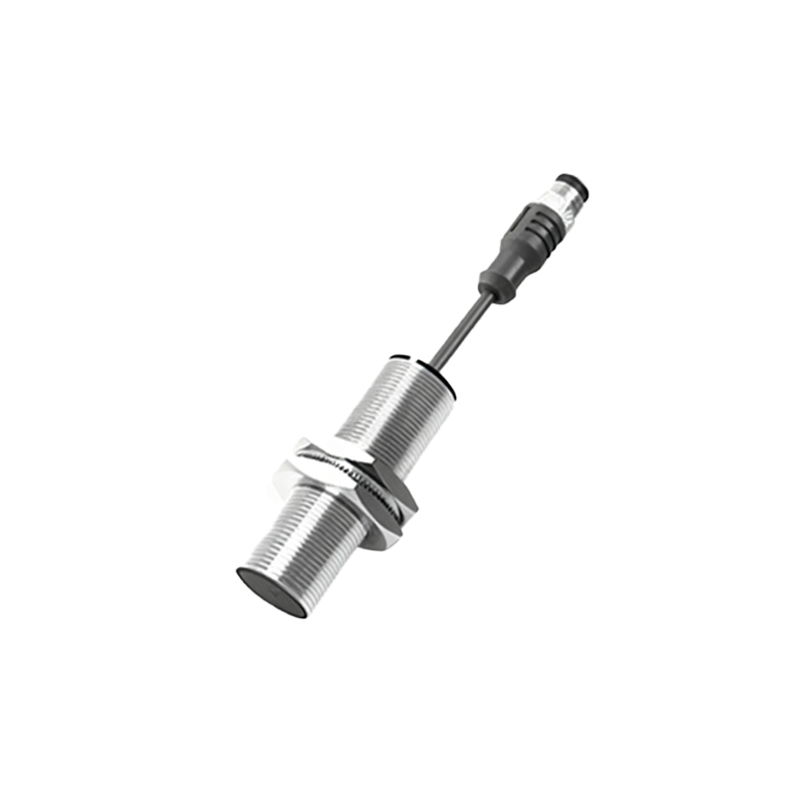
Capacitive 20mm sensors, on the other hand, can detect a much broader range of materials, including metals, plastics, glass, wood, and liquids. They function by generating an electrostatic field. Any object with a dielectric constant different from air will alter the capacitance of this field when it approaches. This change is measured, leading to an output switch. This makes them ideal for applications like level detection in non-metallic tanks or detecting filled plastic bottles on a conveyor.
The key electrical characteristics of these sensors are defined by their output configuration. Common outputs include NPN (sinking), PNP (sourcing), and analog (4-20mA or 0-10V) variants. NPN and PNP are digital outputs, providing a simple ON/OFF signal perfect for counting, positioning, or limit switching. The choice between NPN and PNP depends on the control system's input card requirements (e.g., PLC). Analog output sensors provide a continuous signal proportional to the distance to the target, enabling precise positioning or thickness measurement.
Environmental robustness is a non-negotiable feature. Industrial-grade 20mm proximity sensors are commonly rated IP67 or higher, meaning they are protected against dust ingress and temporary immersion in water. This makes them suitable for harsh environments found in manufacturing plants, food processing, and outdoor applications. Housing materials are usually nickel-plated brass or stainless steel (particularly in wash-down or corrosive environments), ensuring longevity.
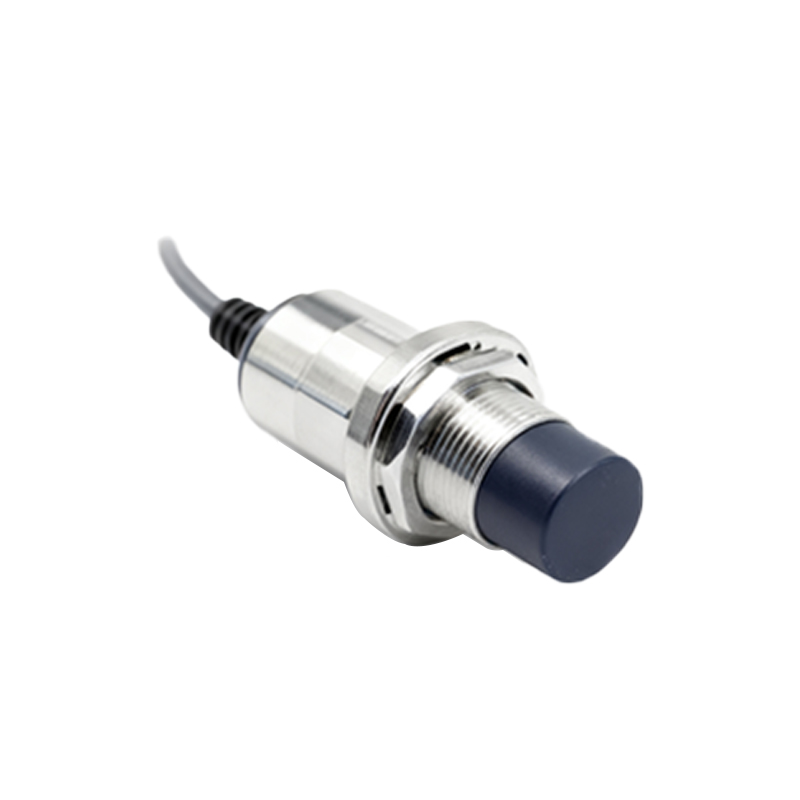
The applications for 20mm proximity sensors are extensive across nearly every industry. In automotive assembly lines, they are used for part presence verification, such as confirming an engine block is in position for machining. In packaging machinery, they detect the presence of a product on a conveyor to trigger a filling or labeling operation. Within material handling, they serve as limit switches on automated guided vehicles (AGVs) or to monitor the position of pallets on a racking system. Capacitive versions are indispensable in the chemical industry for liquid level control in plastic or glass vessels.
When selecting a 20mm proximity sensor, engineers must consider several parameters: the target material (metal, plastic, etc.), the required sensing distance, the output type needed by the control system, the operating voltage (commonly 10-30V DC), the environmental conditions (temperature, exposure to chemicals), and the required response speed. Mounting is also straightforward, often involving a simple threaded barrel (M12 or M18 threading is common for 20mm body sensors) that can be easily installed into a drilled hole.
In conclusion, the 20mm proximity sensor is a fundamental building block of modern industrial control. Its standardized size, reliable performance, and adaptability to both inductive and capacitive sensing principles make it an indispensable tool for engineers designing automated systems. By carefully matching the sensor's technology and specifications to the application's demands, optimal reliability, efficiency, and safety can be achieved on the factory floor.