In the world of industrial automation and machine design, proximity sensors are indispensable components. They detect the presence or absence of an object without physical contact, enabling countless control, counting, positioning, and safety functions. This guide provides a comprehensive overview of the primary proximity sensor types, common models, and their visual characteristics to aid in selection and application.
1. Inductive Proximity Sensors
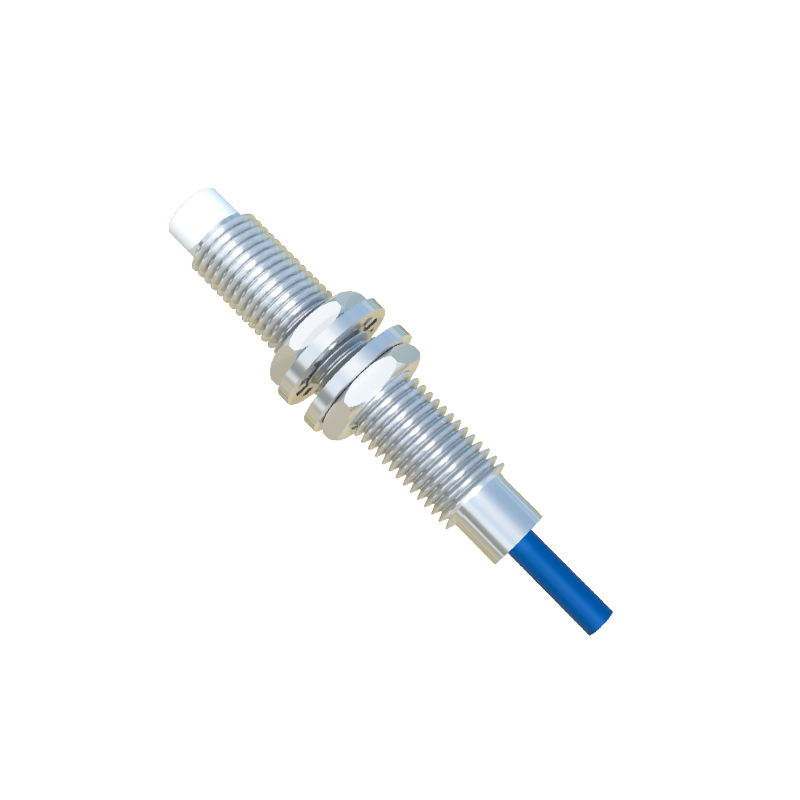
Inductive sensors detect metallic objects. They generate an electromagnetic field; when a metal target enters this field, it causes a change in oscillation amplitude, which the sensor detects. They are ideal for harsh industrial environments.
Common Models/Form Factors:
Cylindrical (Barrel-type): The most ubiquitous shape, available in threads like M8, M12, M18, M30. Models: E2E (Omron), BI (Sick), XS (Schneider).
Rectangular/Block: Used where space is constrained. Models: E2B (Omron), Q5 (Telemecanique).
Ring/Slot: Objects pass through the center hole. Used for part counting or verifying small metallic components.
Key Specs: Sensing distance (from 1mm to 60mm+), Shielded (flush-mountable) vs. Unshielded, Output type (PNP/NPN, NO/NC).
Picture Context: A typical image would show a stainless-steel cylindrical M18 sensor mounted on a machine bracket, with wiring connected, facing a metal gear tooth.
2. Capacitive Proximity Sensors
These sensors can detect both metallic and non-metallic objects (liquids, plastics, wood, granules) by measuring changes in capacitance. They sense the dielectric constant of the target material.
Common Models/Form Factors:
Cylindrical: Similar in shape to inductive sensors but often with a plastic or Teflon face for sensing non-metallics. Models: E2K (Omron), CQ (Telemecanique).
Rectangular: Used for level detection in tanks or bins.
Key Specs: Sensing range (typically shorter than inductive), Sensitivity adjustment potentiometer, Material influence.
Picture Context: An image might depict a capacitive sensor mounted on a plastic hopper, detecting the powder level inside, with its sensitivity adjustment screw visible.
3. Ultrasonic Proximity Sensors
Using sound waves beyond human hearing, these sensors measure the time taken for an echo to return, calculating distance. They are excellent for detecting objects of any material, shape, or color, and for level sensing.
Common Models/Form Factors:
Cylindrical/Tube: Compact sensors for general object detection.
Rectangular/Block: Often used for more advanced applications with analog output or multiple teaching points. Models: UB (Pepperl+Fuchs), UC (Sick).
Key Specs: Sensing range (can be several meters), Beam angle, Analog or switching output, Temperature compensation.
Picture Context: A common photo shows a rectangular ultrasonic sensor mounted above a conveyor belt, detecting variably sized cardboard boxes.
4. Photoelectric Sensors
While often considered a separate category, photoelectric sensors are a major type of non-contact proximity device. They use a light beam (visible red, infrared, or laser).
Primary Modes for Proximity Sensing:
Diffuse (Reflective): Emitter and receiver in one housing. Detects the object that reflects its own light beam. Models: E3Z (Omron), OJ (Pepperl+Fuchs).
Retro-reflective: Uses a separate reflector. The sensor detects when the beam to/from the reflector is broken.
Through-beam: Separate emitter and receiver units; detection occurs when the beam is interrupted.
Key Specs: Sensing distance, Light source type, Background suppression feature.
Picture Context: A diffuse photoelectric sensor with a red LED spot, detecting a plastic bottle on a packaging line.
5. Magnetic Proximity Sensors (Reed Switches/Hall Effect)
These detect permanent magnets. They are simple, reliable, and often used for position detection on cylinders (piston position) or safety door monitoring.
Common Models/Form Factors:
Cylindrical: Small sensors that mount into the cylinder body's slots.
Rectangular/Flat: Surface-mount styles.
Key Specs: Switching distance (very short, e.g., 10-30mm