In the realm of industrial automation, proximity sensors serve as critical components for detecting the presence or absence of objects without physical contact. These sensors, including inductive, capacitive, and photoelectric types, are widely used in manufacturing, robotics, and process control systems. Integrating proximity sensors with computers enables real-time data acquisition, monitoring, and control, enhancing efficiency and precision in automated environments. This article provides a technical overview of how to connect proximity sensors to computers, covering hardware interfaces, communication protocols, and practical implementation steps.
Proximity sensors typically output digital or analog signals based on detection events. Digital sensors, such as PNP or NPN types, provide a simple on/off signal, while analog sensors output a continuous voltage or current proportional to the detected distance or presence. To interface these sensors with a computer, an intermediary hardware component is usually required, as most computers lack direct industrial input capabilities. Common interface devices include programmable logic controllers (PLCs), data acquisition (DAQ) cards, microcontrollers (e.g., Arduino or Raspberry Pi), and industrial gateways.
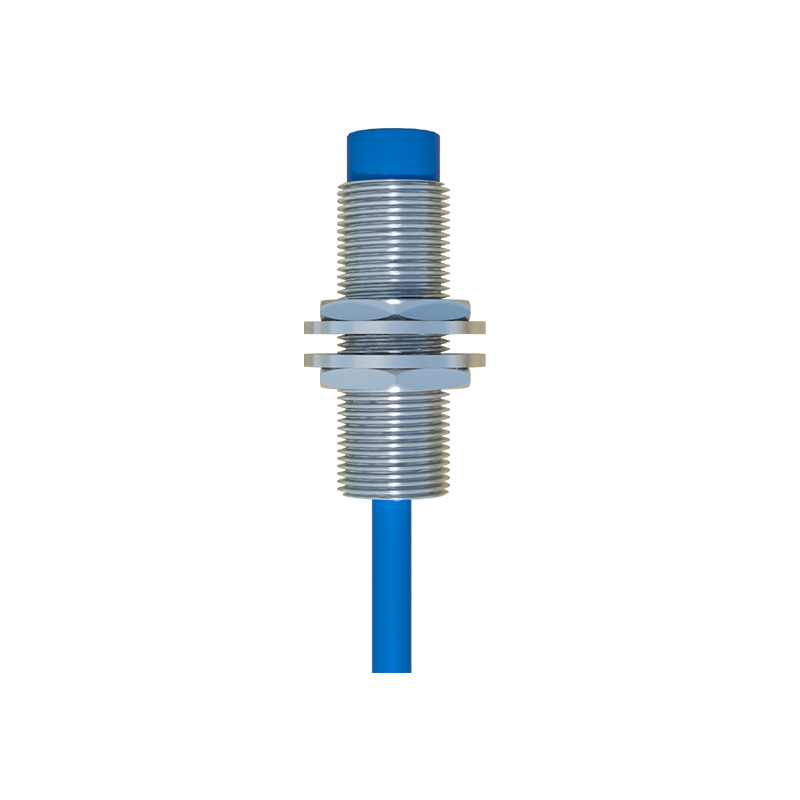
For digital proximity sensors, connection involves wiring the sensor output to a digital input module on a PLC or DAQ card. The sensor’s power supply (typically 12-24V DC) must be matched with the interface device’s specifications. Shielded cables are recommended to minimize electrical noise interference in industrial settings. Once connected, the computer can read the sensor status via software configured for the interface device. For example, using a PLC with Ethernet communication, sensor data can be transmitted to a computer running supervisory control and data acquisition (SCADA) software or custom applications via protocols like Modbus TCP/IP or OPC UA.
Analog proximity sensors require analog-to-digital conversion (ADC) to translate voltage or current signals into digital values readable by a computer. This is often handled by analog input modules on PLCs or DAQ cards with built-in ADC capabilities. Calibration is essential to map sensor output ranges (e.g., 0-10V or 4-20mA) to meaningful physical units, such as millimeters for distance sensing. Software tools like LabVIEW, Python libraries (e.g., PyModbus or pymata), or industrial automation suites can then process this data for logging, visualization, or control algorithms.
Communication protocols play a vital role in sensor-computer integration. In addition to Modbus and OPC UA, other protocols like PROFINET, EtherNet/IP, or MQTT are used depending on the system architecture. For simpler setups, microcontrollers can serve as cost-effective bridges, converting sensor signals to serial (UART) or USB data for direct computer connection. Wireless options, such as Bluetooth or Wi-Fi modules, are also emerging for flexible installations, though they may introduce latency concerns in time-critical applications.
Practical implementation involves careful planning. First, select a proximity sensor suitable for the target material and environmental conditions (e.g., inductive sensors for metals, capacitive for non-metals). Ensure compatibility with the chosen interface device in terms of voltage, current, and signal type. During installation, follow electrical safety standards, such as proper grounding and isolation, to prevent damage from surges or short circuits. Software configuration should include setting up communication parameters, data sampling rates, and error-handling routines to ensure reliable operation.
In summary, connecting proximity sensors to computers is a multi-step process that bridges the physical and digital worlds in automation. By leveraging appropriate hardware and software tools, engineers can achieve seamless integration for applications like object counting, position verification, or quality control. As Industry 4.0 advances, the trend toward smart sensors with embedded connectivity (e.g., IO-Link) is simplifying this process, enabling direct computer communication with minimal intermediary hardware. Regardless of the approach, attention to technical details—from wiring to protocol selection—is key to building robust and efficient sensor-computer systems.