The HC-501 infrared (IR) proximity sensor is a widely adopted component in the fields of automation, robotics, and security systems. As an engineer specializing in electrical and sensor technologies, I find the HC-501 to be a quintessential example of how simple, cost-effective IR sensing can deliver reliable performance in diverse environments. This article delves into its operational principles, key specifications, circuit integration, and common application scenarios, providing a comprehensive guide for professionals and enthusiasts alike.
At its core, the HC-501 operates on the principle of infrared reflection. The sensor emits an infrared beam via an IR LED. When an object enters its detection range, the beam reflects off the object and is captured by a phototransistor receiver. The sensor's internal comparator circuit then processes this signal, producing a digital output—typically a logic low when an object is detected and a logic high when no object is present. This digital simplicity makes it straightforward to interface with microcontrollers like Arduino, Raspberry Pi, or industrial PLCs without complex analog signal conditioning.
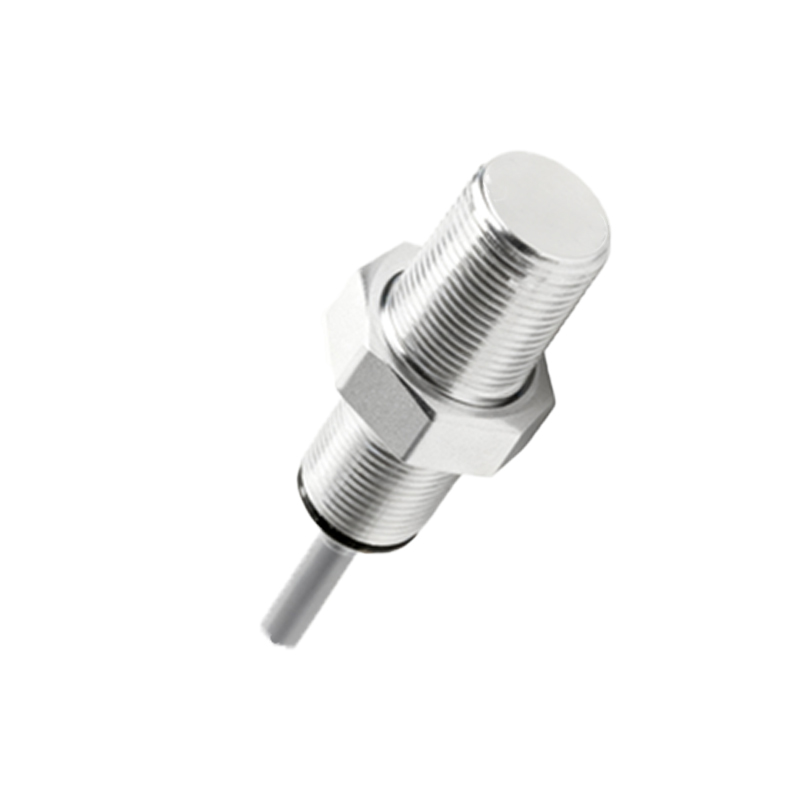
Key specifications define the HC-501's utility. It commonly operates at a voltage range of 3.3V to 5V DC, making it compatible with most standard electronic systems. The detection distance is adjustable, usually from a few centimeters up to approximately 30 cm, via a potentiometer on the module. Its output is TTL-compatible, and it features a response time fast enough for real-time applications such as obstacle avoidance or object counting. The sensor module often includes a built-in ambient light filter to reduce interference from natural or artificial light sources, enhancing stability in varying lighting conditions.
Integrating the HC-501 into a circuit is typically straightforward. The module has three pins: VCC, GND, and OUT. Connecting VCC and GND to a power supply provides operating voltage, while the OUT pin links to a microcontroller's digital input pin. Many users add a pull-up resistor on the output line to ensure a clean signal, though some modules incorporate this internally. In programming, one simply reads the digital state: a LOW signal indicates detection, triggering actions like stopping a motor, activating an alarm, or incrementing a counter. For instance, in a robotic vehicle, the HC-501 can serve as a front-facing sensor to prevent collisions by signaling the control system to alter direction upon detecting obstacles.
Practical applications of the HC-501 are extensive. In industrial automation, it is employed for object detection on conveyor belts, ensuring items are properly positioned for processing. In robotics, it facilitates basic obstacle avoidance and line-following when combined with other sensors. Security systems use it for intrusion detection—placing sensors near windows or doors to trigger alerts when movement is sensed. Additionally, it finds use in home appliances like automatic soap dispensers or hand dryers, where non-contact activation is desired for hygiene and convenience. Its low cost and ease of use also make it popular in educational projects, helping students grasp fundamental concepts of sensing and embedded systems.
However, engineers must consider its limitations. The HC-501 is sensitive to the reflectivity and color of objects; dark or non-reflective materials may reduce detection range. Environmental factors like direct sunlight or strong IR interference can affect accuracy. For critical applications, calibration and testing under actual conditions are advisable. Alternatives like ultrasonic sensors or laser distance sensors offer greater precision or longer range but at higher cost and complexity. Thus, the HC-501 remains an optimal choice for moderate-range, budget-conscious projects where simplicity and reliability are paramount.
In summary, the HC-501 infrared proximity sensor exemplifies effective design for proximity sensing. Its blend of affordability, ease of integration, and robust performance ensures its continued relevance in both professional and hobbyist sectors. By understanding its workings and applications, engineers can leverage this versatile tool to enhance automation, safety, and innovation across various fields.