Inductive proximity sensors are pivotal components in modern industrial automation, particularly within power supply systems where reliability and precision are non-negotiable. These non-contact sensors detect metallic objects by generating an electromagnetic field, making them ideal for harsh environments where dust, moisture, or mechanical wear could compromise traditional switches. In power applications, they ensure seamless operations by monitoring the presence of components like circuit breakers, busbars, or conductive parts in transformers and switchgear.
The core principle relies on an oscillator circuit that creates a high-frequency magnetic field around the sensor’s active face. When a metallic target enters this field, eddy currents are induced, causing a change in oscillation amplitude. This shift triggers a solid-state output signal—typically in NPN or PNP configurations—which interfaces with control systems to initiate actions such as shutting down machinery or alerting operators. Unlike capacitive or photoelectric sensors, inductive variants excel in detecting ferrous and non-ferrous metals without being affected by non-metallic obstructions, ensuring minimal false triggers in electrically noisy power environments.
Key specifications include sensing range, which varies from a few millimeters to several centimeters, and frequency response, critical for high-speed applications like conveyor systems in power plants. Shielded designs offer flush mounting capabilities, preventing interference from adjacent metal, while unshielded types provide extended ranges. In power supply contexts, these sensors contribute to safety by verifying proper connections in electrical cabinets or detecting overheating via metallic expansion. They also enhance efficiency by enabling predictive maintenance; for instance, monitoring wear on generator components to prevent unexpected downtime.
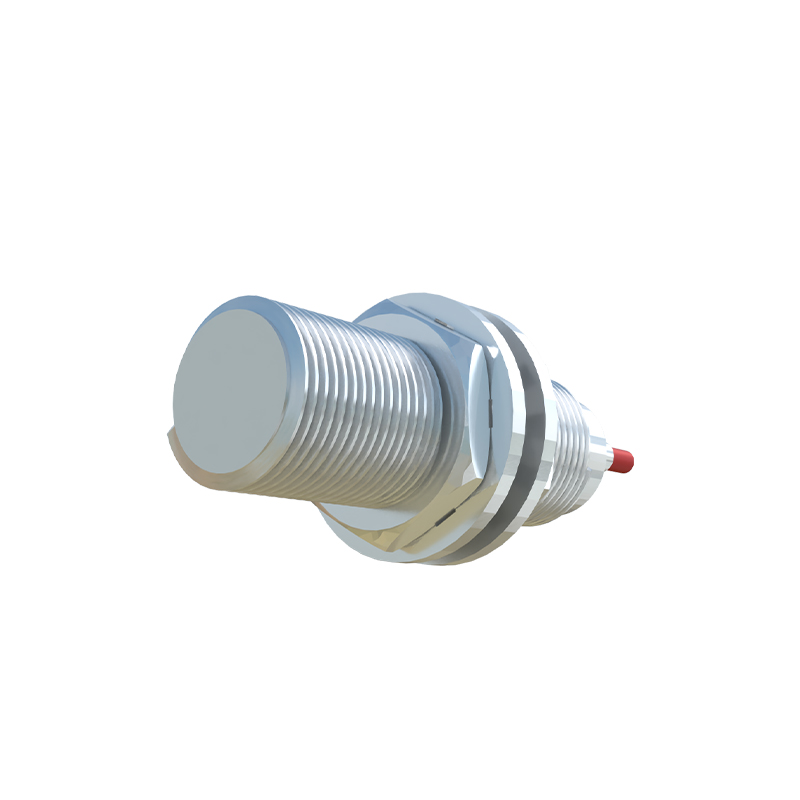
Installation considerations emphasize alignment and environmental factors. Sensors must be positioned to avoid mutual interference in dense arrays, and materials like stainless steel housings are preferred for corrosive settings. Advanced models incorporate IO-Link communication for real-time diagnostics, allowing engineers to monitor parameters like temperature drift or output current, aligning with Industry 4.0 trends. As renewable energy systems expand, inductive sensors adapt to roles in solar panel positioning or wind turbine blade detection, underscoring their versatility. Ultimately, their robustness and low maintenance make them indispensable for ensuring uninterrupted power flow, from grid distribution to consumer electronics manufacturing.