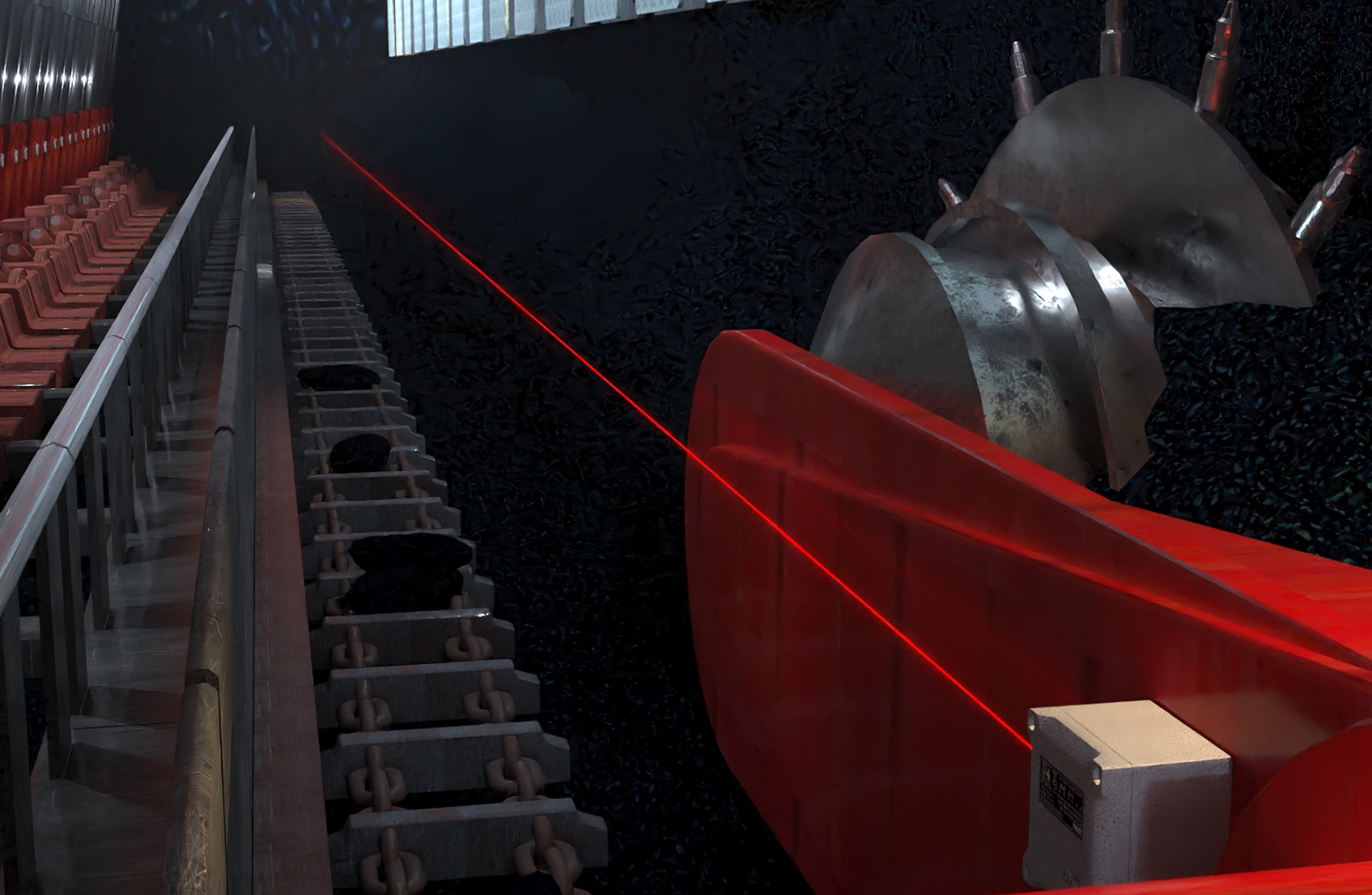
In the realm of industrial automation, precision and reliability are paramount. Among the myriad of technologies driving this sector forward, laser detection sensors have emerged as a cornerstone for accurate counting applications. These sophisticated devices utilize focused laser beams to detect, measure, and count objects with exceptional speed and accuracy, transforming operations across manufacturing, packaging, logistics, and beyond.
At its core, a laser detection sensor operates by emitting a concentrated beam of light toward a target. When this beam intersects with an object, it is reflected back to the sensor's receiver. The sensor then analyzes the reflected light—considering factors such as intensity, time-of-flight, or triangulation—to determine the object's presence, position, or characteristics. For counting tasks, this process is repeated at high frequencies, enabling real-time monitoring of items on conveyor belts, assembly lines, or sorting systems. Unlike traditional mechanical or photoelectric sensors, laser sensors offer superior performance in challenging environments. Their narrow, coherent light beams minimize interference from ambient light, dust, or vibrations, ensuring consistent readings even in harsh industrial settings.
The applications of laser detection sensors in counting are vast and varied. In manufacturing, they are employed to count components during production, verifying that each product contains the correct number of parts. This not only enhances quality control but also reduces waste and operational costs. In packaging lines, these sensors accurately tally items as they are boxed or palletized, preventing overfills or shortages that could lead to customer dissatisfaction. Logistics and warehousing benefit immensely as well; laser sensors facilitate inventory management by counting parcels on conveyors, tracking stock levels, and automating order fulfillment processes. Moreover, in the automotive and electronics industries, where miniaturization is prevalent, the high resolution of laser sensors allows for counting tiny, intricate components that would be indiscernible to other sensor types.
One of the key advantages of laser detection sensors is their versatility in configuration. They can be set up for through-beam, retro-reflective, or diffuse reflection modes, depending on the specific counting requirement. Through-beam sensors, with separate emitter and receiver units, are ideal for long-range counting with high precision. Retro-reflective models use a reflector to bounce the beam back, suitable for medium distances. Diffuse reflection sensors, which rely on the object itself to reflect light, offer flexibility for close-range applications where installing multiple components is impractical. Additionally, advanced models incorporate features like background suppression, which ignores objects beyond a set distance, and programmable logic for custom counting sequences. This adaptability makes laser sensors a fit for diverse operational scales, from small workshops to large-scale industrial plants.

However, implementing laser detection sensors is not without considerations. Proper installation is crucial to avoid misalignment, which can lead to counting errors. Environmental factors such as extreme temperatures, humidity, or highly reflective surfaces may also impact performance, though many industrial-grade sensors are designed to withstand such conditions. Regular maintenance, including lens cleaning and calibration checks, ensures longevity and accuracy. Furthermore, integrating these sensors with broader automation systems—like PLCs (Programmable Logic Controllers) or SCADA (Supervisory Control and Data Acquisition) systems—requires expertise to optimize data flow and enable seamless counting analytics.
Looking ahead, the evolution of laser detection technology continues to push boundaries. Innovations in smart sensors with IoT connectivity allow for predictive maintenance and remote monitoring, reducing downtime. Enhanced algorithms enable more sophisticated counting of irregularly shaped or overlapping items, expanding applications in industries like agriculture for produce counting or recycling for material sorting. As industries increasingly embrace Industry 4.0 principles, the role of laser detection sensors in enabling precise, data-driven counting will only grow more integral.
In conclusion, laser detection sensors represent a transformative tool for counting in industrial automation. Their accuracy, speed, and resilience make them indispensable for modern operations, driving efficiency and quality. By understanding their principles, applications, and best practices, engineers and technicians can leverage these sensors to optimize processes, reduce errors, and pave the way for smarter, more automated industrial environments. As technology advances, we can expect laser sensors to become even more embedded in the fabric of automation, counting not just objects, but also contributing to the broader narrative of industrial innovation.