In the realm of industrial automation, proximity sensors are indispensable components for detecting the presence or absence of objects without physical contact. A critical aspect of their integration and functionality is the interface—the point of connection between the sensor and the control system. This article delves into the common interface types for proximity sensors, explaining their characteristics, typical applications, and selection considerations.
The interface of a proximity sensor fundamentally defines how it communicates its output signal to a Programmable Logic Controller (PLC), relay, or other control devices. The choice of interface is paramount, as it determines compatibility, wiring complexity, performance, and overall system reliability. The primary interface categories are based on the sensor's output configuration and electrical characteristics.
1. Discrete (Digital) Output Interfaces
This is the most prevalent type. The sensor provides a simple ON/OFF signal, indicating whether a target is within its sensing range.
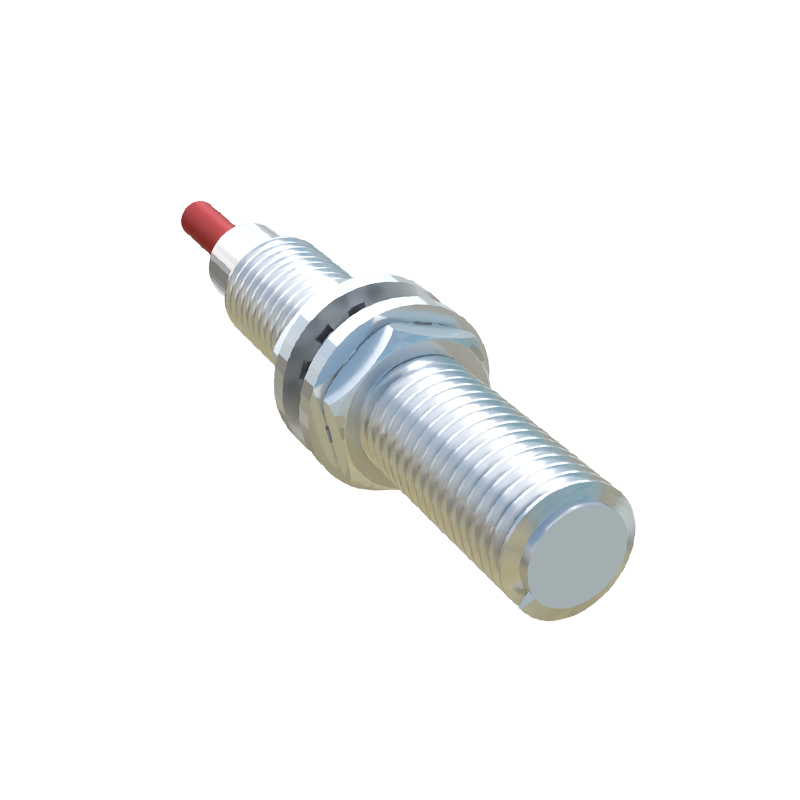
PNP (Sourcing): In a PNP configuration, the output wire acts as a positive voltage source. When the sensor is activated (target detected), it switches the output to connect to the positive supply voltage (+V). This type is commonly used in Europe and with many PLCs that have sinking input modules.
NPN (Sinking): In an NPN configuration, the output wire acts as a path to ground (0V). When activated, the sensor switches the output to connect to the ground. This interface is often found in Asian markets and is compatible with PLCs having sourcing input modules.
Push-Pull (Complementary): This advanced output combines both PNP and NPN transistors in a single circuit. It can source current (like PNP) and sink current (like NPN), offering greater flexibility and compatibility with a wider range of control inputs without concern for polarity mismatch. It is highly resistant to electrical noise and short-circuit conditions.
2. Analog Output Interfaces
For applications requiring more than mere detection—such as measuring distance or monitoring a continuous process variable—analog output sensors are employed. They provide a continuously variable signal proportional to the distance to the target.
Voltage Output (e.g., 0-10V): The output voltage changes linearly with the sensing distance. This interface is straightforward but can be susceptible to voltage drops over long cable runs.
Current Output (e.g., 4-20 mA): This is the industry standard for robust analog signaling. The 4-20 mA current loop is highly resistant to electrical noise and signal degradation over long distances. The "live zero" (4 mA) also allows the control system to distinguish between a valid low signal and a broken wire (0 mA).
3. IO-Link (Point-to-Point Serial Communication)
Representing the shift towards Industry 4.0 and smart sensors, IO-Link is a standardized, vendor-independent serial communication protocol (IEC 61131-9). It operates over a standard 3-wire sensor cable (24V, 0V, and Signal), replacing the traditional digital switching signal with a bi-directional data stream.
Capabilities: Beyond simple switching, an IO-Link proximity sensor can transmit detailed device parameters (e.g., model, serial number), real-time process data (e.g., exact distance, internal temperature), and diagnostic information (e.g., switch cycle count, contamination warnings). Parameters can also be downloaded to the sensor remotely, enabling easy device replacement and advanced condition monitoring.
4. Specialized and Network Interfaces
For complex systems, sensors may interface via dedicated fieldbus or industrial Ethernet protocols.
PROFIBUS, DeviceNet, etc.: Sensors with built-in bus interfaces can be connected directly to a network, reducing wiring and enabling centralized data acquisition. These are often used in highly distributed or large-scale installations.
AS-Interface (AS-i): A simple and cost-effective network specifically designed for connecting binary actuators and sensors like proximity switches using a flat 2-wire cable that carries both power and data.
Selection Criteria for the Right Interface
Choosing the correct interface requires a systematic analysis:
Control System Input: The foremost factor. Match the sensor's output type (PNP/NPN, voltage/current) to the input specifications of the PLC, counter, or relay module.
Application Requirement: Is simple detection sufficient, or is analog distance measurement needed? Is remote configuration and data access (IO-Link) valuable for maintenance and optimization?
Noise Immunity: In electrically noisy environments (e.g., near motors, welders), current loops (4-20mA) or IO-Link offer superior noise immunity compared to simple voltage signals.
Wiring and Installation: Consider cable length, the number of wires, and the ease of