In the realm of industrial automation and smart building management, the reliable detection of human presence is paramount for safety, energy efficiency, and process control. Among the plethora of sensing technologies available, the infrared (IR) sensor-based human proximity switch stands out for its non-contact operation, versatility, and cost-effectiveness. This article delves into the operational principles, key characteristics, diverse applications, and critical selection criteria for these essential components.
At its core, an infrared proximity switch designed for human detection operates on the principle of passive infrared (PIR) sensing. All objects with a temperature above absolute zero emit infrared radiation. The human body, with its typical surface temperature, emits IR radiation with a peak wavelength around 9-10 micrometers. A PIR sensor is specifically tuned to detect changes in this mid-infrared wavelength range. The sensor element is typically made of a pyroelectric material, such as gallium nitride or cesium nitrate, which generates a temporary electrical voltage when exposed to changing levels of IR radiation. Crucially, a PIR sensor does not detect static heat; it only triggers when it senses a change in the infrared radiation pattern within its field of view. This is achieved through a Fresnel lens array mounted in front of the sensor. This lens divides the detection area into multiple zones. When a warm body, like a person, moves from one zone to another, it causes a sequential change in the IR signal, which the sensor interprets as motion.
The performance of an IR human proximity switch is defined by several key parameters. Detection range varies significantly, from short-range switches covering 1-5 meters for indoor applications to long-range models capable of sensing movement up to 20 meters or more. The field of view, often expressed in degrees, determines the coverage area—wide-angle lenses (e.g., 110°) are common for room coverage, while curtain or long-range lenses offer narrower, more directed beams. Response time is critical for safety applications, with modern switches achieving reaction times well under 100 milliseconds. Environmental robustness is another vital consideration. High-quality switches feature housings with an IP (Ingress Protection) rating, such as IP65 or IP67, ensuring resistance to dust and water jets. They must also be designed to operate reliably across a wide temperature range, typically from -20°C to +50°C or beyond, and to reject false triggers from common sources like ambient temperature shifts, sunlight, or HVAC drafts through advanced signal processing algorithms.
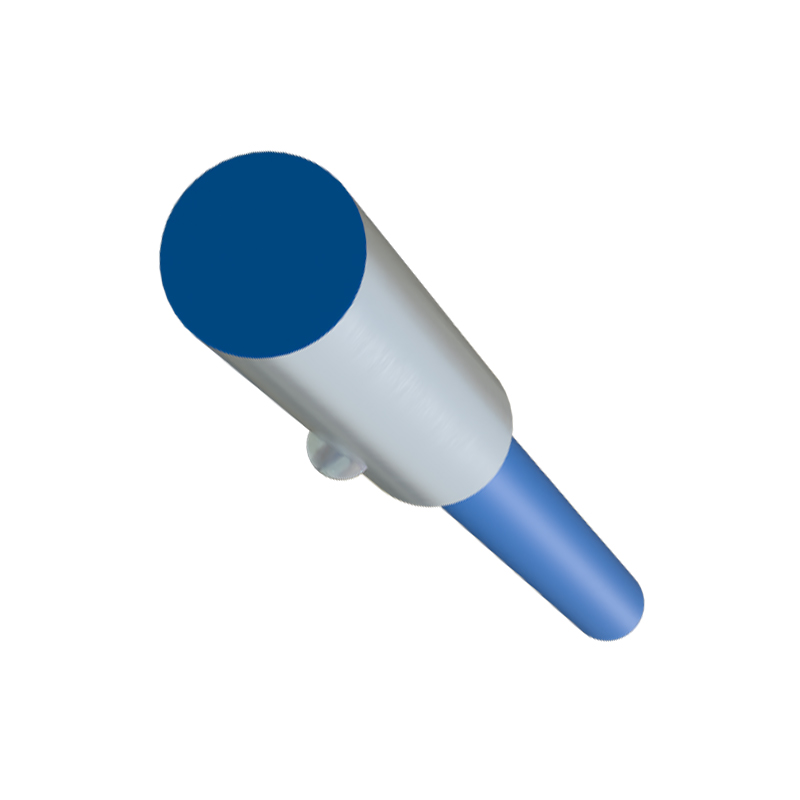
The applications for IR human proximity switches are extensive and cross-industry. In industrial automation, they are indispensable for personnel safety, acting as presence-sensing devices for initiating emergency stops on machinery, safeguarding hazardous areas, or controlling access to robotic cells. In the realm of building automation, they are the backbone of energy-saving systems, automatically controlling lighting, HVAC, and escalators based on occupancy, leading to substantial reductions in energy consumption. Security systems utilize them for intrusion detection in conjunction with other sensors. Furthermore, they enable touchless control in public amenities—automatically flushing toilets, activating faucets, opening doors, or dispensing soap and paper towels, promoting hygiene and convenience.
Selecting the right IR proximity switch requires a careful analysis of the application's needs. First, define the primary objective: Is it for safety, energy management, or convenience? For safety, prioritize switches with high reliability, fast response, and appropriate safety certifications (e.g., SIL, PL). For energy management in offices, a switch with a wide coverage pattern and adjustable time delay is ideal. The installation environment dictates the required ingress protection and operating temperature range. Consider potential sources of interference: Will the switch be exposed to direct sunlight, hot machinery, or strong air currents? Models with dual-element sensors and digital filtering offer better immunity. Finally, evaluate the output signal type—common options include relay (dry contact), transistor (NPN/PNP), or analog (0-10V/4-20mA)—to ensure compatibility with the existing control system, such as a PLC (Programmable Logic Controller) or building management system.
In conclusion, infrared sensor-based human proximity switches are sophisticated, reliable, and indispensable tools in modern electrical and automation engineering. Their ability to provide non-contact, presence-based control drives advancements in safety, efficiency, and user experience across countless sectors. A thorough understanding of their technology and a methodical approach to selection are key to leveraging their full potential in any automated system, ensuring optimal performance, longevity, and return on investment.