In the realm of industrial automation and precision measurement, laser scanning sensors have become indispensable tools. Among their critical specifications, the sensor diameter plays a pivotal role in determining performance, integration feasibility, and application suitability. This article delves into the technical aspects, implications, and selection criteria surrounding the diameter of laser scanner sensors.
The diameter of a laser scanner sensor primarily refers to the physical size of its housing or the aperture from which the laser beam is emitted. This dimension is not merely a mechanical attribute; it directly influences the sensor's optical characteristics. A larger diameter often accommodates a more substantial lens system, which can enhance light collection efficiency, improve signal-to-noise ratio, and potentially allow for a longer working range or higher resolution. Conversely, a compact sensor with a smaller diameter is crucial for installations in space-constrained environments, such as inside robotic grippers, on small mobile platforms, or within intricate machinery.
From an optical physics perspective, the exit aperture diameter is intrinsically linked to the beam's divergence and spot size. According to Gaussian beam optics, for a given wavelength, a larger emitting aperture can support a more collimated beam with lower divergence. This results in a smaller spot size over longer distances, enhancing measurement accuracy for applications like profile scanning, edge detection, or dimensional gauging. However, achieving this often requires a more complex and costly lens assembly. Engineers must balance the need for a tight, precise beam against the physical and economic constraints of their system.
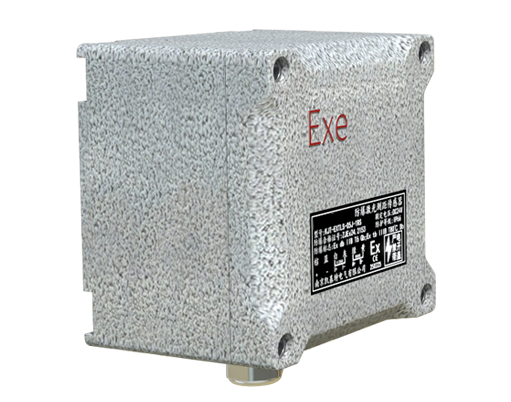
Application context dictates the importance of sensor diameter. In logistics and warehousing, for instance, large-diameter sensors mounted on gantries are used for volumetric scanning of parcels. Their size supports powerful lasers that can accurately measure over large conveyor belts. In contrast, the automotive assembly line employs numerous smaller-diameter sensors for tasks like weld seam tracking or gap measurement between body panels, where minimal intrusion is paramount. Similarly, in electronics manufacturing, ultra-compact sensors are integrated into pick-and-place machines for component verification.
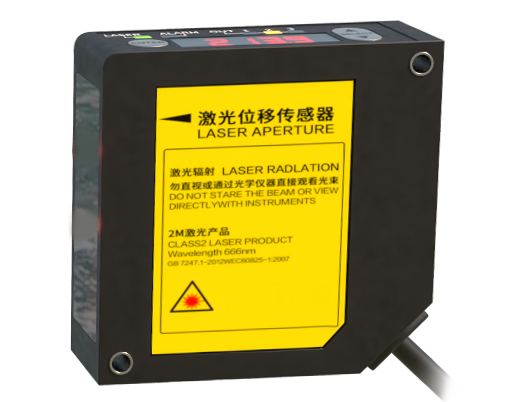
Integration and mounting present another set of considerations. The sensor diameter affects the choice of mounting brackets, vibration resistance, and heat dissipation. A larger, heavier sensor may require more robust mounting and could be more susceptible to vibration-induced errors if not properly secured. Thermal management is also a factor; a larger housing can sometimes offer better heat sinking for the laser diode and processing electronics, contributing to long-term stability and reduced thermal drift in measurements.
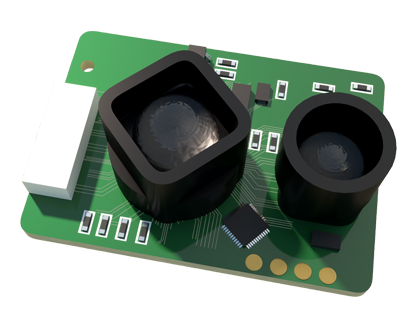
When selecting a laser scanner sensor, diameter should be evaluated alongside other key parameters like scanning angle, measurement rate, accuracy, and environmental ratings (IP class). It is a compromise between optical performance, spatial constraints, and system durability. A common mistake is to prioritize an excessively small size at the cost of inadequate measurement performance or to choose an overly large sensor that complicates mechanical design.
Future trends indicate a push towards miniaturization without sacrificing power or accuracy. Advances in laser diode technology, micro-optics, and integrated circuit design are enabling sensors with smaller diameters to deliver performance once reserved for larger units. This evolution will further expand their application into new domains like micro-robotics and wearable scanning devices.
In conclusion, the diameter of a laser scanner sensor is a fundamental specification that intersects mechanical design, optical performance, and practical application needs. A thorough understanding of its implications enables engineers and system integrators to make informed decisions, optimizing their automated systems for reliability, precision, and efficiency.