In the intricate world of industrial automation, where precision and reliability are paramount, capacitive proximity sensors stand as critical, yet often overlooked, components. Unlike their more common inductive counterparts, these sensors operate on a fundamental principle: the detection of changes in capacitance. At its core, a capacitive sensor generates an electrostatic field. When any object—be it metal, plastic, wood, glass, or even a liquid or granular material—enters this field, it alters the dielectric constant and thus the capacitance of the system. The sensor's internal oscillator detects this change, triggering an output signal to indicate the object's presence. This unique capability to detect non-metallic materials is what sets capacitive sensors apart and grants them a versatile role across countless applications.
The operational mechanism is elegantly simple but highly effective. A typical sensor consists of an electrode (the sensing face), an oscillator circuit, a signal evaluator, and an output switch. The electrode and the target act as two plates of a capacitor, with the air gap serving as the dielectric. As the target approaches, the effective capacitance increases. Once it reaches a predefined threshold, the circuit activates. Modern sensors feature adjustable sensitivity potentiometers, allowing engineers to fine-tune the detection range and ignore background interference, such as container walls or conveyor belts. This adjustability is crucial for handling diverse materials with different dielectric constants.
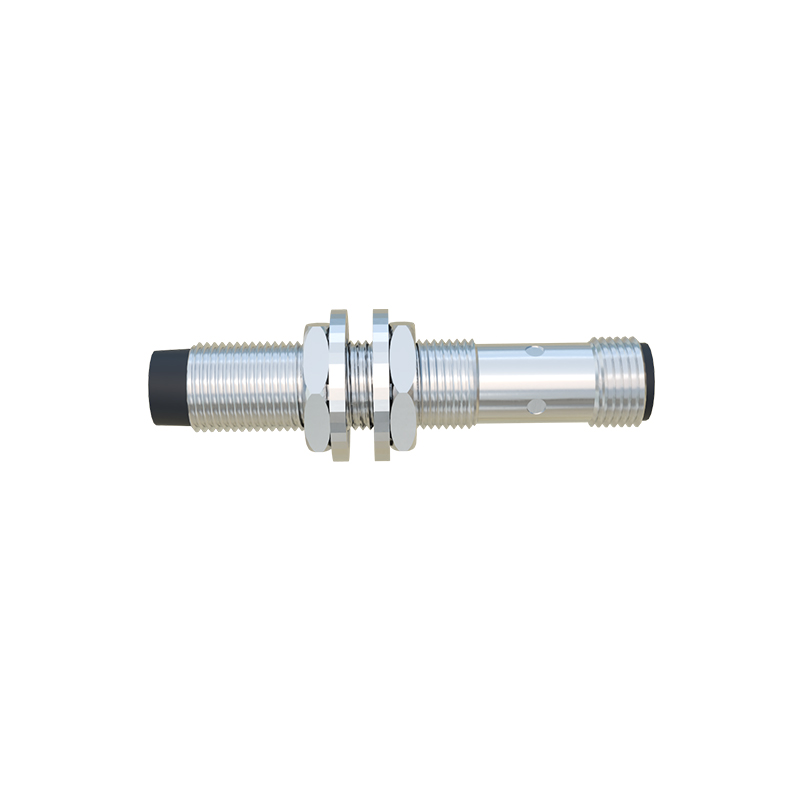
The applications of capacitive proximity switches are vast and integral to modern manufacturing and processing. In the packaging industry, they reliably detect the presence of plastic bottles, cardboard boxes, or foil wrappers on high-speed lines, ensuring proper filling and labeling. Within the food and beverage sector, they monitor levels of liquids, powders, or grains inside non-metallic tanks, preventing overflows or shortages. In woodworking and plastics fabrication, they control the positioning of materials without physical contact, eliminating marks and wear. Furthermore, they are indispensable in assembly automation for verifying the presence of rubber gaskets, ceramic components, or adhesive labels—tasks where inductive sensors would fail. Their hermetic sealing also makes them suitable for washdown environments in pharmaceutical or dairy plants.
Selecting the right capacitive sensor requires careful consideration of several parameters. The sensing distance, typically ranging from a few millimeters to about 25 millimeters, must be chosen with the application's mechanical constraints in mind. The target material's dielectric constant directly influences the effective sensing range; materials with higher constants (like water) are detected more easily than those with lower ones (like certain plastics). Environmental factors such as temperature fluctuations, humidity, dust, and the presence of aggressive chemicals dictate the required housing material (often PBT or stainless steel) and ingress protection (IP) rating. Output types—PNP, NPN, analog, or IO-Link—must be compatible with the control system, such as a PLC.
The advantages of implementing capacitive proximity sensors are compelling. Their non-contact nature ensures zero mechanical wear on both the sensor and the target, leading to exceptional long-term reliability and reduced maintenance. They offer high switching frequencies, capable of detecting objects on rapidly moving production lines. Their ability to sense through non-metallic barriers allows for innovative mounting solutions, protecting the sensor from harsh process conditions. When compared to optical sensors, they are generally less susceptible to interference from ambient light, dust, or color variations of the target object.
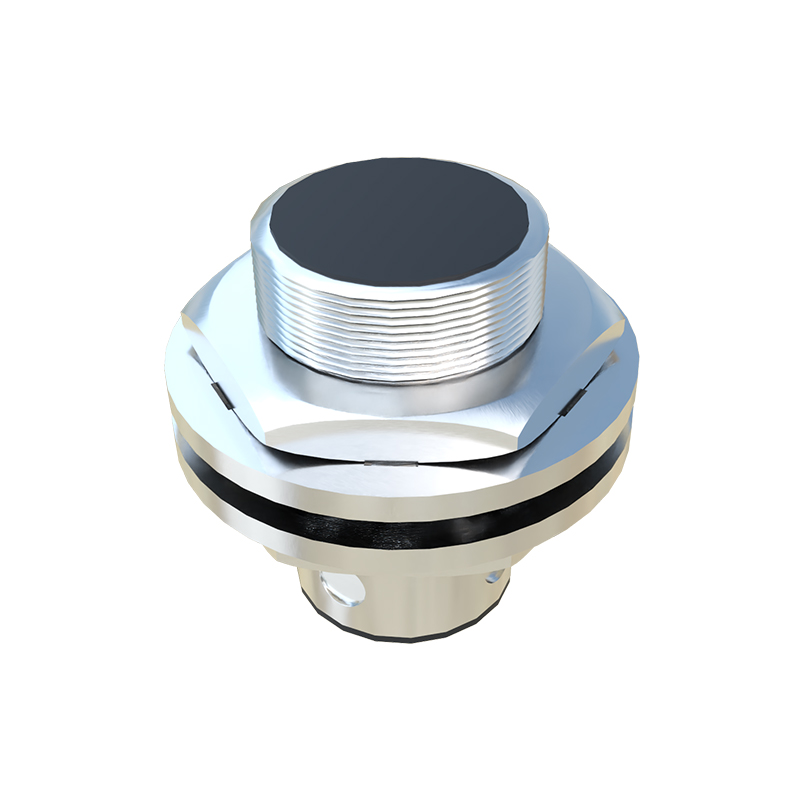
However, engineers must also be mindful of their limitations. The sensing range is generally shorter than that of ultrasonic sensors. Highly conductive materials or very humid environments can sometimes cause false triggers if the sensitivity is not correctly calibrated. Therefore, proper installation is key: maintaining a sufficient clearance from metal backplanes (to prevent shielding effects) and conducting thorough on-site tuning during commissioning are standard best practices.
Looking ahead, the evolution of capacitive sensing technology continues. Miniaturization allows for sensors to fit into increasingly compact machinery. The integration of smart features, such as IO-Link communication, enables remote parameter setting, condition monitoring, and diagnostic data exchange, paving the way for predictive maintenance and enhanced integration into Industry 4.0 frameworks. These advancements ensure that the capacitive proximity switch will remain a fundamental building block in the smart factories of the future.
In conclusion, capacitive proximity sensors are far more than simple on/off switches. They are sophisticated devices that solve complex detection challenges involving diverse materials. Their robustness, versatility, and evolving intelligence make them indispensable for ensuring efficiency, quality, and safety in automated industrial processes. For any engineer designing a system where non-metallic object detection is required, understanding and leveraging the capabilities of capacitive sensing is not just an option—it is a necessity for optimal system performance.