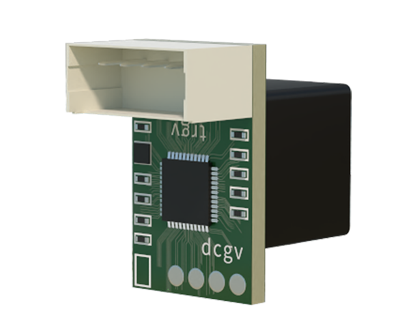
In the realm of industrial automation and precision measurement, laser sensors have emerged as indispensable tools. Their ability to provide non-contact, high-speed, and exceptionally accurate measurements makes them a cornerstone technology across diverse sectors, from manufacturing and robotics to aerospace and consumer electronics. This article delves into the fundamental principles, key applications, and critical factors for selecting the right laser sensor for your specific needs.
At its core, a laser sensor operates by emitting a focused beam of coherent light—a laser—towards a target object. The sensor then detects the interaction of this beam with the target. The specific measurement principle defines the primary categories of laser sensors. The most common types include triangulation sensors, time-of-flight (ToF) sensors, and confocal displacement sensors.
Triangulation sensors are widely used for high-precision distance and displacement measurements at short to medium ranges. The sensor projects a laser spot onto the target surface. A receiving lens, positioned at a known angle to the emitter, captures the reflected light. The position of the reflected spot on a light-sensitive detector (like a CCD or PSD array) shifts as the target distance changes. Using trigonometric calculations, the sensor's processor determines the exact distance with micron-level resolution. This principle is ideal for tasks such as profiling, thickness gauging, and vibration analysis.
Time-of-Flight (ToF) sensors, in contrast, measure the time it takes for a laser pulse to travel to the target and back. By knowing the speed of light, the sensor calculates the distance. While typically offering slightly lower resolution than triangulation sensors at close range, ToF sensors excel at measuring longer distances, often up to several hundred meters. They are commonly found in applications like vehicle LiDAR, bulk level monitoring in silos, and large-scale dimensioning.

Confocal chromatic sensors represent the pinnacle of precision for displacement measurement on challenging surfaces, including transparent, reflective, or multi-layered materials. They use white light, where each wavelength is focused at a different distance. By analyzing the color of the light reflected back through a confocal aperture, the sensor can pinpoint the exact distance to the surface with nanometer resolution, effectively ignoring reflections from other layers.
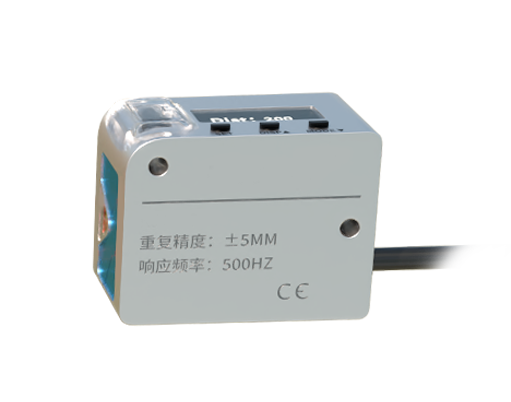
The applications of laser sensors are vast and transformative. In automotive assembly, they ensure precise gap and flush measurement between body panels. In electronics manufacturing, they verify component placement on PCBs and measure solder paste height. In logistics, they facilitate dimensioning for packages to optimize storage and shipping costs. Robotics heavily relies on laser sensors for guidance, obstacle avoidance, and precise positioning of robotic arms. Furthermore, in quality control, they perform 100% inline inspection for defects, warpage, or dimensional tolerances, significantly reducing waste and improving product consistency.
Selecting the appropriate laser sensor requires a careful analysis of several parameters. First, define the measurement range and the required resolution or repeatability. A sensor with sub-micron resolution is unnecessary for meter-level bin filling, just as a long-range ToF sensor is unsuitable for measuring PCB warpage. Second, consider the target surface properties. Glossy, dark, or transparent materials can pose challenges for standard sensors, potentially necessitating a confocal model or specific sensor settings. Third, the environmental conditions are crucial. Factors like ambient light, dust, moisture, and temperature fluctuations can affect performance, so look for sensors with adequate ingress protection (IP) ratings and robust housing. Fourth, evaluate the required output and interface. Common outputs include analog (4-20 mA, 0-10 V), digital (RS-232, RS-485), and industrial Ethernet protocols (EtherCAT, PROFINET, Ethernet/IP) for seamless integration into a control system. Finally, consider the response speed or sampling rate, which must be high enough to capture fast-moving objects or rapid processes.
In conclusion, laser sensors are powerful enablers of automation, quality, and efficiency. Understanding the underlying technology—from triangulation and time-of-flight to confocal principles—is the first step toward leveraging their capabilities. By meticulously matching sensor specifications to the application's demands for range, precision, target material, and environment, engineers can implement reliable and high-performance measurement solutions that drive innovation and operational excellence in the modern industrial landscape.