In the realm of industrial automation and control systems, photoelectric proximity sensors are indispensable components for detecting the presence, absence, or position of objects without physical contact. Among the various configurations available, the three-wire photoelectric proximity sensor stands out for its reliability, ease of integration, and widespread adoption in diverse applications. This article delves into the operational principles, wiring configurations, advantages, and typical use cases of three-wire photoelectric proximity sensors, providing a comprehensive guide for engineers and technicians.
Photoelectric proximity sensors operate by emitting a beam of light—typically infrared, visible red, or laser—and detecting changes in the received light signal. The three-wire variant is designed to interface seamlessly with programmable logic controllers (PLCs) and other control devices, offering a straightforward connection scheme. The three wires generally consist of a positive supply voltage wire (often brown or red), a negative or ground wire (blue or black), and a signal output wire (black, white, or another color depending on the manufacturer). This configuration allows the sensor to provide a discrete digital signal—either normally open (NO) or normally closed (NC)—indicating the detection state.
The wiring of a three-wire photoelectric proximity sensor is critical for proper functionality. Typically, the sensor requires a DC power supply, commonly 12-24 VDC, though some models support wider voltage ranges. The positive wire connects to the positive terminal of the power source, while the negative wire links to the ground. The output wire is then connected to the input module of a PLC or relay, completing the circuit. This setup enables the sensor to switch the output signal based on the detected object, facilitating real-time control in automated processes. One key advantage of the three-wire design over two-wire sensors is the separation of power and signal lines, which reduces leakage current and enhances signal integrity, making it suitable for precise applications.
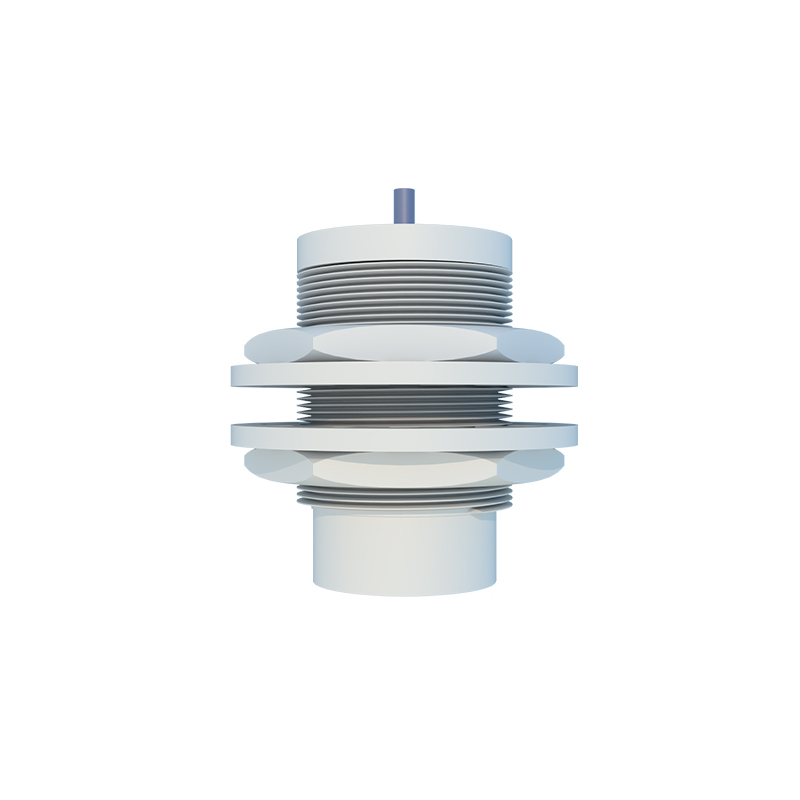
Three-wire photoelectric proximity sensors are available in various sensing modes, including through-beam, retro-reflective, and diffuse reflective. Through-beam sensors consist of separate emitter and receiver units, offering long sensing ranges and high accuracy. Retro-reflective sensors use a reflector to bounce light back to the receiver, ideal for detecting objects at moderate distances. Diffuse reflective sensors have the emitter and receiver in a single housing, relying on light reflection from the target object itself, making them versatile for close-range detection. The choice of mode depends on factors such as sensing distance, object material, and environmental conditions.
The benefits of using three-wire photoelectric proximity sensors are manifold. They provide fast response times, often in the millisecond range, which is crucial for high-speed automation lines. Their non-contact nature minimizes wear and tear, ensuring long service life and reduced maintenance. Additionally, these sensors are highly immune to electrical noise, thanks to shielded wiring and robust construction, making them reliable in harsh industrial environments with electromagnetic interference. Many models also feature adjustable sensitivity, time delays, and output configurations, allowing customization for specific tasks.
Common applications of three-wire photoelectric proximity sensors span across industries. In manufacturing, they are used for object counting, part positioning, and conveyor belt monitoring. In packaging, they ensure proper filling levels and label detection. Automotive assembly lines employ them for robotic guidance and safety interlocks. Food and beverage industries utilize them for bottle cap inspection and liquid level sensing. Their versatility extends to logistics, where they aid in sorting systems and warehouse automation. When selecting a sensor, engineers must consider parameters like sensing range, light source type, environmental ratings (e.g., IP67 for dust and water resistance), and output compatibility.
Installation and maintenance tips include ensuring proper alignment of the sensor and target, avoiding obstructions in the light path, and protecting the lens from dirt or debris. Regular calibration checks can prevent false triggers. It is also advisable to refer to the manufacturer’s datasheet for specific wiring diagrams and operational guidelines. As technology advances, three-wire photoelectric proximity sensors continue to evolve, with innovations like background suppression for improved detection of contrasting objects and IO-Link connectivity for smart factory integration.
In summary, three-wire photoelectric proximity sensors are vital tools in modern automation, offering precision, durability, and flexibility. By understanding their wiring, modes, and applications, professionals can optimize system performance and enhance operational efficiency. Whether in simple detection tasks or complex robotic systems, these sensors provide a reliable solution for non-contact sensing needs.