In the realm of industrial automation and control systems, proximity sensors play a pivotal role in detecting the presence or absence of objects without physical contact. Among the various types available, the four-wire proximity sensor stands out for its versatility and reliability. This article delves into the working principles, configurations, advantages, and typical applications of four-wire proximity sensors, providing engineers and technicians with essential insights for effective implementation.
A four-wire proximity sensor typically consists of two wires for power supply and two for the output signal. Unlike two-wire sensors that combine power and signal in a single loop, or three-wire sensors that separate power and signal but share a common ground, the four-wire design offers distinct benefits. The power wires connect to a DC voltage source, commonly 12V or 24V, ensuring stable operation. The output wires provide a switched signal, which can be either normally open (NO) or normally closed (NC), allowing flexibility in control logic. This separation minimizes interference and enhances signal integrity, making four-wire sensors suitable for precision applications.
The core technology behind these sensors often involves inductive, capacitive, or magnetic sensing principles. Inductive sensors are widely used for detecting metallic objects, utilizing an electromagnetic field to sense changes when a target enters the sensing range. Capacitive sensors can detect both metallic and non-metallic materials by measuring changes in capacitance. Magnetic sensors, such as Hall effect or reed switch types, respond to magnetic fields. Four-wire configurations are compatible with all these technologies, offering robust performance in diverse environments.
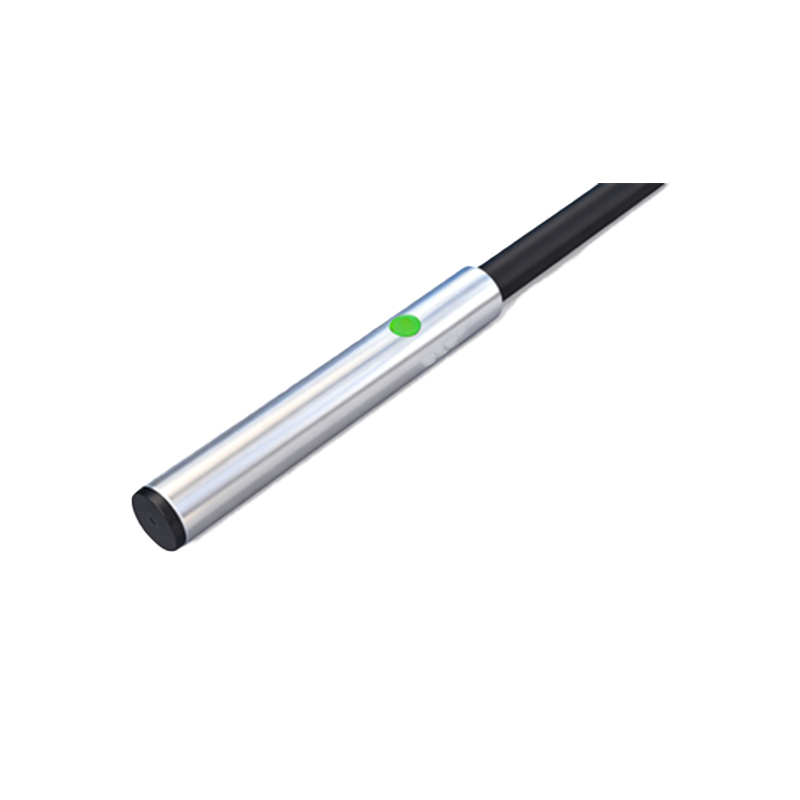
One key advantage of four-wire proximity sensors is their ability to provide both sourcing (PNP) and sinking (NPN) output options. In a PNP configuration, the output wire supplies positive voltage when activated, ideal for interfacing with programmable logic controllers (PLCs) that require a voltage input. In an NPN setup, the output sinks current to ground, commonly used in systems where low-side switching is preferred. This dual capability allows engineers to select the appropriate type based on the control circuitry, reducing compatibility issues and simplifying installation.
Moreover, four-wire sensors often feature enhanced diagnostics and protection mechanisms. They may include short-circuit protection, reverse polarity protection, and LED indicators for status monitoring. These features contribute to higher reliability and easier maintenance in industrial settings, where downtime can be costly. The separate power and signal wires also enable easier troubleshooting, as issues can be isolated to either the supply or output side without disrupting the entire system.
In terms of applications, four-wire proximity sensors are prevalent in manufacturing, packaging, material handling, and automotive industries. They are used for position sensing, object counting, limit switching, and safety interlocks. For instance, in conveyor systems, these sensors detect items on the belt, triggering actions like sorting or stopping. In robotic arms, they ensure precise movement by confirming the presence of components. Their robust construction, often rated IP67 or higher for dust and water resistance, makes them suitable for harsh conditions.
When selecting a four-wire proximity sensor, factors such as sensing range, response time, environmental ratings, and output type must be considered. Engineers should also account for electrical specifications like voltage range and current capacity to ensure compatibility with existing systems. Proper installation, including correct wiring and shielding from electromagnetic interference, is crucial for optimal performance. Regular calibration and testing can extend the sensor's lifespan and maintain accuracy.
In conclusion, four-wire proximity sensors offer a reliable and flexible solution for non-contact detection in industrial automation. Their distinct wiring scheme, combined with advanced features, supports precise control and efficient operation. As technology evolves, these sensors continue to integrate smart capabilities, such as IO-Link communication, enabling real-time data exchange and predictive maintenance. For professionals in the electrical and automation fields, understanding the nuances of four-wire proximity sensors is essential for designing resilient and high-performing systems.