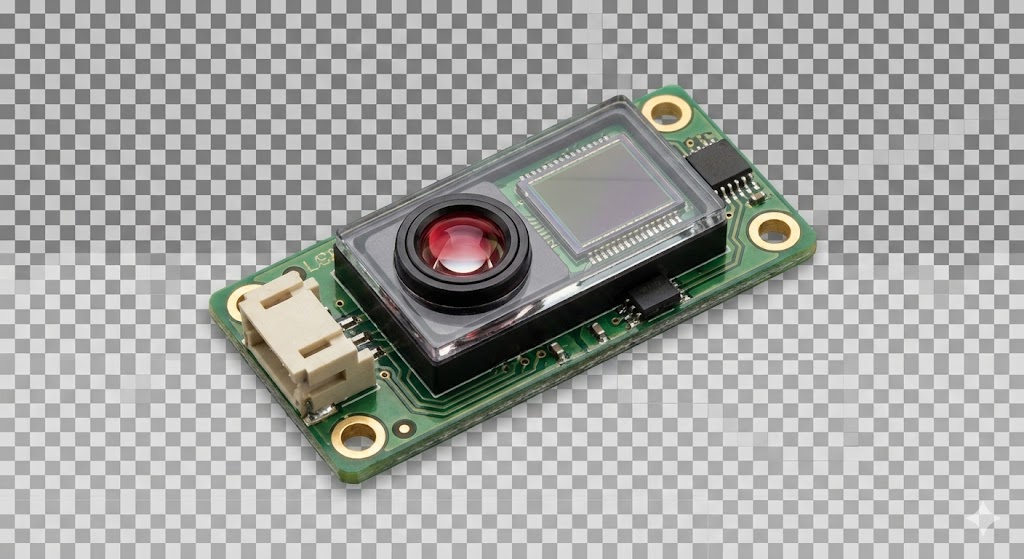
Laser radar sensors, commonly referred to as LiDAR (Light Detection and Ranging), represent a pivotal technology in modern sensing applications. These systems operate by emitting laser pulses toward a target and measuring the time it takes for the reflected light to return to the sensor. This time-of-flight (ToF) principle enables precise distance calculations, forming the foundation for high-resolution 3D mapping and object detection. The core components of a laser radar sensor include a laser transmitter, a receiver with a photodetector, and sophisticated signal processing electronics. The laser transmitter typically utilizes solid-state or semiconductor lasers, which emit coherent light at specific wavelengths—commonly in the near-infrared spectrum, such as 905 nm or 1550 nm. The choice of wavelength is critical, as it affects factors like eye safety, atmospheric absorption, and detection range. For instance, 1550 nm lasers are often preferred in automotive LiDAR due to their higher power limits and reduced risk to human eyes.
Upon emission, laser pulses travel through the environment and interact with objects. When a pulse encounters a surface, a portion of the light is reflected back toward the sensor. The receiver, equipped with a sensitive photodetector like an avalanche photodiode (APD) or a silicon photomultiplier (SiPM), captures this returning signal. The time delay between emission and reception is precisely measured, often using high-speed clocks or time-to-digital converters (TDCs). By applying the formula distance = (speed of light × time delay) / 2, the sensor calculates the range to the target with millimeter-level accuracy. Advanced systems employ multiple pulses or continuous-wave modulation to enhance resolution and mitigate noise from ambient light or interference.
One key advantage of laser radar sensors is their ability to generate detailed point clouds—collections of data points in three-dimensional space. Each point corresponds to a measured distance and angle, allowing for the reconstruction of complex environments. This capability is leveraged in diverse fields, from autonomous vehicles and robotics to industrial automation and topographic surveying. In autonomous driving, for example, LiDAR sensors provide real-time 3D perception, enabling vehicles to detect pedestrians, other vehicles, and obstacles even in low-light conditions. Similarly, in manufacturing, laser radar facilitates precise quality control by scanning components for defects or deviations from design specifications.

The performance of laser radar sensors is influenced by several technical parameters. Angular resolution determines the density of points in a scan, with higher resolution yielding more detailed images. Range accuracy and maximum detection distance depend on laser power, receiver sensitivity, and environmental factors like fog or rain. Modern innovations, such as frequency-modulated continuous-wave (FMCW) LiDAR, offer additional benefits like velocity measurement through Doppler shift analysis, enhancing functionality for dynamic applications. Furthermore, the integration of MEMS (Micro-Electro-Mechanical Systems) mirrors and optical phased arrays has enabled the development of compact, solid-state LiDAR systems, reducing size and cost while improving reliability.
Despite their strengths, laser radar sensors face challenges. Atmospheric conditions can attenuate laser signals, limiting effective range. Multi-path reflections from shiny surfaces may introduce measurement errors. However, ongoing research in adaptive optics, machine learning-based signal processing, and hybrid sensing (combining LiDAR with cameras or radar) aims to address these issues. As technology advances, laser radar sensors are poised to become even more integral to smart infrastructure, environmental monitoring, and safety-critical systems, driving innovation across the electrical and sensing industries.