Laser steering sensors represent a pivotal advancement in industrial automation, offering unparalleled precision in motion control and alignment applications. These devices utilize laser beams to detect positional deviations, enabling real-time adjustments in machinery and robotic systems. The core technology involves emitting a focused laser onto a target surface, where reflected light is captured by photodetectors. By analyzing the beam's angle of return, the sensor calculates displacement data with micron-level accuracy.
In manufacturing environments, laser steering sensors are integral to automated assembly lines. They ensure components are positioned correctly before welding or fastening, reducing error rates by over 90% compared to manual methods. For instance, in automotive production, these sensors guide robotic arms to install windshields with exact alignment, preventing leaks and structural issues. The non-contact nature of laser measurement eliminates wear and tear, enhancing longevity in high-speed operations.
The operational principle hinges on triangulation or time-of-flight methods. Triangulation-based sensors use geometric calculations to determine distance, ideal for short-range tasks like semiconductor wafer alignment. Time-of-flight variants measure the round-trip duration of laser pulses, suited for larger-scale applications such as warehouse logistics robots navigating storage aisles. Both types integrate with PLCs (Programmable Logic Controllers) via standard protocols like EtherCAT or PROFINET, allowing seamless data exchange within Industry 4.0 frameworks.
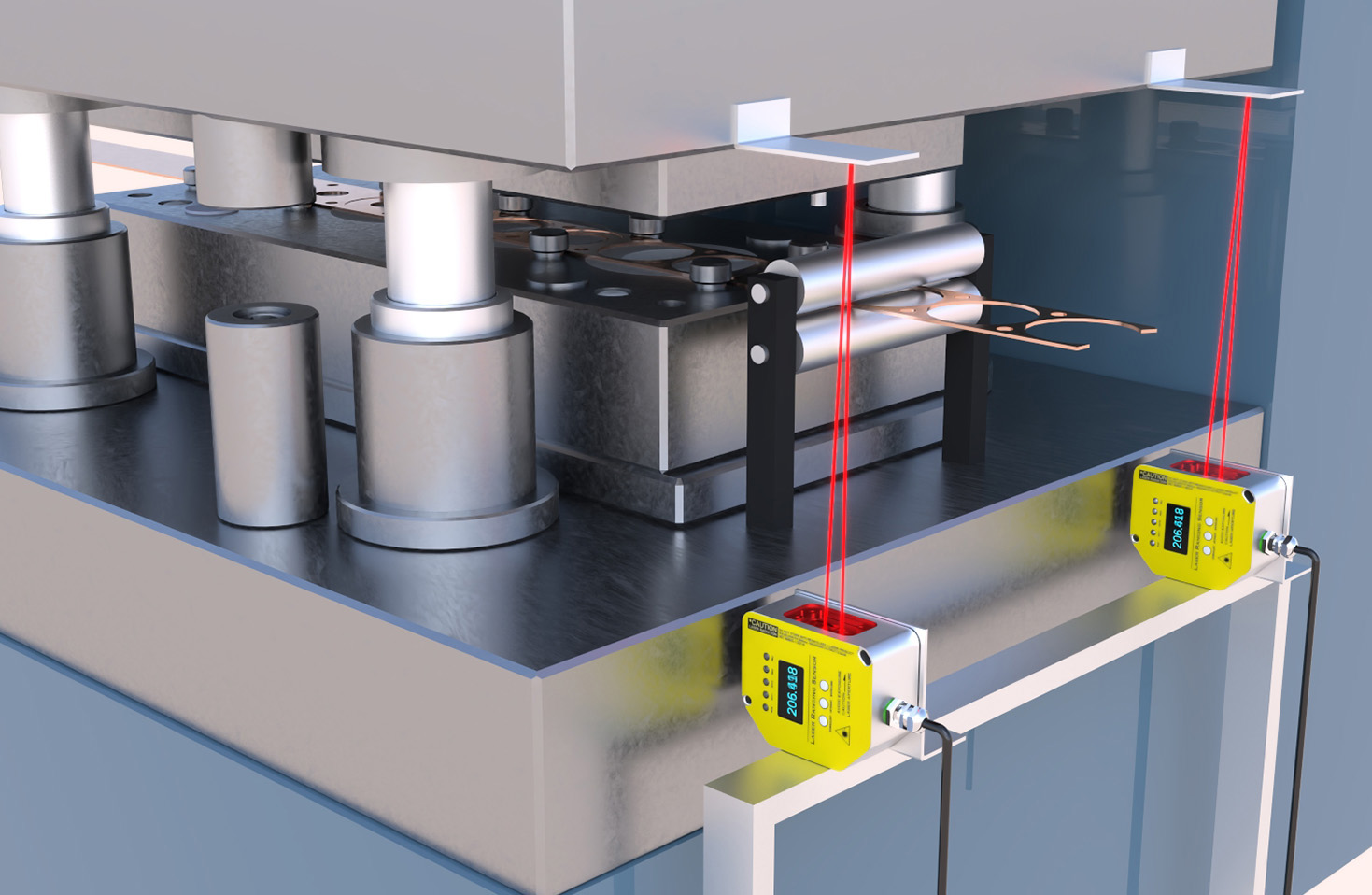
Key advantages include immunity to electromagnetic interference, a critical feature in facilities with heavy machinery. Unlike capacitive or inductive sensors, laser beams remain unaffected by ambient noise, ensuring stable performance in harsh conditions. Additionally, modern sensors incorporate adaptive algorithms that compensate for environmental variables like temperature fluctuations or surface reflectivity changes. For example, in metal stamping plants, sensors automatically calibrate for shiny or dull surfaces, maintaining consistent readings.
Maintenance protocols emphasize regular lens cleaning to prevent dust accumulation, which can scatter laser light. Calibration checks using certified reference targets are recommended quarterly. Most industrial-grade sensors boast IP67 ratings, resisting water and dust ingress, but internal diagnostics via embedded software help preempt failures by monitoring output power degradation.

Future trends point toward miniaturization and AI integration. Emerging designs combine laser steering with machine vision cameras, enabling 3D spatial mapping for complex tasks like drone-based inventory scanning. Research in quantum dot lasers promises even higher resolution for nanotechnology assembly. As industries push for tighter tolerances, these sensors will become indispensable in achieving sub-micron precision across sectors from aerospace to biomedical device manufacturing.
Ultimately, laser steering sensors exemplify how optical technologies drive efficiency in automation. By delivering real-time, contactless feedback, they form the backbone of smart factories, reducing waste and accelerating production cycles. Engineers must stay abreast of evolving standards, such as ISO 9283 for robot performance testing, to fully leverage these tools in designing next-generation automated systems.