Laser sensor motors represent a sophisticated fusion of optical sensing technology and precision motion control, playing a pivotal role in modern industrial automation, robotics, and high-accuracy measurement systems. At their core, these systems integrate a laser-based sensor with an electric motor—often a servo or stepper motor—to enable closed-loop control, where real-time positional feedback ensures exceptional accuracy and repeatability. The fundamental principle revolves around the interaction between the laser sensor and the motor's moving components.
The laser sensor, typically employing time-of-flight, triangulation, or interferometry methods, emits a coherent light beam toward a target surface attached to the motor's rotor or load. As the motor rotates or translates, the reflected light is captured by a photodetector within the sensor. By analyzing the phase shift, intensity variation, or time delay of the returned beam, the sensor calculates precise displacement, speed, or angular position. This data is transmitted to a controller, which compares it with the desired setpoint and adjusts the motor's current, voltage, or pulse signals accordingly. For instance, in a servo motor system, the controller modulates the PWM (Pulse Width Modulation) signals to the motor driver, minimizing error between actual and target positions.
Key components include the laser diode, optics for beam shaping, a high-speed detector, and signal-processing circuitry. The motor itself must exhibit low inertia, minimal backlash, and high torque density to respond swiftly to corrections. Encoders or resolvers are sometimes used alongside laser sensors for redundancy or enhanced resolution. Applications span from semiconductor wafer alignment and CNC machining to autonomous vehicle LiDAR and medical imaging devices, where micron-level precision is non-negotiable.
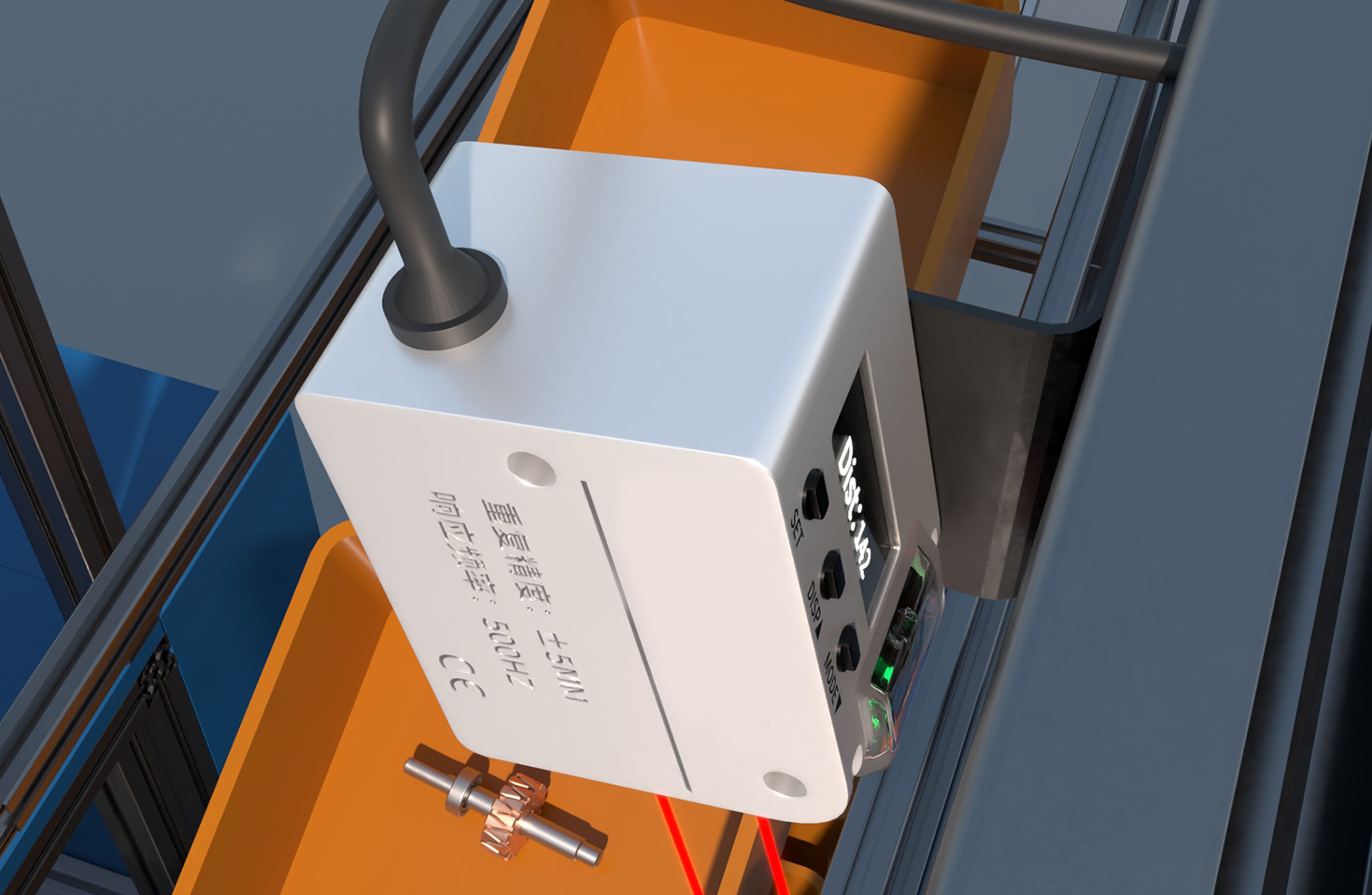
Advantages of laser sensor motors include non-contact measurement, reducing wear and enabling high-speed operation; immunity to electromagnetic interference compared to some inductive sensors; and adaptability to various surfaces and environments. However, challenges such as ambient light sensitivity, cost, and calibration complexity persist. Future trends involve integration with AI for predictive maintenance, miniaturization via MEMS technology, and enhanced multi-axis synchronization for advanced robotics. In summary, laser sensor motors exemplify how optical feedback elevates electromechanical performance, driving innovation across precision-driven industries.
