In the rapidly evolving landscape of smartphone technology, the integration of sophisticated sensors has become a cornerstone of innovation. Among these, infrared (IR) laser sensors have emerged as a critical component, enabling a suite of advanced features that enhance user interaction, security, and augmented reality experiences. This article delves into the engineering principles, applications, and future trajectory of these miniature yet powerful devices from an electrical engineering perspective.
At its core, an infrared laser sensor system in a smartphone typically consists of a vertical-cavity surface-emitting laser (VCSEL) diode, a photodetector (often a single-photon avalanche diode or SPAD array), and dedicated control circuitry. The VCSEL emits a beam of coherent, low-power infrared light, usually in the 850nm or 940nm wavelength range. This wavelength is invisible to the human eye, ensuring user comfort and safety while being efficiently detectable by silicon-based photodetectors. The fundamental operating principle is Time-of-Flight (ToF). The system measures the time it takes for a laser pulse to travel from the emitter to an object and back to the detector. Given the constant speed of light, this time delay is directly proportional to the distance. Modern systems use indirect ToF (iToF), which measures the phase shift of a modulated signal rather than direct pulse timing, allowing for higher precision at shorter ranges and lower power consumption.
The applications are multifaceted. The most ubiquitous is proximity sensing. During a phone call, an IR laser sensor detects when the phone is close to the user's ear and automatically turns off the display to prevent accidental touch inputs and save power. This is a simple binary application but remains vital for power management and usability.
A more complex application is facial recognition for biometric security, such as Apple's Face ID system. Here, an array of VCSELs projects a structured pattern of over 30,000 invisible IR dots onto the user's face. An IR camera then captures this distorted pattern. By analyzing the deformation of this dot matrix, a dedicated neural engine constructs a precise depth map—a 3D topological model of the face. This model is far more secure than a 2D photograph, as it is extremely difficult to spoof with masks or images. The entire process, from emission to authentication, happens in milliseconds, showcasing a marvel of integrated photonics and signal processing.

Furthermore, IR laser sensors are pivotal in enhancing camera capabilities and Augmented Reality (AR). They provide instant depth information for portrait mode effects, enabling accurate background blur (bokeh) by distinguishing the subject from the backdrop. In AR, they allow virtual objects to interact realistically with the physical environment by understanding the geometry of the surrounding space. This enables applications from immersive gaming to practical furniture placement tools.
From an engineering standpoint, the challenges are significant. Integration is key; these components must be miniaturized to fit within the slim confines of a smartphone bezel or notch. Power efficiency is paramount, as continuous operation can drain the battery. The system must also be robust against environmental interference, such as bright sunlight which contains IR radiation. Advanced optical filters, precise calibration algorithms, and sophisticated power gating techniques are employed to mitigate these issues. Thermal management of the VCSEL array is another critical consideration to ensure consistent output and longevity.
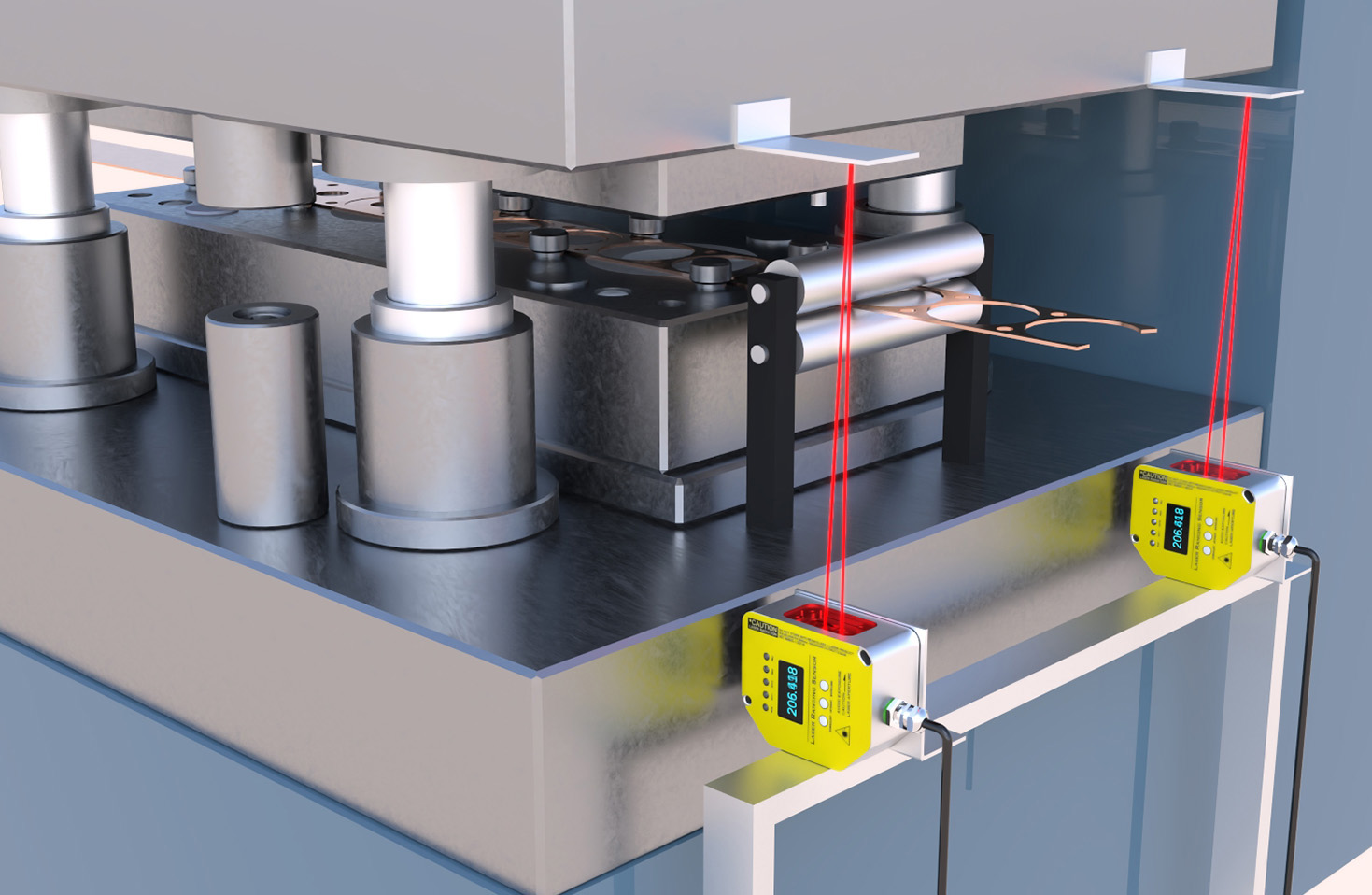
Looking ahead, the future of IR laser sensors in mobile devices points towards greater resolution, lower power consumption, and new form factors. We are moving towards full-scene 3D mapping capabilities, which could revolutionize photography, navigation for the visually impaired, and gesture control. The convergence of IR sensing with other modalities like LiDAR (Light Detection and Ranging), already present in higher-end tablets and phones, promises even greater depth accuracy and range. Furthermore, advancements in silicon photonics could lead to the direct integration of laser sources and detectors onto system-on-a-chip (SoC) platforms, reducing size and cost while improving performance.
In conclusion, the infrared laser sensor is a quintessential example of how fundamental photonic principles, when masterfully engineered into a compact, low-power package, can enable transformative smartphone functionalities. It bridges the gap between the digital interface and the physical world, providing machines with a fundamental sense of spatial awareness. As R&D continues to push the boundaries of miniaturization and computational photography, these sensors will undoubtedly remain at the forefront, silently shaping the next generation of human-device interaction.