In today's fast-paced industrial and technological landscape, accurate distance measurement is not just a convenience—it's a critical component of efficiency, safety, and quality control. Among the various technologies available, the 5-meter laser distance sensor stands out as a versatile and reliable tool for a wide range of applications. This device operates on the principle of time-of-flight or phase-shift measurement, where a laser diode emits a focused beam of light towards a target. The sensor then precisely calculates the time it takes for the reflected light to return, translating this data into an accurate distance reading with typical resolutions in the millimeter range.
The core advantage of a laser sensor with a 5-meter range is its optimal balance between reach and precision. This range is particularly suited for numerous indoor and controlled environment tasks. In industrial automation, for instance, these sensors are indispensable for positioning robotic arms, monitoring material levels in bins or on conveyor belts, and verifying component dimensions on assembly lines. Their non-contact nature eliminates wear and tear, ensuring long-term reliability and consistency that mechanical probes cannot match.
Construction and renovation professionals have also embraced the 5m laser distance sensor. It streamlines tasks like measuring room dimensions, calculating square footage, and ensuring alignments. Compared to traditional tape measures, it offers single-operator capability for hard-to-reach spots and drastically reduces human error. The data can often be transferred to design software, bridging the gap between physical measurement and digital planning.
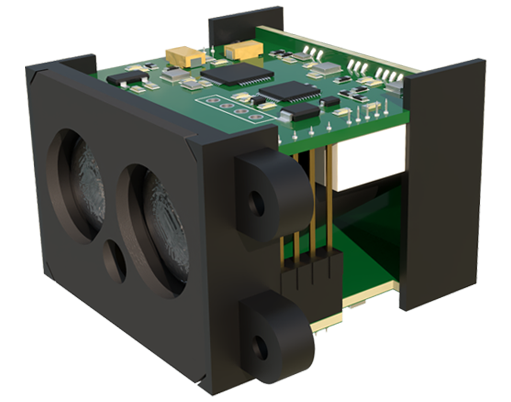
Beyond these common uses, innovative applications continue to emerge. In logistics, they help automate warehouse inventory management by measuring package sizes or pallet heights. In the realm of smart devices and robotics, they serve as the "eyes" for navigation and obstacle avoidance for automated guided vehicles (AGVs) and service robots. Even in consumer electronics, the underlying technology powers features like autofocus enhancement in smartphones or gesture recognition.
Selecting the right 5-meter laser sensor requires careful consideration of several key parameters. Accuracy and resolution are paramount; while most offer millimeter precision, specific needs may demand higher specs. The laser class (typically Class 2, which is eye-safe under normal operating conditions) is crucial for user safety. Environmental factors like ambient light, dust, and the target's surface properties (color, reflectivity) can affect performance. Therefore, models with robust housings (IP ratings for dust and water resistance) and advanced filtering algorithms to compensate for interference are preferred for harsh industrial settings.
Interface options are another critical decision point. Many sensors provide analog outputs (4-20mA, 0-10V), digital interfaces (RS232, RS485), or industrial network protocols like IO-Link and PROFINET. This connectivity allows for seamless integration into existing control systems, programmable logic controllers (PLCs), and data acquisition networks, enabling real-time monitoring and process adjustment.

The future of laser distance sensing is geared towards greater integration, intelligence, and miniaturization. We are seeing trends towards sensors with built-in Bluetooth or WiFi for wireless data logging, compact form factors for space-constrained applications, and multi-function devices that can measure distance, speed, and position simultaneously. As the Internet of Things (IoT) expands, these sensors will become even more vital data nodes, feeding information into centralized systems for predictive maintenance and advanced analytics.
In conclusion, the 5-meter laser distance sensor is a cornerstone of modern precision measurement. Its blend of accuracy, reliability, and adaptability makes it an essential tool across diverse sectors from factory floors to construction sites. By understanding its operating principles, key features, and application potential, engineers, technicians, and project managers can leverage this technology to enhance operational efficiency, improve product quality, and drive innovation in their respective fields. As technology advances, these sensors will undoubtedly evolve, offering even greater capabilities to meet the challenges of tomorrow.