In the realm of industrial automation and precision measurement, laser sensors have become indispensable tools due to their high accuracy, non-contact nature, and rapid response times. A critical parameter that significantly influences the performance of these sensors is the spot size—the diameter of the laser beam at the point of incidence on the target surface. Minimizing the laser sensor spot size is paramount for achieving superior resolution, enhanced edge detection, and improved measurement fidelity in applications ranging from semiconductor manufacturing to automotive assembly. This article delves into the technical aspects, methodologies, and practical considerations for reducing spot size to optimize sensor performance.
The spot size of a laser sensor is fundamentally governed by optical principles, primarily diffraction effects. According to Gaussian beam optics, the minimum achievable spot diameter (d) can be approximated by the formula: d = (4λf)/(πD), where λ is the wavelength of the laser, f is the focal length of the focusing lens, and D is the beam diameter at the lens. This equation highlights that shorter wavelengths, longer focal lengths, and larger beam diameters contribute to a smaller spot. For instance, blue lasers (with wavelengths around 450 nm) inherently enable finer spots compared to red lasers (around 650 nm), assuming other factors remain constant. However, practical constraints such as lens aberrations, alignment inaccuracies, and environmental vibrations often limit the theoretical minimum, necessitating a holistic approach to spot size minimization.
Key strategies for reducing spot size begin with selecting appropriate laser sources and optical components. Utilizing lasers with shorter wavelengths, such as those in the violet or ultraviolet spectrum, can directly decrease diffraction-limited spot dimensions. Additionally, employing high-quality aspheric lenses or microscope objectives with large numerical apertures (NA) enhances light collection and focusing capabilities, effectively shrinking the spot. Beam expansion techniques, where the laser beam is widened before entering the focusing lens, also play a crucial role. By increasing the input beam diameter (D), the divergence angle reduces, leading to a tighter focus. In practice, integrating beam expanders or collimators into the sensor design is common in industries like electronics inspection, where micron-level precision is required.
Environmental and operational factors must not be overlooked. Thermal fluctuations can cause lens expansion or contraction, altering focal points and spot characteristics. Implementing temperature-stabilized enclosures or using materials with low thermal coefficients ensures consistent performance. Similarly, mechanical vibrations from machinery can misalign optical paths, enlarging the spot size over time. Anti-vibration mounts and rigid sensor housings mitigate these effects, maintaining optimal focus. Regular calibration using standardized targets, such as USAF resolution charts, allows engineers to monitor spot size and adjust parameters proactively. For dynamic applications, like scanning moving parts on a conveyor, high-speed autofocus systems can dynamically compensate for distance variations, preserving a minimal spot across varying working ranges.
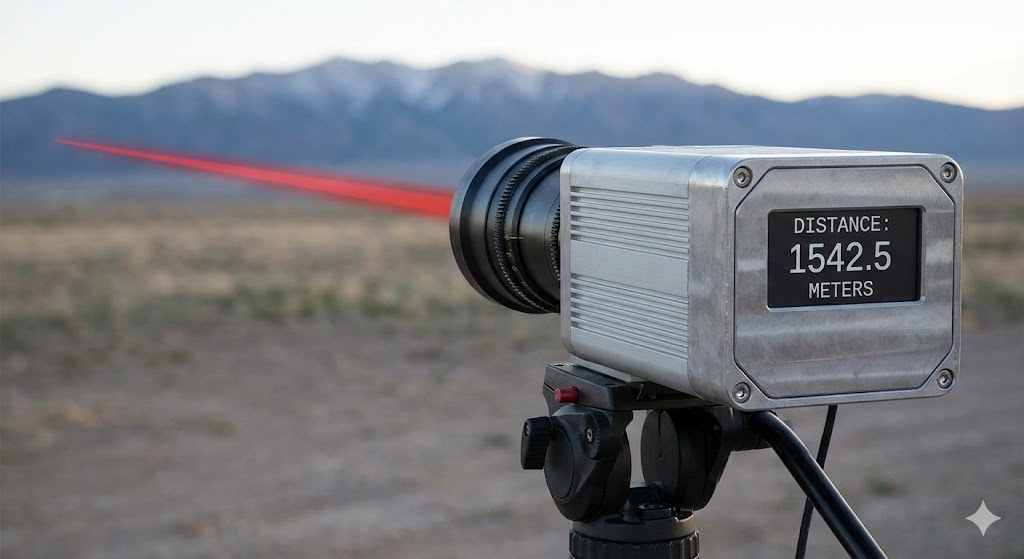
Applications benefiting from minimized laser sensor spots are diverse. In semiconductor lithography, ultra-small spots enable precise patterning of circuits at nanometer scales, directly impacting chip performance and yield. In medical device manufacturing, such as stent production, reduced spot sizes facilitate accurate diameter measurements and surface defect detection, ensuring compliance with stringent safety standards. Furthermore, in 3D scanning and metrology, finer spots enhance point cloud density, allowing for detailed topographic maps of complex geometries. Case studies from automotive quality control illustrate how minimized spots improve weld seam inspection and gap measurement between panels, reducing rework costs and enhancing product reliability.
Despite the advantages, challenges persist in achieving and maintaining minimal spot sizes. Optical diffraction limits impose a fundamental barrier, making sub-wavelength spots difficult without advanced techniques like near-field scanning. Cost considerations also arise, as high-NA lenses and stable laser sources entail significant investment. Engineers must balance performance with budget, often opting for customized solutions tailored to specific tolerances. Future trends point toward adaptive optics, where deformable mirrors or liquid lenses dynamically correct aberrations in real-time, and the integration of fiber lasers with compact designs, offering both small spots and flexibility in harsh environments.

In conclusion, minimizing laser sensor spot size is a multifaceted endeavor that combines optical engineering, environmental control, and application-specific tuning. By understanding the underlying principles and implementing robust strategies, industries can harness the full potential of laser sensors for unparalleled precision. As technology advances, continued innovation in laser and optics will further push the boundaries, enabling even finer measurements and driving progress across manufacturing and research sectors.