In the rapidly evolving landscape of industrial automation and precision measurement, laser sensors stand as a cornerstone of modern photoelectric technology. These sophisticated devices harness the unique properties of coherent light to perform tasks with unparalleled accuracy, speed, and reliability. Unlike conventional sensors, laser sensors operate by emitting a focused beam of light—typically from a laser diode—and analyzing the characteristics of the reflected beam. This fundamental principle enables non-contact detection, measurement, and inspection across a vast spectrum of industries.
The core operating principle revolves around several key methodologies. Time-of-Flight (ToF) sensors calculate distance by measuring the time delay between the emission of a laser pulse and the detection of its reflection. Triangulation sensors, on the other hand, use a known geometric arrangement between the laser emitter, the target, and a position-sensitive detector (PSD) or CMOS/CCD array to determine displacement or profile. Confocal sensors utilize chromatic aberration to achieve nanometer-level resolution for height and thickness measurements. Each method offers distinct advantages in terms of range, resolution, environmental tolerance, and cost, making the selection process critical for optimal system integration.
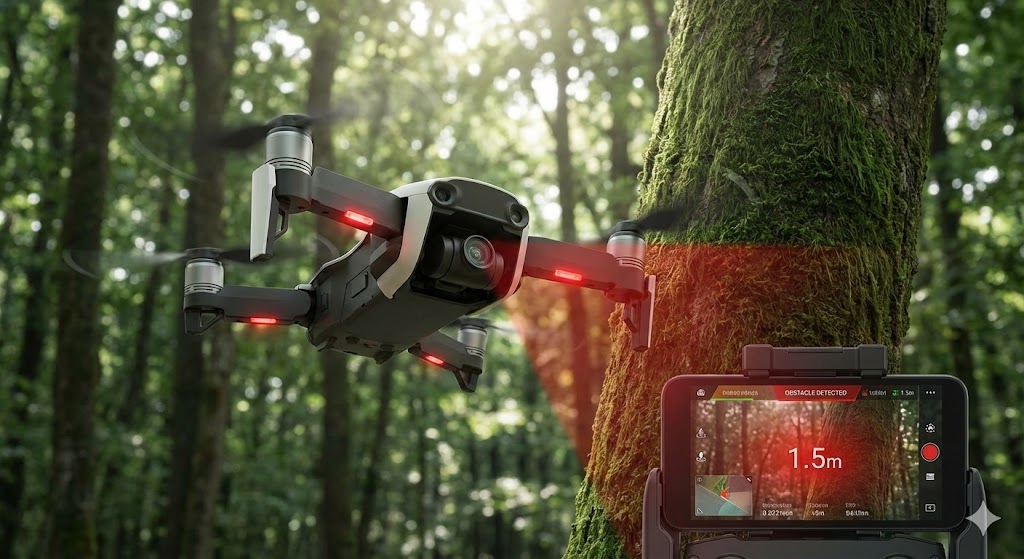
The applications of laser sensors are as diverse as they are impactful. In manufacturing, they are indispensable for precise dimensional gauging, part presence verification, edge detection, and fill-level control. Robotics and autonomous guided vehicles (AGVs) rely heavily on laser distance sensors and LiDAR (Light Detection and Ranging) systems for navigation, obstacle avoidance, and spatial mapping. The semiconductor industry employs ultra-high-precision laser sensors for wafer inspection and alignment. Furthermore, they play vital roles in quality control, such as detecting surface defects, monitoring vibration, and ensuring correct assembly tolerances. Their non-contact nature makes them ideal for measuring delicate, hot, or fast-moving objects without risk of damage or wear.
Choosing the right laser sensor requires a careful analysis of several technical parameters. Key specifications include measurement range, which defines the minimum and maximum working distances; resolution, the smallest detectable change in the measured variable; linearity, the deviation from a perfect straight-line response; and repeatability, the consistency of measurements under unchanged conditions. Environmental factors are equally crucial. The sensor must be rated for the ambient light conditions, temperature fluctuations, dust, moisture, and potential interference from other light sources. Industrial-grade sensors often feature robust housings (IP67/IP69K ratings), integrated thermal compensation, and advanced filtering algorithms to ensure stable performance in harsh environments.
The integration of laser sensors into larger control systems is facilitated by various output options. Common interfaces include analog outputs (0-10V, 4-20mA), digital switches (PNP/NPN), and serial communication protocols like RS-232, RS-485, or industrial Ethernet (EtherCAT, PROFINET). This flexibility allows seamless connectivity with Programmable Logic Controllers (PLCs), human-machine interfaces (HMIs), and data acquisition systems, enabling real-time process monitoring and closed-loop control.

Looking ahead, the future of laser sensor technology is poised for significant advancements. Miniaturization continues to drive the development of smaller, more power-efficient sensors for portable and embedded applications. The integration of Artificial Intelligence (AI) and machine learning algorithms is enhancing sensor capabilities, allowing for predictive maintenance, advanced pattern recognition, and adaptive calibration. Furthermore, the emergence of new laser sources and detector materials promises improvements in wavelength diversity, power efficiency, and cost reduction. As Industry 4.0 and the Internet of Things (IoT) mature, laser sensors will become even more intelligent nodes within interconnected smart factories, providing rich, actionable data for optimizing entire production ecosystems.
In conclusion, laser sensors represent a critical and dynamic segment of photoelectric technology. Their ability to deliver precise, non-contact measurements in challenging conditions has revolutionized automation and quality assurance. For engineers and system integrators, a deep understanding of their operating principles, application nuances, and selection criteria is essential for harnessing their full potential and driving innovation in an increasingly automated world.
