In the realm of industrial automation and control systems, proximity sensors stand as indispensable components for non-contact object detection. Their ability to sense the presence or absence of an object without physical contact ensures reliability, longevity, and precision in countless applications. This guide delves into the core series and models of proximity sensors, providing a technical overview for engineers and procurement specialists.
Proximity sensors are primarily categorized by their underlying sensing technology. The most prevalent types include Inductive, Capacitive, and Ultrasonic sensors, each with distinct operating principles and ideal use cases.
Inductive Proximity Sensors
Inductive sensors are the workhorses of metal detection. They generate an electromagnetic field. When a metallic target enters this field, it induces eddy currents within the target, causing a change in the sensor's oscillation amplitude. This change is detected and converted into a switching signal. Key series and model considerations include:
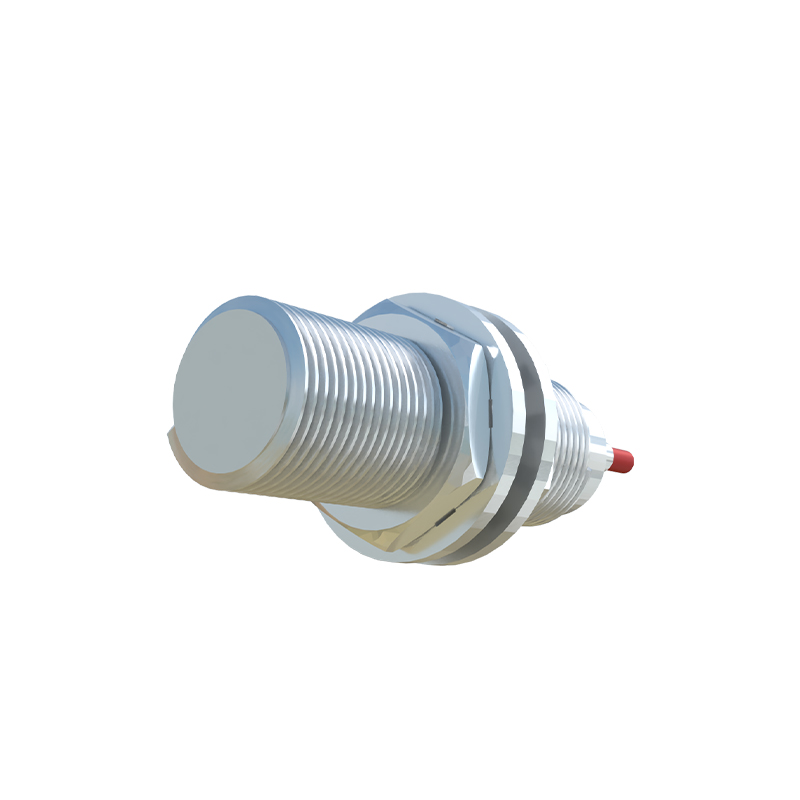
Shielded vs. Unshielded Models: Shielded series (e.g., E2E, E2Q) can be flush-mounted in metal without affecting their sensing field, offering easier installation. Unshielded models (e.g., E2A) provide longer sensing distances but require non-metallic surroundings.
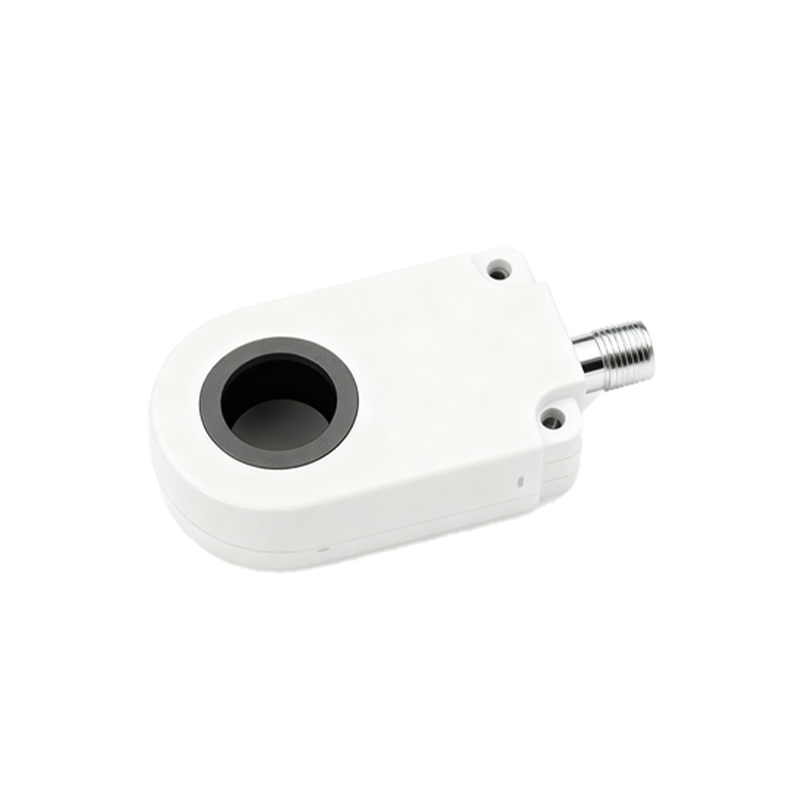
Form Factor: Cylindrical models (M8, M12, M18, M30 threaded barrels) are ubiquitous. Rectangular or block-style models (e.g., E2K series) are used where space is constrained.
Output Configuration: Models are available with NPN (sinking) or PNP (sourcing) transistor outputs, as well as Analog (4-20mA, 0-10V) or IO-Link versions for continuous distance measurement. Common DC voltage ratings are 10-30V DC.
Specialized Variants: All-metal detection series can sense all types of metals at similar ranges, while standard models have reduced range for non-ferrous metals like aluminum or copper.
Capacitive Proximity Sensors
Operating on the principle of capacitance change, these sensors can detect nearly any material—liquids, powders, plastics, wood, and glass—in addition to metals. They generate an electrostatic field. The entry of any material with a dielectric constant different from air alters the capacitance, triggering the switch.
Material Sensitivity Adjustment: Most capacitive series (e.g., E2K, CQ series) feature a potentiometer for sensitivity tuning, allowing them to ignore container walls and sense only the material inside.
Applications: Ideal for level detection of liquids, granular materials, and non-metallic objects. Models are available in cylindrical and rectangular housings.
Environmental Robustness: High-end series offer robust sealing (IP67, IP69K) for washdown environments in food & beverage or pharmaceutical industries.
Ultrasonic Proximity Sensors
These sensors use sound waves beyond the human hearing range. They measure the time taken for an emitted ultrasonic pulse to bounce back from a target. This time-of-flight principle allows for precise distance measurement regardless of the target's material, color, or transparency.
Analog and Switching Models: Series like the E4A or UC provide both simple on/off switching at set thresholds and analog output proportional to distance.
Background Suppression: Advanced models can be programmed to ignore fixed background objects, focusing only on targets within a specific "window."
Challenging Environments: They perform well in environments with dust, mist, or varying light conditions where photoelectric sensors might fail. Typical sensing ranges can extend from a few centimeters to several meters.
Selection Criteria and Model Nomenclature
Choosing the correct series involves evaluating several parameters:
1. Target Material: Metal only? Choose inductive. Other materials? Consider capacitive or ultrasonic.
2. Sensing Distance (Sn): Always select a model with a rated sensing distance 10-20% greater than the application requires to account for tolerances.
3. Installation Environment: Consider temperature extremes, presence of chemicals, washdown pressures, and potential for physical impact. Ingress Protection (IP) ratings are critical.
4. Electrical Requirements: Match the supply voltage (DC or AC) and output type (NPN/PNP, NO/NC) to your control system (e.g., PLC input card).
5. Housing and Connection: Cylindrical sensors may have built-in cables or quick-disconnect (M12, M8) connectors. Rectangular sensors often offer cable or connector variants.
Manufacturers like Omron, Sick, Pepperl+Fuchs, and Balluff use specific alphanumeric series codes (e.g., Omron's E2A, E2E, E2K; Sick's IME, IMR;