In the rapidly evolving landscape of industrial automation, the demand for reliable, high-precision sensing solutions continues to grow. Among the array of available technologies, micro retro-reflective laser sensors have emerged as a critical component for numerous applications, offering unparalleled accuracy, compact design, and robust performance. These sensors operate on a fundamental principle: they emit a focused laser beam toward a retro-reflector, which then returns the beam directly to the sensor's receiver. By detecting the presence or absence of this returned beam, the sensor can determine the existence of an object that interrupts the path. This simple yet effective mechanism enables precise detection even in challenging environments characterized by dust, vibration, or variable lighting conditions.
The core advantage of micro retro-reflective laser sensors lies in their miniaturized form factor without compromising on capability. Traditional photoelectric sensors often struggle with alignment issues or require significant installation space. In contrast, these micro laser sensors integrate advanced optics and electronics into a housing typically measuring only a few centimeters. This compactness allows for easy integration into tight spaces within machinery, robotic arms, conveyor systems, and assembly lines. Furthermore, the use of a laser light source, as opposed to standard LED-based light, provides a highly collimated beam with a small spot size. This results in exceptional sensing resolution, enabling the detection of very small objects or precise positioning tasks that would be impossible with diffuse or through-beam sensors. For instance, in electronics manufacturing, these sensors can reliably detect minute components like microchips or connectors on high-speed pick-and-place machines, ensuring flawless assembly processes.
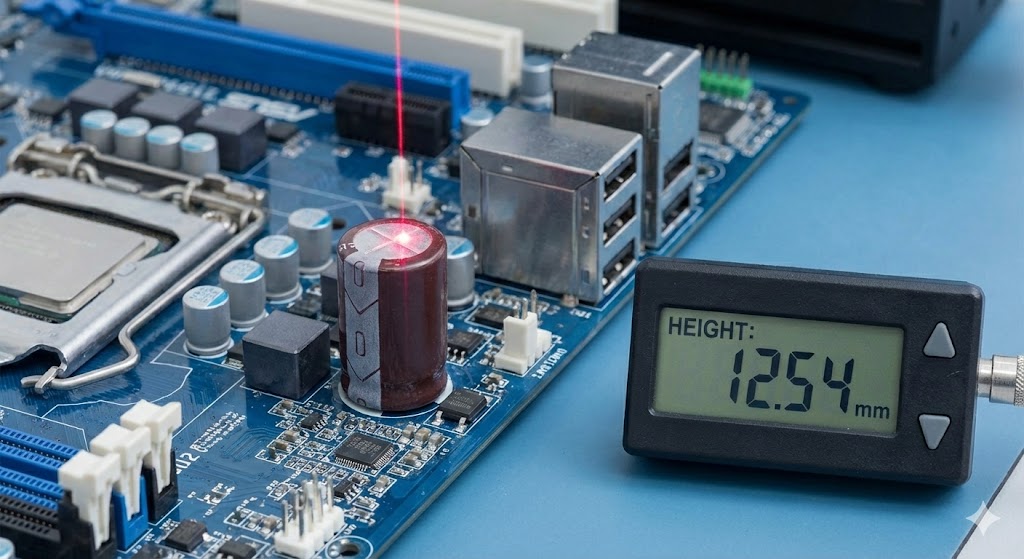
Another significant benefit is their exceptional sensing range relative to size. Despite their miniature design, many models offer detection distances of several meters when paired with an appropriate retro-reflector. This extended range provides flexibility in system layout, reducing the need for multiple sensors and simplifying overall design. The retro-reflector itself is a key element; typically constructed from specialized prismatic or corner-cube materials, it reflects incoming light back along the same path regardless of the angle of incidence. This characteristic ensures consistent signal return even if the sensor or reflector experiences minor misalignment due to thermal expansion or mechanical shock, thereby enhancing long-term reliability and reducing maintenance demands.
In practical applications, micro retro-reflective laser sensors excel across diverse industries. In packaging and logistics, they are deployed for precise box counting, label verification, and detecting transparent films or glass containers—tasks where conventional sensors might fail due to material translucency. The automotive sector utilizes them for part presence verification in engine assembly, brake system checks, and ensuring correct component orientation. Within cleanroom environments for semiconductor production, their non-contact nature and immunity to ambient light interference make them ideal for monitoring wafer handling robots without risk of contamination. Additionally, their high-speed response, often in the microsecond range, is crucial for synchronizing operations in high-throughput production lines, preventing jams and optimizing cycle times.
When selecting a micro retro-reflective laser sensor, engineers must consider several technical parameters. These include the sensing distance, required beam spot size, response time, and environmental ratings such as IP67 for dust and water resistance. Output options (e.g., NPN/PNP transistors or analog outputs) should match the control system interface. Many modern sensors also incorporate intelligent features like teach-in functionality for easy setup, adjustable sensitivity via potentiometers or digital interfaces, and built-in diagnostics such as stability indicators or alarm outputs for beam blockage. These features streamline integration and enhance operational visibility.
Looking ahead, advancements in laser diode technology and integrated circuit design are pushing the boundaries of what micro retro-reflective sensors can achieve. Future iterations may offer even smaller footprints, higher energy efficiency, and enhanced connectivity for Industry 4.0 applications, such as direct data exchange via IO-Link or Ethernet protocols. This will enable predictive maintenance and tighter integration with factory-wide control systems. In conclusion, micro retro-reflective laser sensors represent a sophisticated fusion of optical precision and electronic intelligence. Their ability to deliver reliable, high-accuracy detection in a compact package makes them indispensable for modern automated systems, driving efficiency and quality in manufacturing and beyond. As automation complexity increases, these sensors will undoubtedly continue to play a pivotal role in enabling smarter, more responsive industrial environments.