In the realm of industrial automation, laser sensors have emerged as pivotal components, offering unparalleled precision, speed, and reliability. This case study delves into a real-world application within a high-speed automotive assembly line, where laser displacement sensors were deployed to enhance quality control and operational efficiency.
The automotive manufacturer faced challenges in accurately measuring the gap and flushness between car body panels, such as doors, hoods, and trunks. Traditional mechanical gauges were prone to wear, required frequent calibration, and often led to inconsistencies, resulting in rework and production delays. To address this, the company integrated a series of high-resolution laser displacement sensors from a leading supplier, such as Keyence or Omron, into their inspection stations.
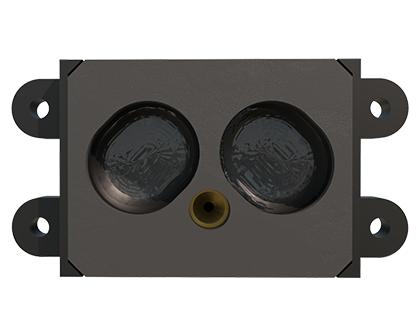
These laser sensors operate on the principle of triangulation, emitting a focused laser beam onto the target surface. The reflected light is captured by a receiver, and the displacement is calculated based on the angle of reflection. In this setup, sensors were positioned at critical points along the assembly line. For instance, one sensor measured the vertical gap between a door and the car frame, while another assessed the horizontal flushness. The sensors provided non-contact measurements with an accuracy of ±0.01 mm and a response time of less than 1 millisecond, enabling real-time monitoring without slowing down the production pace.

During implementation, engineers configured the sensors via intuitive software interfaces, setting tolerance thresholds for acceptable gap and flushness values. Data from the sensors were transmitted to a centralized PLC (Programmable Logic Controller), which triggered alerts if measurements deviated from specifications. This allowed immediate corrective actions, such as adjusting robotic arms or halting the line for manual intervention, thereby preventing defective units from progressing further.
The results were transformative. Defect rates related to panel alignment dropped by over 70% within the first quarter of deployment. Production throughput increased by 15% due to reduced downtime from manual inspections and rework. Moreover, the sensors' durability in harsh industrial environments—resistant to dust, vibrations, and temperature fluctuations—minimized maintenance needs, leading to a significant reduction in operational costs. The ROI (Return on Investment) was achieved in less than six months, highlighting the economic viability of laser sensor technology.
Beyond this case, laser sensors find applications in diverse sectors like electronics manufacturing, where they measure component heights on PCBs, or in logistics, for dimensioning packages. Their versatility stems from advancements in fiber optics and CMOS technology, allowing for compact designs and enhanced performance. However, challenges persist, such as interference from highly reflective surfaces or ambient light, which can be mitigated through filters and proper calibration.
In conclusion, this case study underscores how laser sensors drive innovation in industrial automation. By providing accurate, non-contact measurements, they not only improve product quality but also optimize processes, reduce waste, and support lean manufacturing initiatives. As industries evolve toward Industry 4.0, integrating laser sensors with IoT platforms for predictive analytics will further unlock efficiencies, making them indispensable tools for modern engineering.