In the intricate world of industrial automation and control systems, proximity switches and sensors stand as fundamental components, silently enabling precision, safety, and efficiency. These devices, often operating without physical contact, are the unsung heroes that detect the presence or absence of objects, measure distances, and trigger critical actions in machinery and processes. Understanding their principles, types, and applications is essential for any engineer or technician involved in system design and maintenance.
At its core, a proximity sensor is a device that detects the presence of a nearby object without any physical contact. It does so by emitting an electromagnetic field or a beam of electromagnetic radiation (like infrared light) and then looking for changes in the field or return signal. The object being detected is often referred to as the sensor's "target." Proximity switches are a specific subset; they are binary sensors that provide a simple ON/OFF output signal when an object enters their sensing range, effectively acting as a switch.
The operational principle divides these devices into several primary categories, each with distinct advantages and ideal use cases.
Inductive Proximity Sensors: These are among the most common types in industrial settings. They generate an oscillating electromagnetic field. When a metallic object (the target) enters this field, it induces eddy currents within the metal, which causes a change in the oscillation amplitude. This change is detected by the sensor's circuitry, triggering an output signal. Inductive sensors are robust, reliable, and excellent for detecting ferrous and non-ferrous metals. They are widely used in metal detection applications, such as counting metal parts, determining position in CNC machines, or as limit switches.
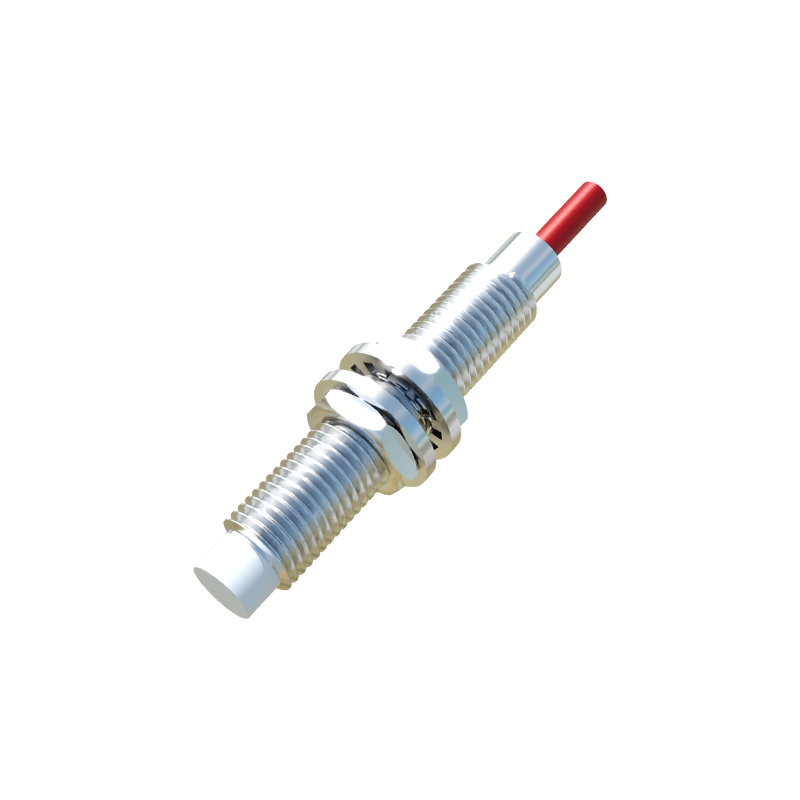
Capacitive Proximity Sensors: These sensors can detect both metallic and non-metallic objects, including liquids, powders, plastics, and wood. They operate by generating an electrostatic field. The presence of any material with a dielectric constant different from air alters the capacitance of the circuit, which is detected and converted into an output signal. This makes them versatile for applications like liquid level detection, material handling of non-metals, and presence detection of packaged goods.
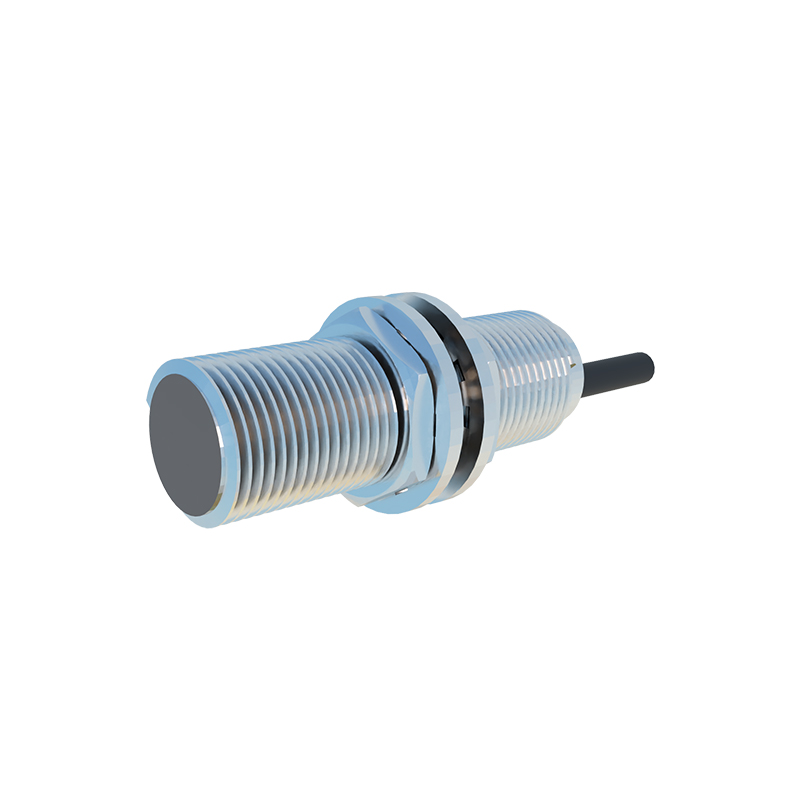
Photoelectric Sensors: Utilizing a light transmitter (usually LED) and a receiver, these sensors detect objects based on the interruption or reflection of a light beam. They come in several configurations: through-beam (separate transmitter and receiver), retro-reflective (uses a reflector), and diffuse (reflective), where the sensor itself contains both elements and detects light bounced off the target. Photoelectric sensors offer long sensing ranges and can detect virtually any material. They are prevalent in packaging, material handling, and assembly line automation for object counting, positioning, and break detection.
Ultrasonic Sensors: These work on a principle similar to sonar. They emit high-frequency sound waves and evaluate the echo received back. The time lapse between sending the signal and receiving the echo is used to calculate the distance to the target. Ultrasonic sensors are excellent for distance measurement, level sensing of liquids and bulk solids, and detecting clear or complex-shaped objects where photoelectric sensors might struggle.
Magnetic Proximity Sensors (Reed Switches): These are simple, cost-effective switches activated by the presence of a magnetic field, typically from a permanent magnet. They are often used in safety applications, such as door position sensing on machinery guards or in low-speed rotational sensing.
Selecting the right sensor involves a careful analysis of several parameters: the nature of the target material (metal, plastic, liquid), the required sensing distance, the environmental conditions (temperature, humidity, presence of dust or washdown requirements), the output type needed (PNP/NPN, analog, IO-Link), and the required response speed and switching frequency.
Installation and environmental factors are critical for reliable operation. Inductive sensors can be affected by adjacent metal, known as the "mounting flush" consideration. Photoelectric sensors can be fooled by ambient light or highly reflective surfaces. Ultrasonic sensors may have issues in environments with significant air turbulence or temperature gradients. Proper shielding, mounting, and environmental rating selection (e.g., IP67 for dust and water ingress protection) are paramount.
The integration of smart features and Industry 4.0 connectivity is a significant trend. Modern proximity sensors now often come with IO-Link capability, a point-to-point serial communication protocol. This allows for not just binary state reporting but also the transmission of detailed diagnostic data (like operating hours, temperature, signal strength) and remote parameterization. This enables predictive maintenance, reduces downtime, and simplifies device replacement.
In conclusion, proximity switches and sensors are indispensable in modern industrial automation. From ensuring a robotic gripper has picked up a part to verifying a safety door is closed, or precisely controlling the fill level of a tank, their applications are virtually limitless. A deep understanding of their operating principles, coupled with a methodical approach to