In the realm of modern building automation and smart infrastructure, the integration of laser sensors within garage systems represents a significant leap forward in operational efficiency, safety, and user convenience. Unlike traditional ultrasonic or infrared sensors, laser sensors utilize focused light beams to deliver unparalleled precision in object detection, distance measurement, and spatial mapping. This technology is fundamentally transforming how residential, commercial, and industrial garages function.
The core principle behind laser sensors, often based on time-of-flight (ToF) or triangulation methods, involves emitting a laser pulse and measuring the time or phase shift of its reflection. In a garage environment, this translates to highly accurate detection of vehicles, obstacles, and even human presence. For instance, in automated parking systems, laser sensors mounted at entry points and along pathways create a real-time, three-dimensional map of the available space. This allows for precise guidance of vehicles into tight spots, minimizing the risk of collisions and maximizing parking density. The margin of error is often reduced to mere millimeters, a feat unachievable with conventional sensors.
Safety is paramount in any garage setting, and laser sensors contribute substantially to this aspect. They are integral to safety light curtains and presence detection systems around automated garage doors. Before a heavy sectional door closes, laser scanners continuously monitor the threshold area. If the beam is interrupted by a person, pet, or object, the door's closing mechanism is instantly halted and reversed, preventing serious injury or property damage. This is a critical improvement over older mechanical safety edges, which require physical contact to trigger a response.
Furthermore, laser sensors enhance security systems within garages. By precisely monitoring movement and detecting anomalies in predefined zones, they can differentiate between the expected silhouette of a vehicle and an unauthorized intruder. This data can be integrated with access control and alarm systems, providing a robust layer of protection for valuable assets stored within.
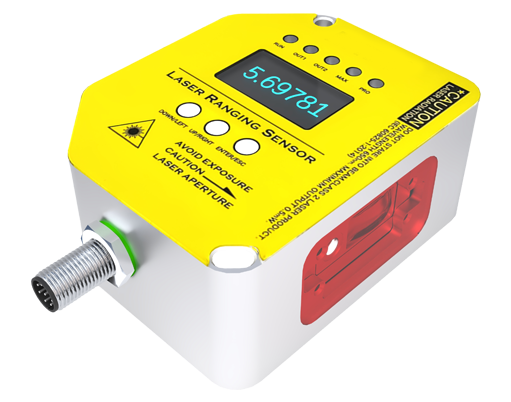
From an operational and maintenance perspective, the advantages are clear. Laser sensors are less susceptible to environmental factors common in garages, such as temperature fluctuations, dust, and ambient light interference, compared to ultrasonic sensors which can be affected by air currents and temperature gradients. Their non-contact nature means there is no mechanical wear, leading to higher long-term reliability and lower lifecycle costs. For facility managers, this translates to reduced downtime and maintenance calls.
The application extends to energy efficiency as well. In large commercial parking garages, laser-based occupancy monitoring can intelligently control lighting and ventilation systems. Lights and fans can operate at minimal levels in empty zones and ramp up instantly upon detecting a vehicle's entry, leading to substantial energy savings without compromising user comfort or safety.
Looking ahead, the convergence of laser sensor data with the Internet of Things (IoT) and artificial intelligence (AI) platforms promises even smarter garages. Predictive analytics could forecast parking space availability, while AI could analyze movement patterns to optimize traffic flow during peak hours. The role of the laser sensor as the primary "eye" of the garage system will only become more central.

In conclusion, the adoption of laser sensor technology is not merely an upgrade but a foundational shift in garage design and management. By offering extreme accuracy, enhanced safety, improved reliability, and integration potential with broader smart systems, laser sensors are setting a new standard for what a modern, automated, and secure garage can be. For engineers, architects, and property developers, specifying this technology is increasingly becoming a benchmark for quality and forward-thinking design in automotive infrastructure.