In the complex landscape of industrial automation, the reliable detection of objects at a distance is a cornerstone of efficiency, safety, and process control. Long-distance proximity sensors, distinct from their standard-range counterparts, are engineered to fulfill this critical role. This article delves into the performance characteristics, underlying technologies, and key selection criteria for these specialized devices, providing a technical guide for engineers and system integrators.
The primary performance metric for any long-distance proximity sensor is its nominal sensing range. While standard inductive sensors may operate within a few millimeters to tens of millimeters, long-distance variants can reliably detect metallic targets from 15mm up to 120mm or more, depending on the technology and target material. For non-metallic objects, ultrasonic and photoelectric sensors push these boundaries further, with ranges extending to several meters or even tens of meters. It is crucial to understand that the stated nominal range is typically defined under ideal conditions: a standard target (e.g., mild steel for inductive sensors) of a specified size, aligned axially. Real-world performance is governed by the effective sensing distance, which is influenced by target material, size, shape, and orientation. For instance, the sensing distance for stainless steel is often reduced compared to mild steel, and a smaller target will require a closer proximity for reliable detection.
Beyond range, several other performance parameters are paramount. Repeatability, or the sensor's ability to consistently detect a target at the same point, is vital for precision applications. Hysteresis is a built-in differential between the switch-on and switch-off points, preventing output oscillation when a target is near the sensing limit. Response time, often in the microsecond or millisecond range, determines how quickly the sensor can react to a passing target, impacting suitability for high-speed production lines. Environmental robustness is non-negotiable in industrial settings. Key ratings include Ingress Protection (IP) codes (e.g., IP67, IP69K) for resistance to dust and liquids, and operational temperature ranges. Furthermore, sensors must exhibit high immunity to electromagnetic interference (EMI), voltage fluctuations, and for photoelectric types, ambient light interference.
The core technology defines the capabilities and limitations of a long-distance sensor. Inductive sensors are the workhorse for metallic object detection. Long-range versions often employ specialized coil designs and ferrite cores to extend the magnetic field. They are rugged, contactless, and unaffected by opaque materials, but are inherently blind to non-metals. Capacitive sensors can detect both metallic and non-metallic materials (liquids, plastics, wood) by measuring changes in capacitance. Their sensing distance, while greater than standard inductive sensors, is generally less than that of ultrasonic or photoelectric options and can be influenced by environmental factors like humidity. Ultrasonic sensors operate by emitting sound waves and measuring the time-of-flight of the echo. They excel at detecting objects of virtually any material, over long distances, and can provide analog distance information. However, they can be affected by temperature variations (which change the speed of sound), acoustic noise, and the texture/angle of the target surface. Photoelectric sensors, particularly the through-beam and retro-reflective types, offer the longest sensing ranges, easily reaching tens of meters. They use modulated infrared light to avoid ambient light interference. While highly versatile for detecting small objects of any material, their performance can be compromised by dirty lenses, heavy airborne contamination (fog, dust), and highly reflective or absorbent target surfaces.
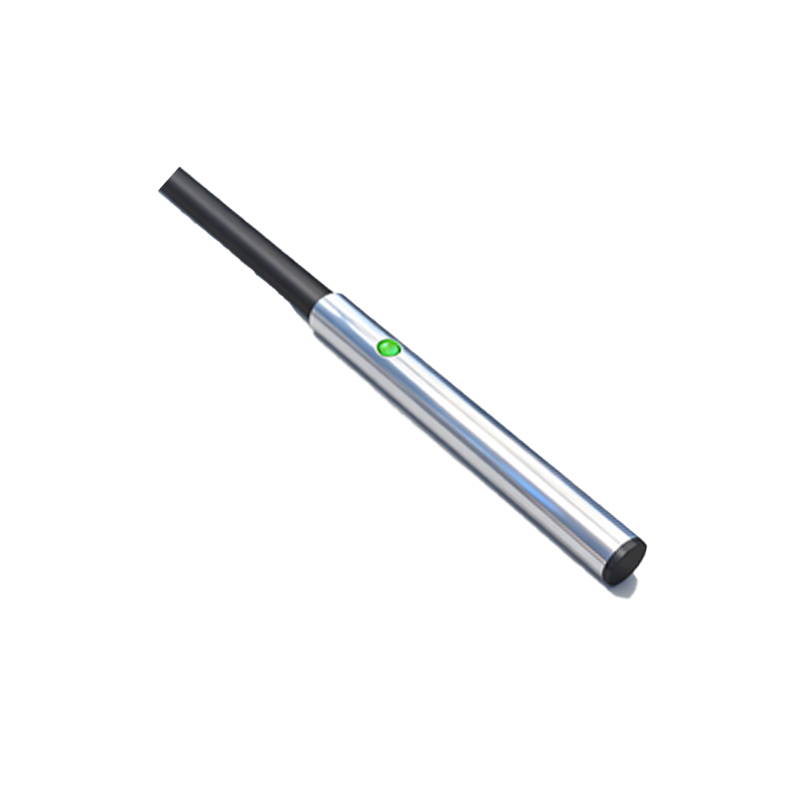
Selecting the appropriate long-distance sensor requires a systematic analysis of the application. Start by defining the target material, size, and required detection distance. Next, assess the environmental conditions: presence of dust, moisture, oils, temperature extremes, and potential sources of electrical or optical interference. The required output type (discrete PNP/NPN, analog 4-20mA/0-10V, IO-Link) and electrical configuration must match the control system. For mounting, consider mechanical constraints, alignment needs, and whether a built-in or separate amplifier is preferable. Finally, factor in regulatory requirements for specific industries, such as food-grade approvals or safety integrity levels (SIL).
In conclusion, long-distance proximity sensors are not merely "longer" sensors; they represent a specialized category where performance is a careful balance of range, speed, accuracy, and durability. A successful implementation hinges on a thorough understanding of both the sensor's technological principles and the specific demands of the application. By meticulously evaluating the parameters discussed—sensing range under real conditions, repeatability, environmental ratings, and technology-specific strengths—engineers can specify the optimal sensor, ensuring robust and reliable performance that enhances system automation and operational intelligence.