In the realm of industrial automation and safety systems, human proximity sensors have become indispensable components for detecting the presence or absence of personnel within hazardous zones. These sensors, which typically utilize technologies such as capacitive, inductive, ultrasonic, or infrared sensing, are designed to prevent accidents by triggering alarms or halting machinery when a human enters a predefined area. However, the off-the-shelf functionality of these sensors often falls short of meeting the complex and specific requirements of modern industrial environments. This is where secondary development comes into play—a process that involves customizing and enhancing sensor systems through software adjustments, hardware modifications, and integration with other control systems.
Secondary development of human proximity sensors begins with a thorough analysis of the application scenario. For instance, in a manufacturing plant with high levels of electromagnetic interference, standard inductive sensors might produce false triggers. Engineers can address this by reprogramming the sensor's firmware to include noise-filtering algorithms or by integrating additional shielding components. Similarly, in environments where precise distance measurement is critical, such as robotic assembly lines, ultrasonic sensors can be calibrated to provide real-time feedback with millimeter accuracy. This customization not only improves reliability but also extends the sensor's operational lifespan by reducing unnecessary activations.
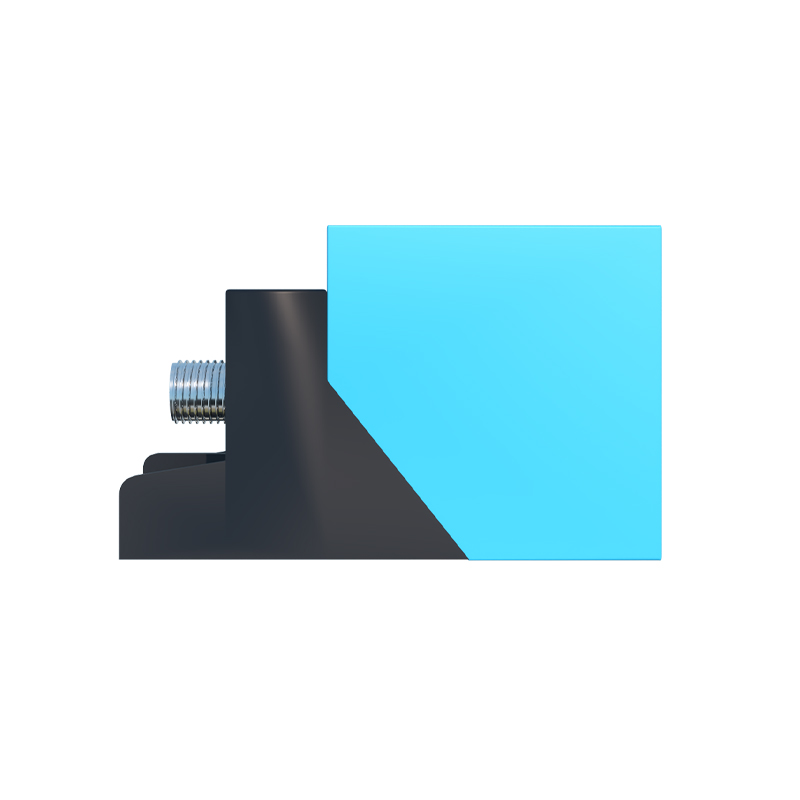
One of the key aspects of secondary development is the integration of sensors with programmable logic controllers (PLCs) and human-machine interfaces (HMIs). By developing custom communication protocols, such as Modbus TCP/IP or PROFINET, engineers can enable seamless data exchange between sensors and central control units. This allows for advanced features like predictive maintenance, where sensor data is analyzed to forecast potential failures before they occur. For example, a proximity sensor monitoring access to a high-voltage area can be programmed to log entry attempts and transmit alerts to maintenance teams via industrial IoT platforms. Such integrations enhance both safety and operational efficiency.
Another area of focus is the adaptation of sensor sensitivity and range. In applications like automated guided vehicles (AGVs) or collaborative robots (cobots), sensors must distinguish between human operators and inanimate objects to avoid unnecessary stoppages. Through secondary development, engineers can implement machine learning algorithms that enable sensors to learn and recognize patterns over time. This might involve training the sensor with datasets of human movements versus machine operations, thereby reducing false positives and optimizing workflow continuity. Additionally, adjustable sensing ranges can be configured via software to accommodate different zones within a facility, from narrow corridors to open floor plans.
Power management is also a critical consideration in secondary development. Many industrial settings require sensors to operate in low-power modes to conserve energy or function in battery-backed systems during power outages. Engineers can modify sensor firmware to include sleep-wake cycles or duty cycling, where the sensor activates only at specified intervals. This not only reduces energy consumption but also minimizes heat generation, which is vital in high-temperature environments. Furthermore, by incorporating energy-harvesting techniques, such as piezoelectric or solar elements, sensors can become self-sustaining in remote or hard-to-access locations.
Safety certifications and compliance with international standards, such as ISO 13849 or IEC 61508, must be maintained throughout the secondary development process. Any modifications to hardware or software should undergo rigorous testing to ensure they do not compromise the sensor's original safety integrity. This includes environmental testing for factors like humidity, vibration, and temperature extremes, as well as functional testing to verify response times and fail-safe mechanisms. Documentation of all changes is essential for audit trails and future upgrades.
In conclusion, secondary development of human proximity sensors is a multifaceted endeavor that bridges the gap between generic sensor capabilities and specialized industrial needs. By leveraging software customization, hardware enhancements, and system integrations, engineers can create tailored solutions that enhance safety, efficiency, and adaptability. As industries continue to evolve toward smarter and more connected operations, the role of secondary development will only grow in importance, driving innovation in sensor technology and its applications.