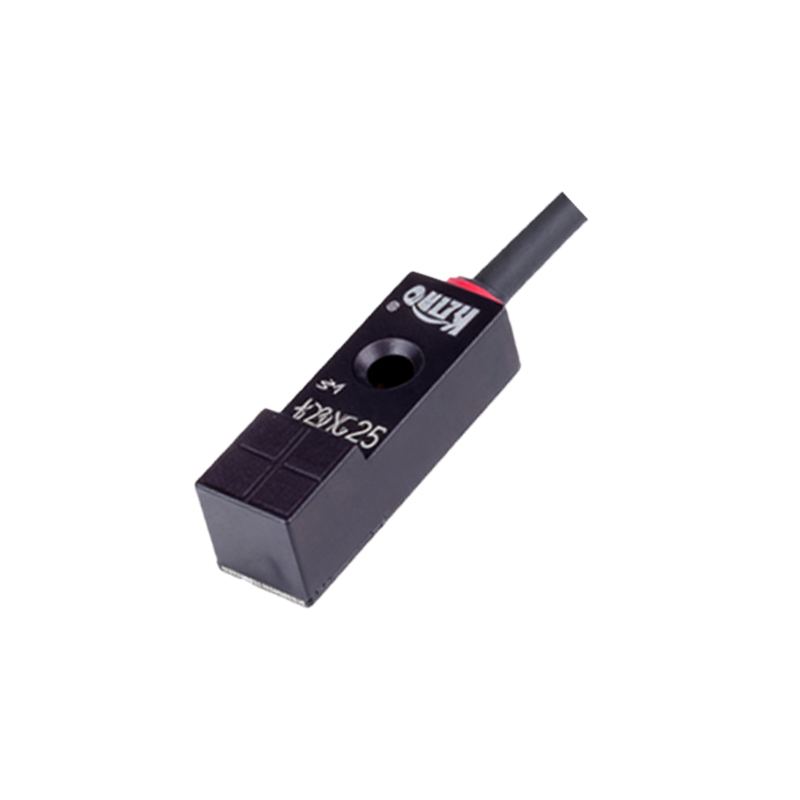
In the realm of industrial automation and control systems, proximity sensors stand as indispensable components for non-contact detection. Among the diverse types available, probe type proximity sensors, often referred to as cylindrical or barrel sensors, are particularly renowned for their precision and reliability in detecting metallic objects. This article delves into the operational principles, key characteristics, application scenarios, and selection criteria for these critical devices.
At its core, a probe type proximity sensor operates on the principle of electromagnetic induction or, in some variants, capacitive sensing. The most common type for metal detection is the inductive proximity sensor. It contains a coil wound around a ferrite core at the tip of the probe, which is part of an oscillator circuit. When an AC current passes through this coil, it generates an alternating magnetic field around the sensor's active face. When a conductive metal target enters this field, eddy currents are induced on the target's surface. These eddy currents draw energy from the oscillator, causing a change in its amplitude. This change is detected by a threshold circuit, which subsequently triggers a solid-state switch (typically an NPN or PNP transistor) to change the output state. The entire process is contactless, ensuring no physical wear on the sensor or the target.
Key specifications define the performance of a probe sensor. The sensing distance, or nominal range, is a critical parameter, typically ranging from a few millimeters to several tens of millimeters. It is important to note that this distance is calibrated for a standard target (usually mild steel). Different metals, such as aluminum or copper, have different damping effects on the magnetic field, resulting in a reduced effective sensing range—a factor known as the reduction factor. The housing material, often stainless steel (e.g., SUS303, SUS304) or brass with nickel plating, provides robustness against mechanical impacts, coolants, and oils. The electrical connection is usually via a pre-wired cable or a quick-disconnect connector, with common supply voltages being 10-30V DC or 20-250V AC. Output configurations include normally open (NO), normally closed (NC), or complementary outputs, and analog output versions are available for distance-proportional measurement.
The application spectrum for probe proximity sensors is vast. They are quintessential in machine tools for monitoring tool presence, detecting broken drills, or confirming part positioning. In automated assembly lines, they verify the presence of components like bolts or metal brackets. Material handling systems employ them for counting metallic parts on conveyors or detecting the end position of a metal slide. Their cylindrical form factor allows for easy installation in drilled holes, making them ideal for space-constrained environments. A significant advantage is their immunity to environmental contaminants like dust, dirt, and non-conductive liquids, provided the housing integrity is maintained. However, they are not suitable for detecting non-metallic objects; for such tasks, capacitive probe sensors are the alternative.
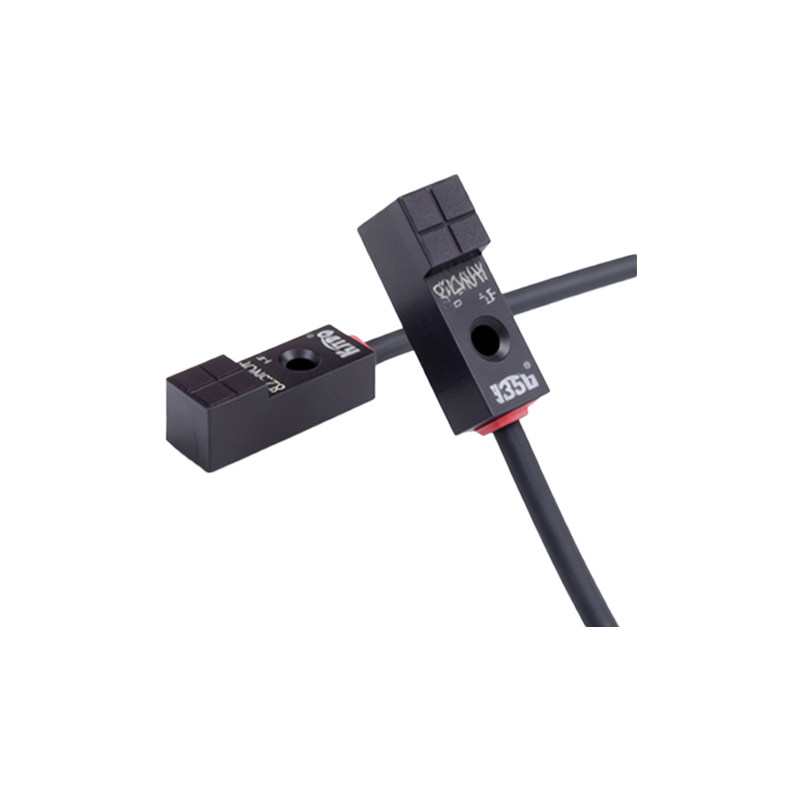
Selecting the right probe sensor requires careful consideration of several factors. First, identify the target material and size relative to the sensor's active face to ensure reliable switching. The required sensing distance must account for installation tolerances and the reduction factor for non-ferrous metals. The operating environment dictates the needed ingress protection (IP) rating—IP67 is standard for resistance to temporary immersion, while IP69K is for high-pressure washdowns. Electrical compatibility with the controller (PLC) is paramount: choose between 2-wire, 3-wire, or 4-wire designs, and ensure the output type (sourcing PNP or sinking NPN) matches the input module. For high-speed applications, such as counting gear teeth, the sensor's switching frequency (response time) becomes a limiting factor. Finally, consider mechanical aspects like thread size (common M5, M8, M12, M18, M30) and barrel length to fit the mounting location.
Installation and maintenance are straightforward but crucial. Ensure the sensor is mounted securely without over-tightening, which can distort the housing. Maintain the recommended clearance from surrounding metal (lateral and flush-mounting distances) to prevent false triggering. For sensing side-facing targets, a shielded (flush-mountable) sensor type is necessary, whereas unshielded types offer a longer range but require metal-free zones around the sensing face. Regular checks should verify the sensor is clean and free from metallic swarf buildup, which could affect performance.
In conclusion, probe type inductive proximity sensors are workhorses of industrial sensing. Their non-contact operation, durability, and high-speed response make them a preferred choice for metallic object detection across countless industries, from automotive manufacturing to packaging machinery. Understanding their technology and specifications empowers engineers and technicians to implement robust and efficient sensing solutions, thereby enhancing system reliability and productivity. As automation evolves, these sensors continue to be refined with features like IO-Link communication for advanced