In the realm of industrial automation and control systems, proximity sensors are indispensable components for detecting the presence or absence of objects without physical contact. Among the various types available, the distinction between 2-wire and 3-wire proximity sensors is a fundamental consideration for engineers and technicians. This article delves into the operational principles, wiring configurations, advantages, disadvantages, and typical applications of both sensor types, providing a comprehensive guide for selection and implementation.
Operational Principles and Wiring Configurations
A proximity sensor, regardless of its wiring, functions by generating an electromagnetic field or using capacitive/inductive principles to detect metallic or non-metallic targets. The core difference lies in how they are integrated into electrical circuits.

A 2-wire proximity sensor is designed with simplicity in mind. It connects directly in series with the load (such as a relay, programmable logic controller input, or indicator lamp) and the power supply. Essentially, it acts like a switch within the circuit. The two wires serve both to power the sensor and to carry the output signal. When no target is detected, a small leakage current (typically a few milliamps) flows through the sensor to maintain its internal electronics. Upon detection, the sensor switches to a low-resistance state, allowing full load current to pass, thus signaling the target's presence. This design eliminates the need for a separate power wire, making installation straightforward. Common wiring involves connecting one wire to the positive DC supply or one phase of an AC supply, and the other wire to the load, which then returns to the negative DC or neutral AC line.
In contrast, a 3-wire proximity sensor features separate paths for power supply and output signal. It has three distinct wires: typically, a brown wire for positive DC supply, a blue wire for negative DC supply (common or ground), and a black wire for the output signal. This configuration provides a dedicated switching output (either NPN sinking or PNP sourcing) that is isolated from the power circuit. The sensor's internal circuitry is powered continuously between the brown and blue wires. The black output wire acts as a switch leg, connecting either to ground (in NPN type) or to positive supply (in PNP type) when a target is detected. This separation allows for more stable operation, especially with sensitive control devices like PLCs, as the output is a clean, discrete signal without leakage current interference.
Advantages and Disadvantages
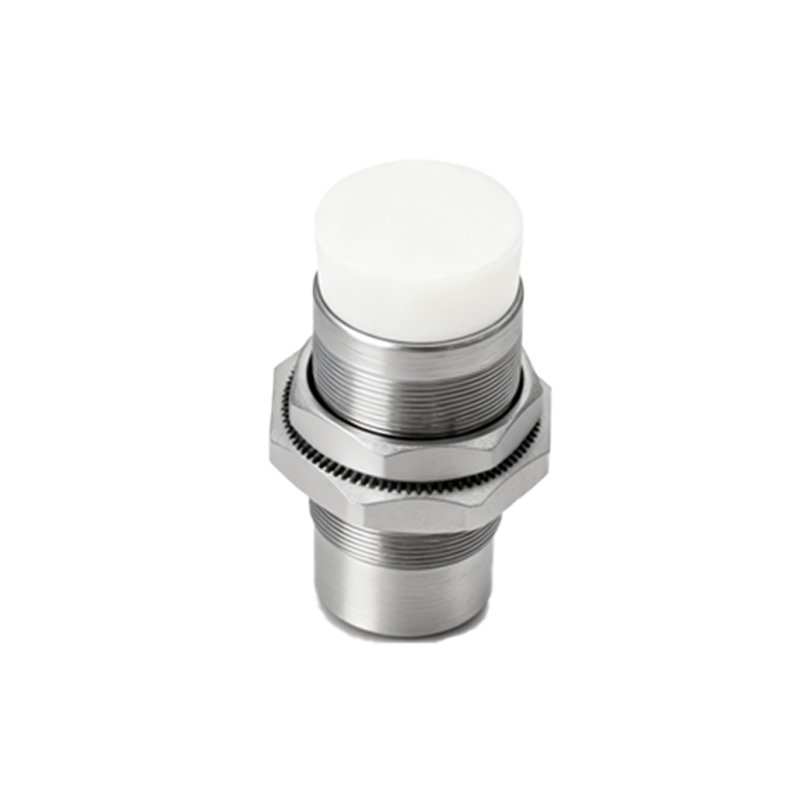
The choice between 2-wire and 3-wire sensors often hinges on specific application requirements and constraints.
2-Wire Proximity Sensor Advantages:
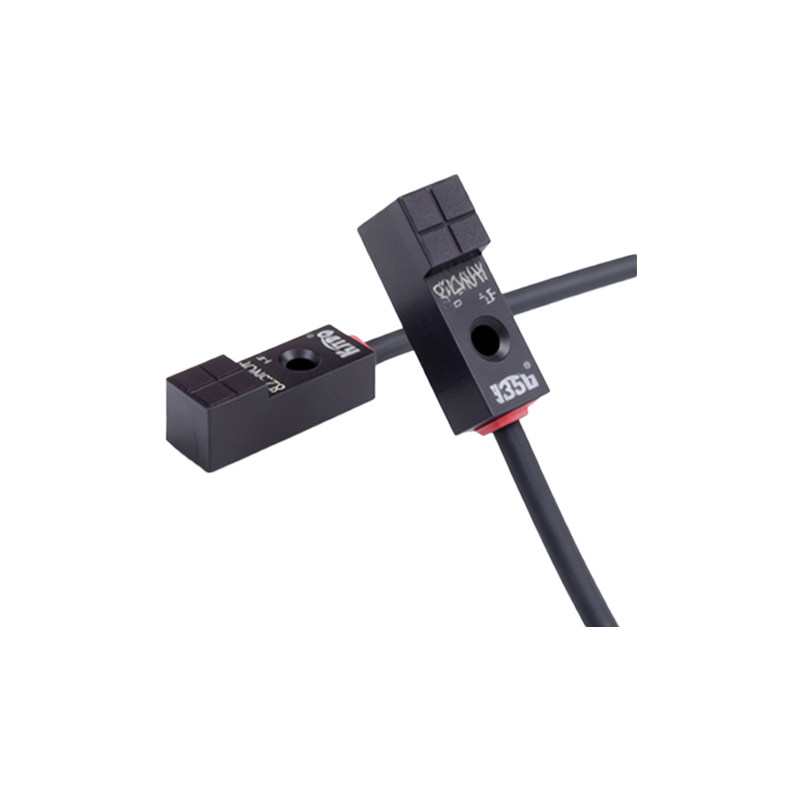
- Simplified Wiring: With only two wires, installation is faster and reduces material costs, as fewer cables and terminals are needed.
- Compatibility with AC/DC: Many 2-wire models can operate on both alternating current (AC) and direct current (DC) power supplies, offering flexibility in diverse environments.
- Space Efficiency: Their compact wiring makes them suitable for tight spaces or applications where conduit and panel space are limited.
2-Wire Proximity Sensor Disadvantages:
- Leakage Current: The inherent leakage current (usually 1-3 mA) can cause issues with low-power loads or PLC inputs, potentially leading to false triggers or "ghost" signals if not properly accounted for.
- Voltage Drop: Since the sensor is in series with the load, a voltage drop occurs across it, which might affect the performance of the load, particularly with long wire runs or high-current devices.
- Limited Output Options: They generally lack the flexibility of output types (e.g., only switching capability without amplified signals) compared to 3-wire versions.
3-Wire Proximity Sensor Advantages:
- No Leakage Current: The isolated output ensures no residual current flows when the sensor is off, providing a clear on/off signal ideal for PLCs and microcontrollers.
- Higher Performance: They often support faster switching frequencies, longer sensing ranges, and better noise immunity due to dedicated power and signal lines.
- Output Flexibility: Available in NPN (sinking) and PNP (sourcing) configurations, allowing compatibility with various control system architectures (e.g., Asian vs. European standards).
3-Wire Proximity Sensor Disadvantages:
- Complex Wiring: Requiring three wires increases installation time and cost, and may necessitate additional cable management.
- Power Supply Specificity: Typically designed for DC power only, limiting use in pure AC systems without converters.
- Potential for Wiring Errors: Incorrect connection of the output wire (e.g., confusing NPN with PNP) can lead to malfunctions or damage.
Typical Applications and Selection