In modern automated systems, proximity sensor shutters play a critical yet often overlooked role. These components, sometimes referred to as flags, vanes, or targets, are physical interfaces that modulate the detection field of proximity sensors. By strategically interrupting or allowing the sensor's electromagnetic or optical field, shutters enable precise positional feedback, object counting, speed monitoring, and safety interlocking in machinery.
The core function of a proximity sensor shutter is to create a reliable and repeatable trigger event. Unlike detecting a random object passing by, a shutter is a designed part of the machine that presents a consistent profile to the sensor. This consistency is paramount for accuracy in applications like rotary encoding, where a slotted disk shutter rotates between a sensor pair to measure RPM, or in linear actuators, where a tab indicates the end-of-travel position. The material, geometry, and mounting of the shutter directly influence the sensor's performance, including its effective sensing range and response time.
Selecting the correct shutter involves several key considerations. First, compatibility with the sensor type is essential. Inductive proximity sensors, which detect metallic objects, require shutters made of ferrous metals like steel or iron to ensure a strong signal. For capacitive sensors, a wider range of materials can be used, but the dielectric constant must be considered. Photoelectric sensors, which use light beams, typically employ opaque shutters (often metal or plastic) to block the beam completely. The shutter's size and the width of its "gap" or "tab" must be designed relative to the sensor's beam width or sensing face to ensure a clean on/off signal without chatter. In high-speed applications, a narrow vane might be necessary to provide a brief, sharp interruption.
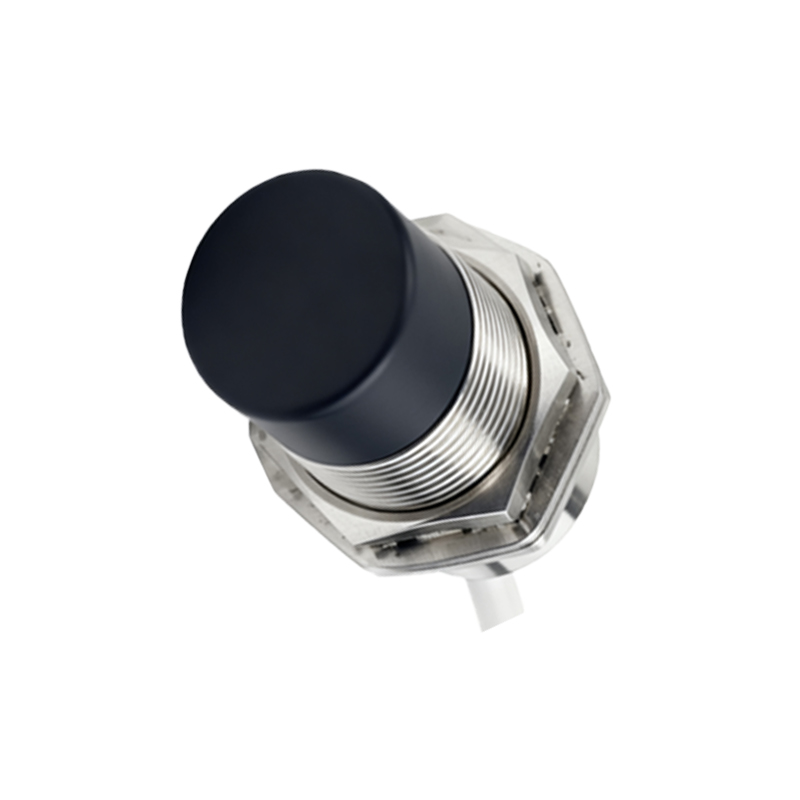
Environmental factors also dictate shutter design. In washdown or outdoor environments, shutters made from stainless steel (e.g., 303, 304, or 316 grades) offer excellent corrosion resistance. For high-temperature areas near ovens or engines, materials like high-temp steel or ceramics may be required. The mechanical mounting must be rigid to prevent vibration-induced misalignment, which could cause false triggers. In safety-critical applications, such as interlocking guard doors, the shutter's design often follows standards like ISO 14119, which covers the design of actuating parts for position switches to prevent tampering and ensure fail-safe operation.
A common application is in conveyor systems, where a paddle or flag shutter mounted on the conveyor frame triggers a sensor to confirm the passage of a product. Another is in automated packaging machines, where a rotary cam with precisely machined lobes uses shutters to sequence various operations like filling, sealing, and cutting. In the printing industry, registration marks on paper act as optical shutters for photoelectric sensors to ensure precise color alignment.
Proper installation and maintenance are the final steps for success. The air gap between the sensor face and the shutter must be set according to the manufacturer's specifications, typically within 50-80% of the sensor's rated nominal sensing distance to account for thermal drift and mechanical tolerances. Regular inspection for physical damage, buildup of debris, or corrosion is necessary to maintain signal integrity. Misalignment is a frequent culprit in sensor failure; thus, checking that the shutter passes squarely through the sensor's detection field is a standard troubleshooting step.
In summary, the proximity sensor shutter is a fundamental component for transforming simple presence detection into sophisticated motion control and sequencing. Its correct selection and implementation, based on sensor technology, material science, and mechanical design principles, are vital for the reliability, accuracy, and longevity of automated equipment. Engineers and technicians must give these small components the attention they deserve in system design and maintenance protocols.