In the rapidly evolving landscape of industrial automation and IoT, the integration of laser sensors with Raspberry Pi single-board computers has emerged as a transformative solution for engineers and developers. This synergy combines the precision of laser-based measurement with the computational flexibility and affordability of Raspberry Pi, enabling sophisticated applications from quality control to robotics.
Laser sensors, known for their high accuracy, non-contact measurement capabilities, and rapid response times, are pivotal in environments requiring meticulous detection, positioning, or profiling. Common types include time-of-flight (ToF) sensors for distance measurement, triangulation sensors for precise displacement, and laser scanners for 3D mapping. When paired with a Raspberry Pi—a versatile, low-cost computing platform with GPIO pins, USB ports, and robust community support—these sensors transcend traditional limitations, allowing for real-time data processing, network connectivity, and custom algorithm implementation.
The integration process typically involves interfacing the laser sensor with the Raspberry Pi via communication protocols such as I2C, SPI, UART, or USB. For instance, a ToF laser sensor like the VL53L0X can be connected using I2C, with libraries available in Python for seamless data acquisition. Engineers must consider factors like power requirements, signal conditioning, and environmental interference (e.g., ambient light or reflective surfaces) to ensure reliable operation. Python, being the dominant language for Raspberry Pi, offers extensive libraries (e.g., RPi.GPIO, NumPy) for sensor control, data analysis, and visualization, facilitating rapid prototyping.
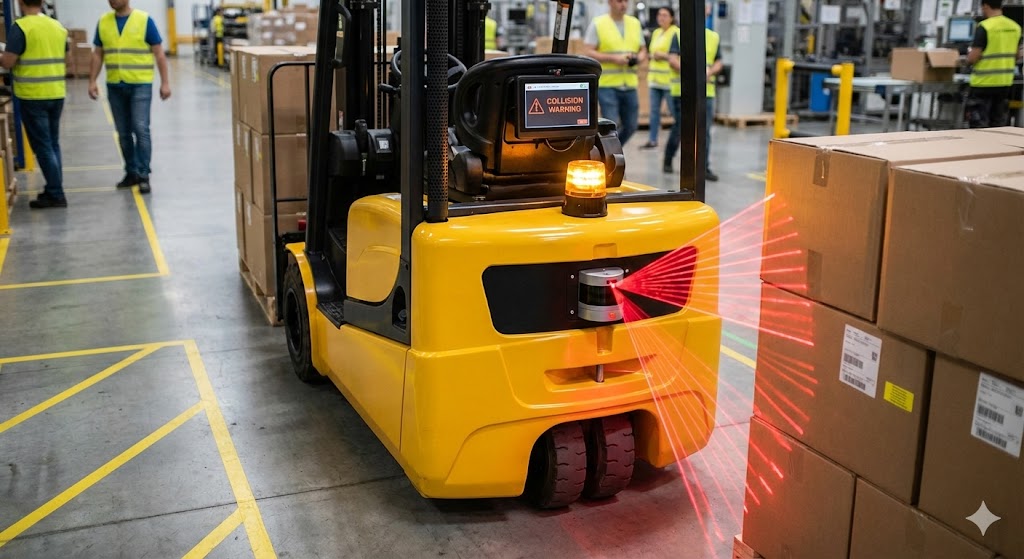
Applications of this integration are vast and impactful. In manufacturing, laser-Raspberry Pi systems enable automated inspection of component dimensions, detecting sub-millimeter defects on production lines. In robotics, they provide accurate obstacle avoidance and navigation for autonomous vehicles or robotic arms. Smart agriculture leverages these setups for crop monitoring and yield estimation, while logistics employs them for package sorting and inventory management. Additionally, in research and development, they serve as cost-effective tools for prototyping custom sensing solutions, such as vibration analysis or structural health monitoring.
Key advantages include scalability, as multiple sensors can be networked to a single Raspberry Pi for complex setups, and remote accessibility, with data transmitted over Wi-Fi or Ethernet for cloud-based analytics. However, challenges persist, such as managing computational load for high-speed sensor data or ensuring robustness in harsh industrial environments—often addressed through optimized code, heat management, or protective enclosures.
Looking ahead, advancements in Raspberry Pi hardware (e.g., faster processors in Raspberry Pi 4 or 5) and more compact, energy-efficient laser sensors will further enhance this integration. Emerging trends like edge computing and AI integration allow for on-device machine learning, enabling predictive maintenance or adaptive control without constant cloud dependency. For engineers, mastering this combination not only reduces system costs but also fosters innovation in designing intelligent, responsive automation systems.
In summary, the fusion of laser sensors with Raspberry Pi represents a powerful, accessible paradigm for modern engineering. By leveraging open-source tools and modular components, professionals can develop tailored solutions that drive efficiency, accuracy, and connectivity across diverse industrial sectors, paving the way for smarter, more autonomous technologies.