In the complex and demanding landscape of modern industrial automation, ensuring operational safety is not merely a regulatory requirement but a fundamental cornerstone of productivity and asset protection. Among the myriad of sensing technologies deployed, safety capacitive proximity sensors have emerged as a critical, yet often underappreciated, component. Their unique operating principle and robust design make them indispensable for a wide range of applications where non-contact detection of both metallic and non-metallic objects is essential within a safety-critical context.
Unlike their inductive counterparts, which are primarily sensitive to metals, capacitive proximity sensors function by generating an electrostatic field. The sensor's active face and the target object act as two plates of a capacitor. When an object enters this detection field, it alters the dielectric constant and thus the capacitance of the system. The sensor's internal oscillator circuit detects this change, triggering a switching signal. This fundamental capability to detect materials like plastics, glass, wood, liquids, and granular substances—regardless of color or surface finish—vastly expands their utility in safety systems.
The designation "safety" elevates these sensors from standard components to integral parts of a safety function. Safety capacitive proximity sensors are designed and certified according to stringent international standards such as IEC 60947-5-2, IEC 62061, and ISO 13849-1. They contribute to achieving required Performance Levels (PL) or Safety Integrity Levels (SIL). Key features that define a safety-rated sensor include:
Redundant and Diverse Internal Circuits: To prevent dangerous failures, safety sensors often incorporate two independent switching channels or use diverse technologies (e.g., one capacitive, one optical) within a single housing. This redundancy ensures that a single internal fault does not lead to a loss of the safety function.
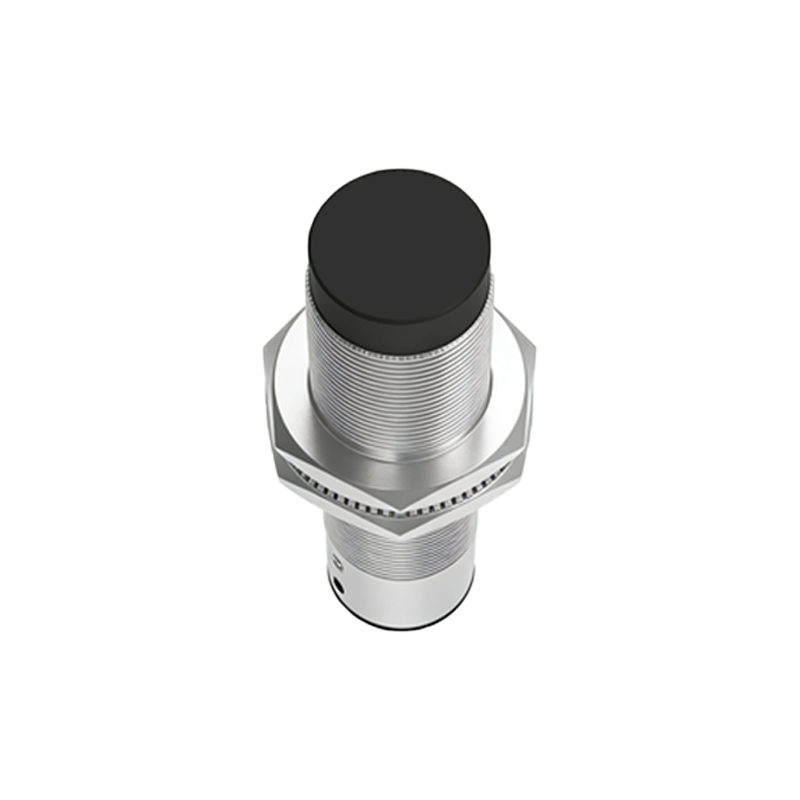
Diagnostic Coverage: These sensors continuously self-monitor for faults such as wire breaks, short circuits, internal component failure, or contamination buildup on the sensing face. Upon detecting a fault, they can initiate a safe state—typically by switching off the output—and send a diagnostic signal to the safety controller.
Secure Output States: The output switching is designed to be failsafe. For instance, a safe state is guaranteed in the event of a power loss or internal failure.
High Immunity to Environmental Interference: They are built to resist electromagnetic interference (EMI), voltage spikes, and temperature fluctuations, which are common in industrial settings and could otherwise cause erroneous switching.
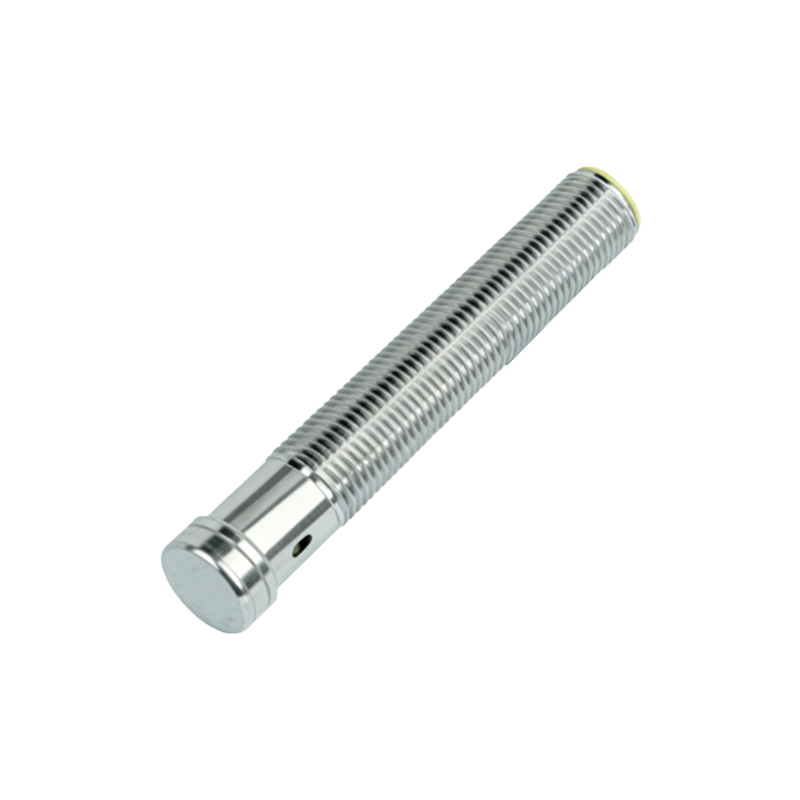
The practical applications of safety capacitive proximity sensors are extensive. A prime example is in safeguarding hazardous areas on machinery. They can be used as part of an interlocking guard system on a robotic cell or a press brake. By detecting the presence of an operator's hand or a tool within a danger zone—even through a thin non-metallic guard window—they can prevent machine actuation or initiate an immediate stop. In the packaging and food & beverage industries, they ensure safety in processes involving non-metallic materials. For instance, they can monitor the correct positioning of a plastic bottle or a cardboard blank before a sealing or stamping operation commutes, preventing jams and potential machine damage that could pose safety risks. Furthermore, in chemical or water treatment plants, they provide safe, non-contact level detection of aggressive or conductive liquids inside non-metallic tanks, eliminating the risk associated with mechanical floats or conductive probes.
Selecting the right safety capacitive proximity sensor requires careful consideration. Engineers must evaluate the required sensing distance, which is influenced by the target material's dielectric constant. The sensor's housing material (often PBT or stainless steel) must be compatible with the environment, resisting oils, coolants, or chemical washdowns. The output type (e.g., PNP/NPN, analog, IO-Link Safety) must integrate seamlessly with the existing safety PLC or relay system. Crucially, the sensor's PL or SIL rating must be validated as part of the overall machine's risk assessment to ensure the complete safety loop meets the mandated performance level.
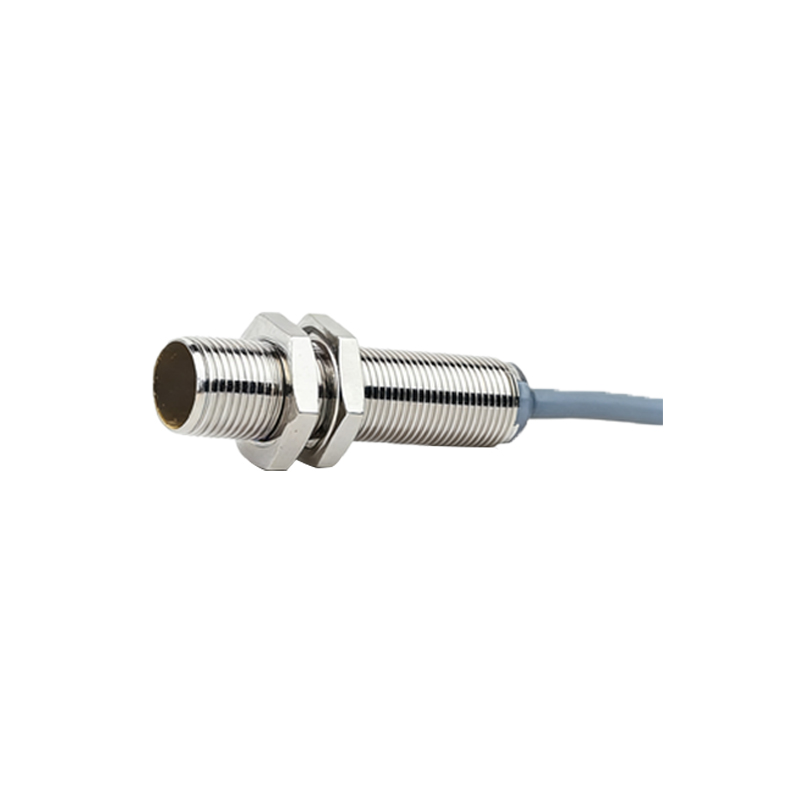
In conclusion, safety capacitive proximity sensors represent a sophisticated fusion of sensitive detection technology and rigorous safety engineering. They provide a versatile and reliable solution for protecting personnel, preventing equipment damage, and ensuring process integrity in environments where non-metallic objects are present. By offering non-contact, material-inclusive sensing with built-in diagnostics and fail-safe operation, they are a vital element in building compliant, resilient, and productive automated systems. Their role transcends simple object detection, forming a fundamental link in the chain of responsibility that defines modern industrial safety.