In the realm of industrial automation and machine safety, the ability to detect the presence or absence of an object without physical contact is paramount. Among the diverse technologies enabling this capability, current sensing proximity sensors stand out for their unique operational principle and robust performance. Unlike standard inductive proximity sensors that detect the disturbance in an electromagnetic field caused by a metallic target, current sensing variants operate by monitoring the current draw within the sensor's own oscillator circuit. This fundamental difference unlocks specific advantages in challenging environments.
The core working principle revolves around an internal high-frequency oscillator that generates an electromagnetic field at the sensing face. When a metallic target enters this field, eddy currents are induced on the target's surface. In a standard inductive sensor, this causes a change in oscillation amplitude, which is then evaluated by a threshold circuit to trigger an output switch. A current sensing proximity sensor, however, is designed to be particularly sensitive to the damping effect these eddy currents have on the oscillator. Instead of primarily measuring amplitude drop, its circuitry is finely tuned to detect the minute increase in current consumption within the oscillator coil that occurs due to this damping. This current change is amplified and processed to control the output state. This method often provides superior stability against factors like temperature fluctuations and voltage variations, as the sensor is monitoring a parameter intrinsic to its own power circuit.
This operational nuance translates into distinct benefits. First and foremost, current sensing proximity sensors typically exhibit exceptional switching consistency. The point at which they turn on and off (the hysteresis) is often very narrow and repeatable, making them excellent for applications requiring precise positioning or edge detection. They are generally less susceptible to false triggering from environmental electrical noise because the signal being measured (current) is less easily influenced than an amplitude-based signal. Furthermore, many models demonstrate remarkable performance when dealing with different types of metals. While all inductive sensors have a reduction factor for non-ferrous metals like aluminum or copper, the current sensing method can sometimes offer more consistent detection across a wider range of target materials.
The applications for current sensing proximity sensors are found wherever reliability and precision are critical. A prime example is in metal stamping and punching presses, where they are used for accurate sheet metal positioning and end-of-stroke detection. Their stability ensures that the machine cycle triggers at the exact same point every time, which is vital for product quality and tooling protection. In automated assembly lines, they are deployed for precise part presence verification, especially with small or thin metallic components where other sensors might struggle. Another key area is in weld seam tracking systems, where the sensor must reliably detect the edge of a metal sheet or weld bead without being affected by spatter or the high electromagnetic interference generated by welding equipment. Their inherent noise immunity makes them a suitable choice for such electrically hostile environments.
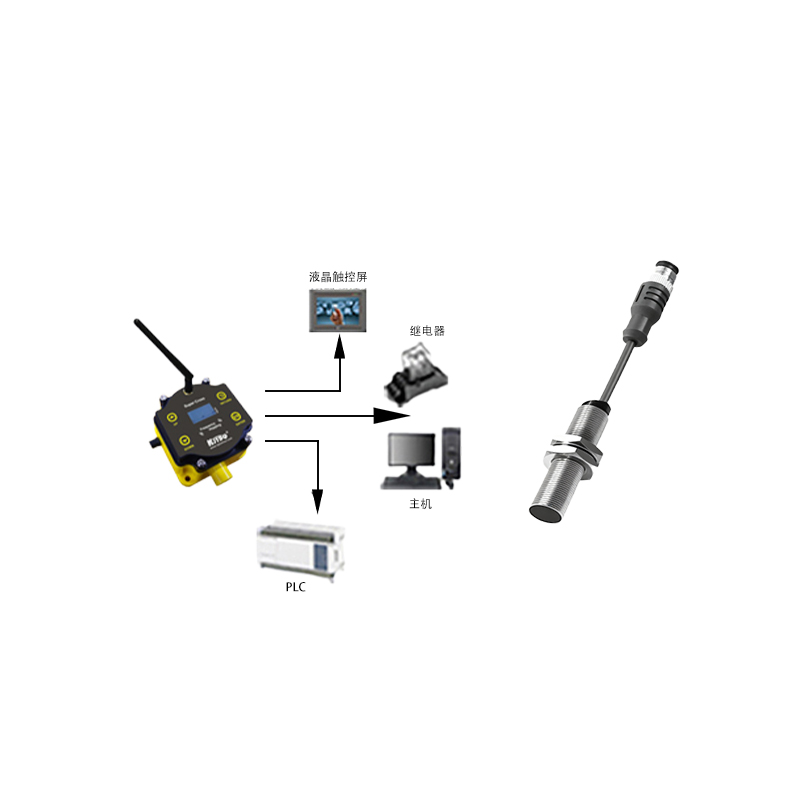
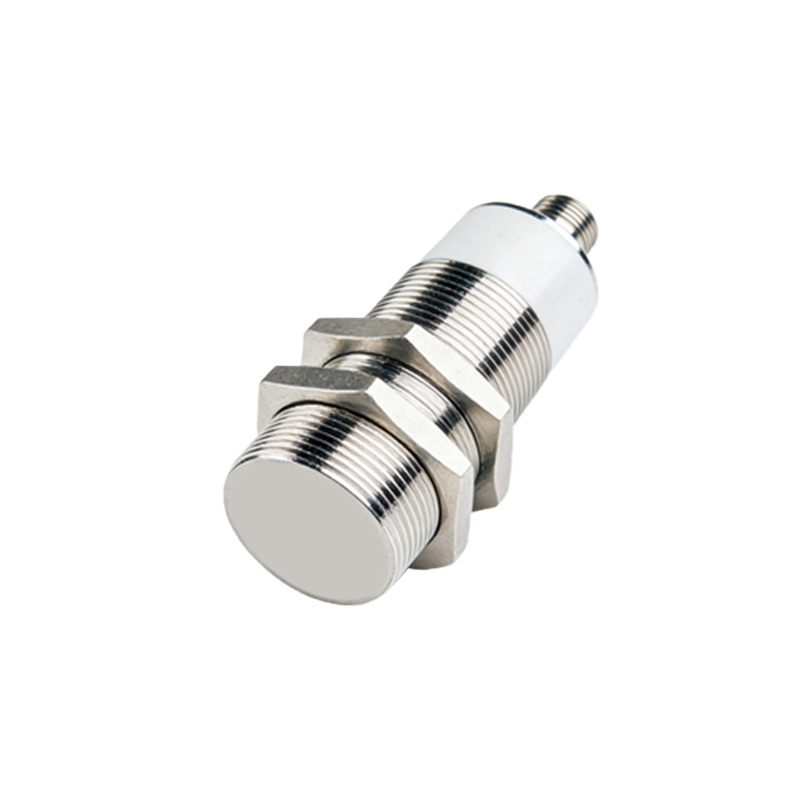
Selecting the right current sensing proximity sensor requires careful consideration of several parameters. The sensing distance, or nominal range, must be chosen based on the application's mechanical constraints. It is crucial to note that the effective sensing distance for non-ferrous metals will be shorter, and manufacturers provide reduction factors to calculate this. The housing material and style are also vital; cylindrical barrels (e.g., M8, M12, M18, M30 threads) are common, but rectangular or limit-switch style housings exist for specific mounting needs. The output type must match the control system—common options include NPN (sinking), PNP (sourcing), or analog (4-20mA, 0-10V) outputs for distance-proportional signals. Environmental ratings, particularly the Ingress Protection (IP) code, indicate resilience against dust and water, which is essential for washdown areas or outdoor use. Finally, considering the electrical connection, whether pre-wired cable or quick-disconnect connectors, impacts maintenance and installation ease.
In conclusion, current sensing proximity sensors offer a sophisticated and reliable solution for non-contact metal detection. By leveraging the damping effect on oscillator current, they provide high repeatability, stability against interference, and consistent performance across various metals. When designing a system that demands precise and dependable operation in the presence of electrical noise or with challenging targets, engineers would be well-advised to evaluate the specific advantages that current sensing technology brings to the table. Their role in enhancing the efficiency, safety, and quality of modern industrial processes remains indispensable.