Inductive proximity sensors are a cornerstone of modern industrial automation, offering non-contact detection of metallic objects. These robust and reliable devices operate on a fundamental principle of electromagnetism, providing critical feedback for control systems in countless applications. Unlike mechanical limit switches, they have no moving parts, leading to exceptional longevity and minimal maintenance. This article delves into the working principle, key specifications, and diverse applications of inductive proximity sensors, with a focus on their integral role in automated systems.
At the heart of an inductive proximity sensor is an oscillator circuit that generates a high-frequency electromagnetic field. This field radiates from the active face of the sensor, typically a sensing coil wound around a ferrite core. When a metallic object enters this oscillating field, eddy currents are induced on the surface of the target. These eddy currents draw energy from the sensor's oscillator, causing a reduction in the amplitude of oscillation. An evaluation circuit within the sensor monitors this amplitude change. Once the amplitude drops below a predetermined threshold—corresponding to the object being within the specified sensing range—the sensor's output state switches. This output is typically a solid-state transistor (PNP or NPN) that provides a signal to a programmable logic controller (PLC) or other control unit.
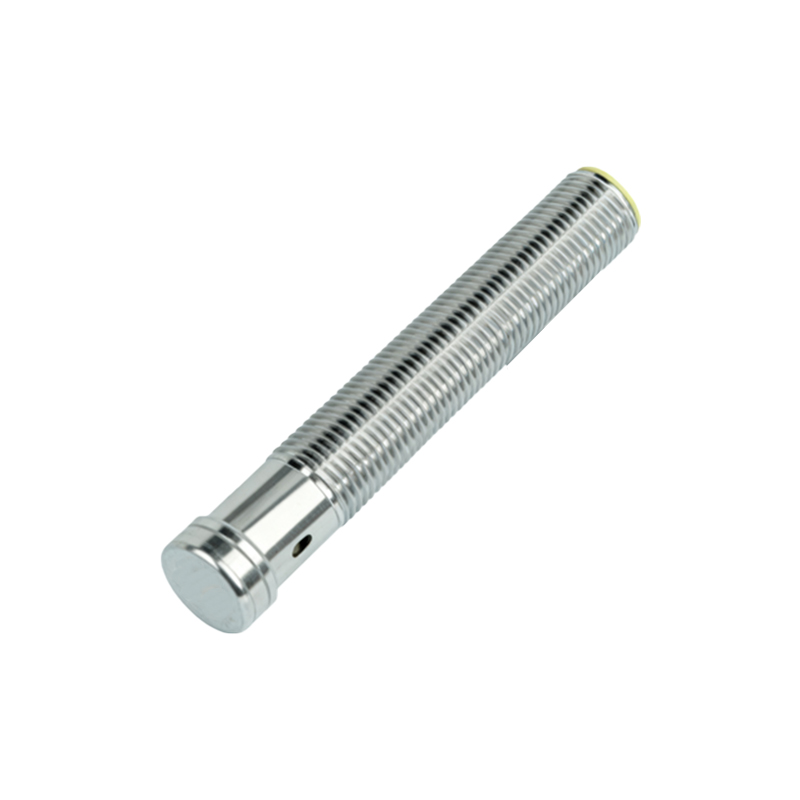
Key performance parameters define the suitability of a sensor for a given task. The sensing distance (Sn) is a nominal value specified for a standard target (usually mild steel). It is crucial to note that this distance varies with different metals; for instance, the effective range for stainless steel is often 60-80% of Sn, and for aluminum or copper, it can be as low as 30-50%. The hysteresis is the difference between the switch-on and switch-off points, which prevents output chatter when a target is at the edge of the sensing range. Switching frequency indicates how many on/off cycles per second the sensor can handle, a critical factor in high-speed counting or positioning applications. Environmental ratings, such as IP67 or IP69K for ingress protection and robust housing materials like nickel-plated brass or PBT plastic, ensure reliable operation in harsh conditions involving dust, moisture, oils, and coolants.

The applications for inductive proximity sensors are vast and integral to industrial efficiency. In material handling, they detect the presence of pallets, boxes, or products on conveyor belts, triggering sorting mechanisms or stopping conveyors. In machine tools, they are used for precise end-of-travel detection of slides and spindles, tool breakage monitoring, and part positioning in CNC machining centers. Automotive assembly lines rely on them for verifying component presence, robotic guidance, and weld nut detection. They are also essential in packaging machinery for fill-level control, cap detection, and label registration.
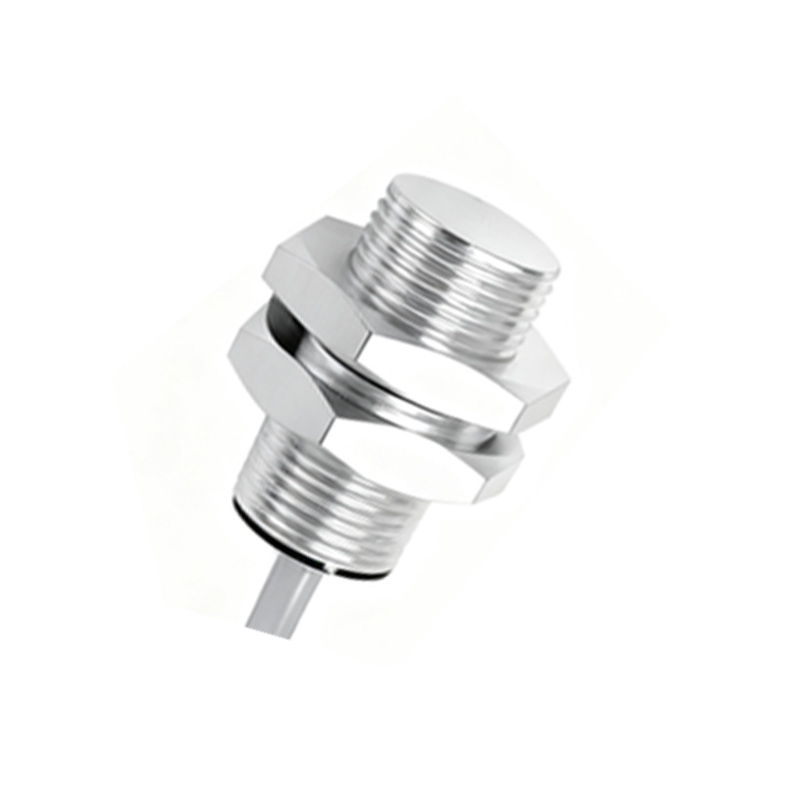
Selecting the right sensor involves careful consideration of the target material, required sensing distance, environmental conditions, electrical output type, and physical mounting constraints. Cylindrical threaded barrels (e.g., M8, M12, M18, M30) are common, but rectangular and ring-shaped (slot) styles are available for specialized tasks like detecting small parts or verifying the presence of fasteners. Shielded (flush-mountable) sensors can be installed in metal without affecting their sensing field, while unshielded sensors offer a longer range but require non-metallic surroundings.
In conclusion, inductive proximity sensors are indispensable components in automated industrial environments. Their non-contact operation, high reliability, and adaptability to challenging conditions make them the preferred choice for metallic object detection. A thorough understanding of their operating principle, specifications, and application nuances enables engineers and technicians to design more robust, efficient, and intelligent automation systems. As Industry 4.0 advances, these sensors continue to evolve, integrating IO-Link communication for advanced diagnostics and parameterization, further solidifying their role as the fundamental eyes of the factory floor.