Laser length measurement sensors have revolutionized precision engineering and industrial automation, offering unparalleled accuracy, speed, and reliability. These devices utilize laser technology to measure distances, dimensions, and positions with micron-level precision, making them indispensable in sectors such as manufacturing, aerospace, automotive, and electronics. This article explores the working principles, key features, applications, and recent advancements in laser length measurement sensors, providing insights into their critical role in modern industry.
The fundamental principle behind laser length measurement sensors is based on the time-of-flight (ToF) or triangulation method. In ToF sensors, a laser pulse is emitted toward a target, and the time taken for the reflection to return is measured. Since the speed of light is constant, the distance can be calculated precisely. Triangulation-based sensors, on the other hand, use a laser beam projected onto a surface, with a receiver detecting the reflected light at an angle. By analyzing the displacement of the light spot, the sensor determines the distance. Both methods offer high accuracy, but triangulation is often preferred for short-range measurements, while ToF excels in longer ranges.

Key features of modern laser length measurement sensors include high resolution, often down to micrometers, and fast response times, enabling real-time monitoring in dynamic environments. They are non-contact devices, eliminating wear and tear and allowing measurements on delicate or moving surfaces. Advanced models incorporate environmental compensation for temperature, humidity, and ambient light, ensuring consistent performance in harsh industrial settings. Additionally, integration with digital interfaces like Ethernet, PROFINET, or IO-Link facilitates seamless connectivity with control systems, supporting Industry 4.0 initiatives.

In industrial applications, these sensors are widely used for quality control, such as verifying part dimensions, detecting defects, and ensuring assembly tolerances. In automotive manufacturing, they measure component gaps and alignments, while in electronics, they inspect circuit board profiles and solder paste thickness. Aerospace industries rely on them for precise machining and assembly of aircraft parts. Beyond manufacturing, laser length sensors are employed in robotics for navigation and object detection, in logistics for inventory management, and in construction for surveying and alignment tasks.
Recent advancements have further enhanced the capabilities of laser length measurement sensors. The development of blue laser technology, for instance, improves performance on reflective or transparent surfaces that traditionally challenge red lasers. Miniaturization has led to compact sensors suitable for tight spaces, without compromising accuracy. Enhanced software algorithms enable advanced data processing, such as edge detection and pattern recognition, while AI integration allows for predictive maintenance and adaptive control. Moreover, the rise of smart sensors with embedded diagnostics reduces downtime and optimizes operational efficiency.
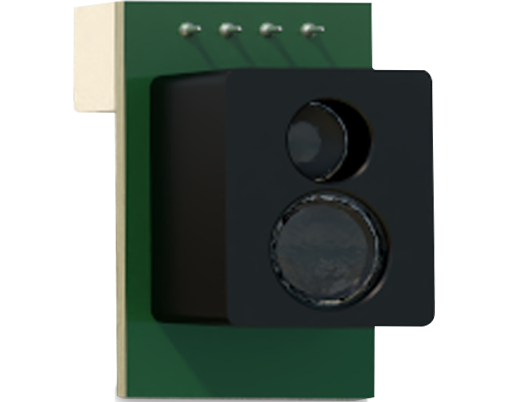
Despite their advantages, challenges remain, including cost considerations for small-scale operations and the need for skilled personnel for calibration and maintenance. However, ongoing research focuses on cost reduction, improved robustness, and user-friendly designs. As industries increasingly prioritize automation and precision, laser length measurement sensors are poised to become even more critical, driving innovation and efficiency across global supply chains.
In conclusion, laser length measurement sensors represent a cornerstone of modern industrial technology, combining high precision with versatility. Their evolution continues to shape manufacturing and beyond, offering solutions that enhance productivity, quality, and safety. By staying abreast of technological trends, engineers and industry professionals can leverage these tools to meet the demands of an ever-advancing industrial landscape.