In the realm of industrial automation, robotics, and consumer electronics, proximity sensing technology plays a pivotal role in enabling devices to interact with their environment without physical contact. Among the various types of proximity sensors, infrared (IR) proximity sensors stand out for their reliability, cost-effectiveness, and versatility. But what exactly are these devices called in technical and commercial contexts? Commonly, they are referred to as Infrared Proximity Sensors or IR Proximity Sensors. In some applications, they might be specifically named based on their function, such as IR Obstacle Detection Sensors or IR Distance Sensors. Understanding their nomenclature, working principles, and applications is essential for engineers and designers integrating them into systems.
At its core, an infrared proximity sensor operates by emitting infrared light—typically through an IR LED—and detecting the reflection of that light from nearby objects using a photodiode or phototransistor. The key principle involves measuring the intensity of the reflected IR radiation, which correlates with the distance to the object. Unlike ultrasonic sensors that use sound waves, IR sensors rely on light, making them suitable for environments where acoustic interference is a concern. However, they can be affected by ambient light, especially sunlight, which contains IR components. To mitigate this, many modern IR proximity sensors employ modulated IR signals and filters to distinguish between emitted and environmental IR radiation.
The terminology around these sensors often reflects their design and application. For instance, Passive Infrared (PIR) Sensors are a subset used primarily for motion detection by sensing changes in IR radiation from objects like humans, rather than actively emitting IR. In contrast, active IR proximity sensors are the focus here. In datasheets and technical manuals, you might encounter terms like IR Reflective Sensors or IR Beam Sensors, emphasizing the reflective nature of the detection. For longer-range applications, Time-of-Flight (ToF) IR Sensors are used, which calculate distance based on the time taken for an IR pulse to return. These are sometimes grouped under proximity sensors but are more precise in distance measurement.
In practical applications, IR proximity sensors are ubiquitous. In smartphones, they are often called Proximity Sensors and are used to turn off the screen during calls to prevent accidental touches. In robotics, they serve as Obstacle Avoidance Sensors, helping autonomous vehicles navigate by detecting nearby obstacles. Industrial settings might use them as Non-Contact Detection Sensors for counting objects on conveyor belts or ensuring machine safety. The automotive industry integrates them into Parking Assistance Systems, where they are marketed as IR Parking Sensors. The naming convention thus adapts to the industry, but the underlying technology remains consistent.
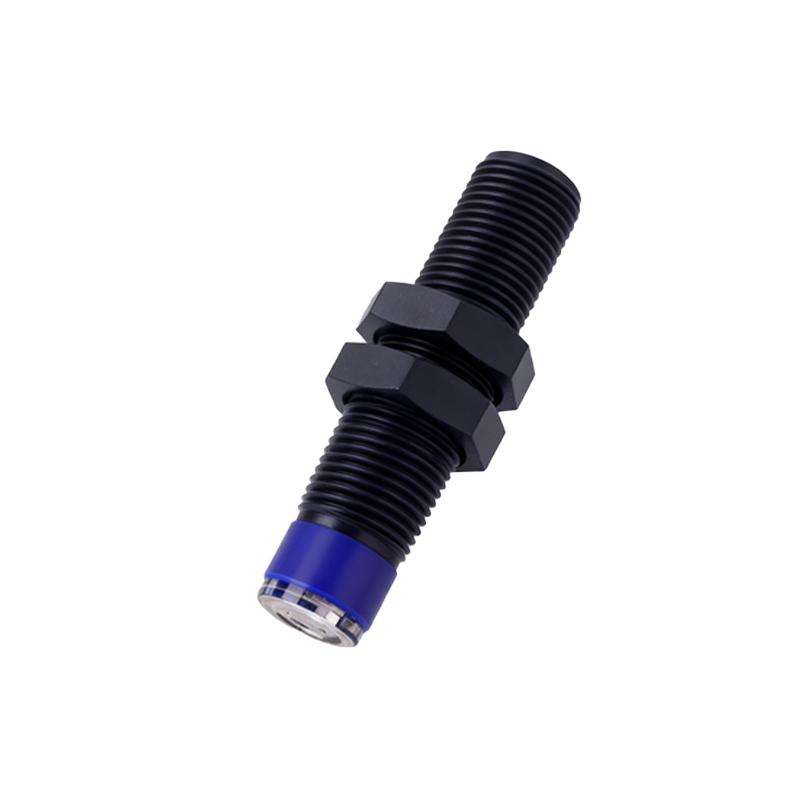
When selecting an IR proximity sensor, engineers consider factors like detection range, response time, and environmental robustness. Typical detection ranges vary from a few centimeters to several meters, depending on the IR emitter power and receiver sensitivity. For example, short-range sensors (1-10 cm) are common in consumer electronics, while medium-range sensors (up to 1 meter) are used in robotics. It's also crucial to note that IR sensors may struggle with certain materials—like black surfaces that absorb IR light—leading to reduced performance. In such cases, alternative sensors like capacitive or ultrasonic types might be recommended.
From a design perspective, IR proximity sensors offer advantages such as low power consumption, compact size, and ease of integration. They are often packaged as modules with built-in signal conditioning circuits, simplifying implementation. However, calibration is necessary to account for variations in object reflectivity and ambient conditions. In summary, whether you call them IR proximity sensors, IR detectors, or by application-specific names, these devices are indispensable in modern technology. Their ability to provide non-contact sensing continues to drive innovation across sectors, from smart home devices to advanced manufacturing systems. As technology evolves, we may see further refinements in terminology, but the fundamental role of IR in proximity sensing will undoubtedly persist.