In the realm of industrial automation and control systems, proximity sensors are indispensable components for non-contact object detection. Among the various configurations available, the 4-wire proximity sensor stands out for its unique combination of features, offering a blend of simplicity and functionality that is highly valued in many applications. This article delves into the intricacies of 4-wire sensors, explaining their wiring, operational principles, and typical use cases.
Fundamentally, a proximity sensor detects the presence or absence of a target object without physical contact. It does so by emitting an electromagnetic field or a beam of electromagnetic radiation (like infrared light) and looking for changes in the field or return signal. The 4-wire variant is a specific type, often referring to DC-powered sensors. The "4-wire" designation primarily describes its electrical connection scheme, which is crucial for proper installation and operation.
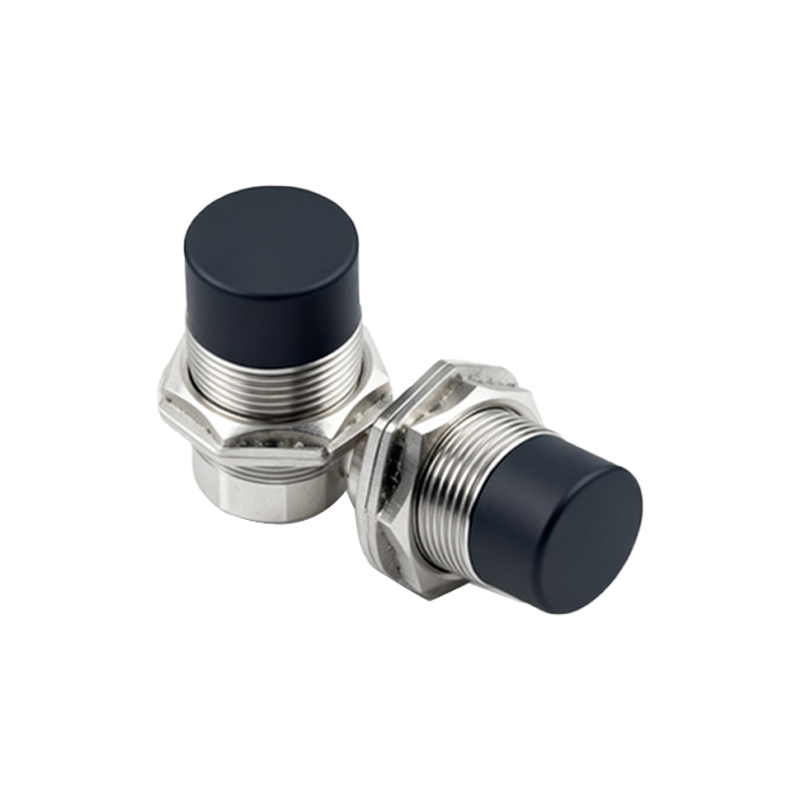
The core of a 4-wire DC proximity sensor's wiring is its ability to provide both a switched output and a direct power connection, all within one device. Here is a standard breakdown of the four wires:
1. Brown Wire: This is universally the positive supply voltage wire (+V). It connects to the positive terminal of the DC power source.
2. Blue Wire: This is the negative or common wire (0V). It connects to the negative terminal of the DC power source, completing the power circuit for the sensor's internal electronics.
3. Black Wire: This is typically the normally open (NO) output wire. When the sensor detects a target, this wire switches to connect to the positive supply voltage, providing a "high" signal.
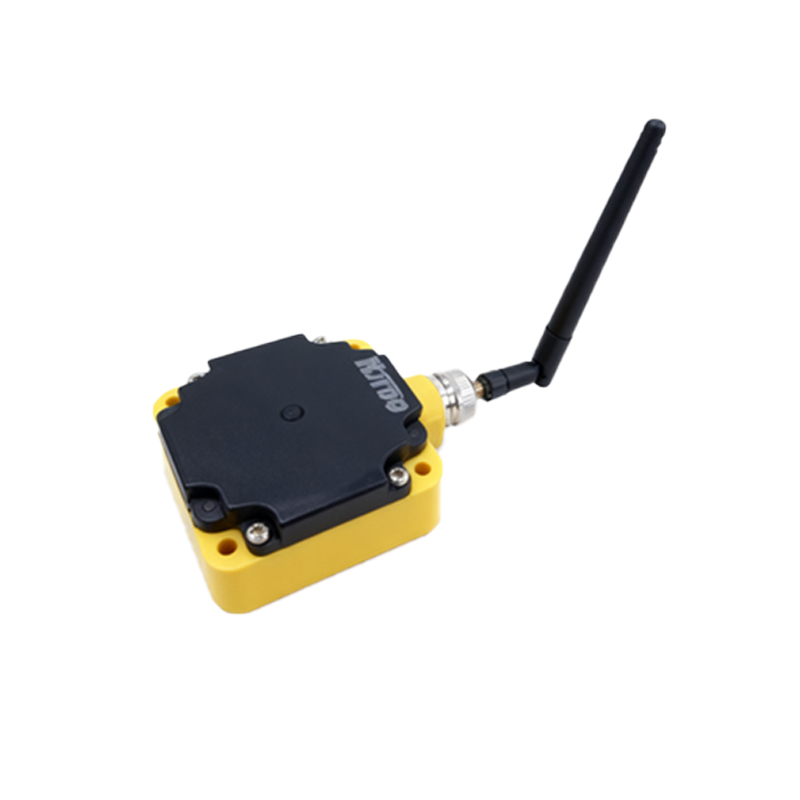
4. White Wire: This is often the normally closed (NC) output wire. Its logic is opposite to the black wire. When the sensor detects a target, this wire switches to disconnect from the supply (or connect to common), providing a "low" signal or opening the circuit.
It is critical to consult the specific sensor's datasheet, as wire color coding can occasionally vary by manufacturer, though the brown/blue for power and black/white for switched outputs is a widely adopted standard per international conventions (e.g., IEC).
The operation is straightforward. When DC power (commonly 10-30V DC) is applied across the brown and blue wires, the sensor's oscillator circuit becomes active. In the absence of a target, the internal switching element (usually a solid-state MOSFET) for the NO output (black wire) remains off (open circuit), while the NC output (white wire) is typically active. When a metallic or other detectable object enters the sensor's sensing range, it dampens or alters the oscillator's field. This change is detected by the sensor's circuitry, which triggers the output switch. The black (NO) wire then becomes energized (switches to +V), and the white (NC) wire de-energizes (switches to 0V or opens). This provides two complementary logic signals from a single sensing event.
A key advantage of the 4-wire design is its self-contained nature. Unlike 2-wire sensors that must be wired in series with the load, or 3-wire sensors that have a single output type (PNP or NPN sourcing/sinking), the 4-wire sensor offers both NO and NC outputs simultaneously. This provides immense flexibility for control logic. A PLC or relay module can use either signal based on the required safety or logic condition without needing additional inverters or logic gates. Furthermore, the output wires are typically electrically isolated from the supply wires, offering better noise immunity and protection for connected control equipment.
Applications for 4-wire proximity sensors are vast across manufacturing, packaging, material handling, and automotive assembly. They are ideal for:
Position Verification: Confirming a part is in place before a machining operation begins.
End-of-Travel Detection: Sensing when a cylinder has fully extended or retracted.
Counting Objects: As items pass on a conveyor, each detection pulse can be counted.
Safety Interlocks: Using the NC output for a fail-safe circuit; if the sensor fails or wiring breaks, the NC circuit opens, triggering a safe shutdown.
Speed Monitoring: Detecting the teeth of a gear to calculate rotational speed.
When selecting a 4-wire sensor, engineers must consider factors such as sensing distance, target material, output current capacity, housing style (cylindrical, rectangular), and environmental ratings (IP67 for dust and water resistance is common). Proper shielding and cable routing are also essential in electrically noisy industrial environments to prevent false triggering.
In conclusion, the 4-wire DC proximity sensor is a versatile and robust solution for object detection. Its dual complementary outputs, clear wiring scheme, and reliable solid